
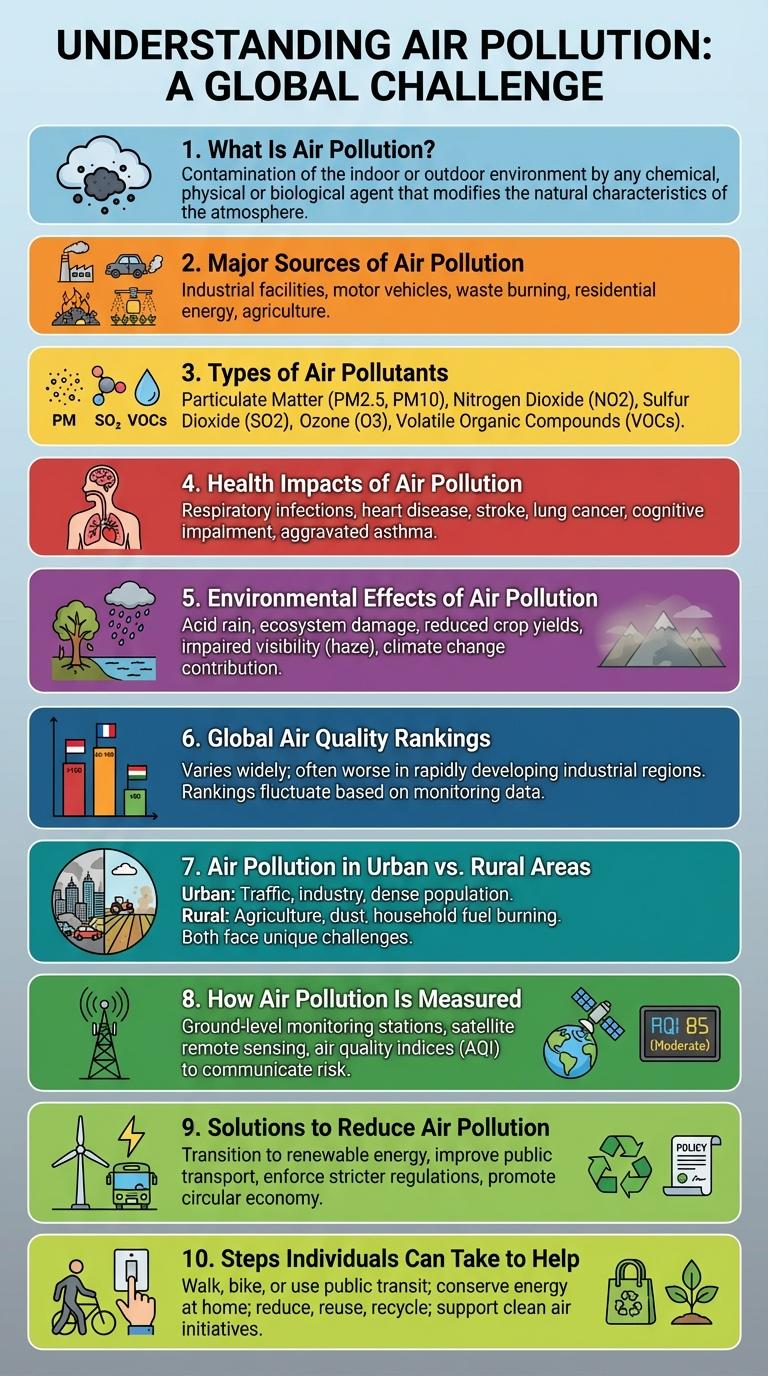
Air pollution significantly impacts public health and the environment by introducing harmful particles into the atmosphere. Understanding the sources, effects, and preventive measures is essential for mitigating its consequences. This infographic visually presents key data and insights to raise awareness and promote cleaner air initiatives.
What Is Air Pollution?
Air pollution refers to the presence of harmful substances in the Earth's atmosphere that negatively impact human health and the environment. These pollutants originate from both natural sources and human activities, causing significant air quality degradation.
- Definition - Air pollution is the introduction of toxic chemicals and particulate matter into the air.
- Sources - Major sources include vehicle emissions, industrial discharges, and burning of fossil fuels.
- Effects - Exposure to polluted air can lead to respiratory diseases, environmental damage, and climate change.
Major Sources of Air Pollution
Air pollution originates from various sources that contribute harmful substances to the atmosphere. Understanding these major sources is crucial for developing effective strategies to improve air quality.
Industrial activities release large amounts of pollutants like sulfur dioxide and nitrogen oxides into the air. Vehicle emissions are another significant contributor, producing carbon monoxide and particulate matter.
Types of Air Pollutants
Air pollution consists of various harmful substances that adversely affect the environment and human health. Understanding the types of air pollutants is crucial for effective air quality management and pollution reduction.
Common air pollutants include particulate matter (PM), nitrogen oxides (NOx), sulfur dioxide (SO2), carbon monoxide (CO), and volatile organic compounds (VOCs). These pollutants originate from sources such as vehicle emissions, industrial processes, and natural events like wildfires.
Health Impacts of Air Pollution
Air pollution significantly affects respiratory health, causing conditions such as asthma, bronchitis, and chronic obstructive pulmonary disease (COPD). Long-term exposure to polluted air increases the risk of cardiovascular diseases and can lead to premature death. Vulnerable populations, including children and the elderly, face higher susceptibility to these adverse health outcomes.
Environmental Effects of Air Pollution
What are the environmental effects of air pollution?
Air pollution severely damages ecosystems by introducing harmful substances into the atmosphere, soil, and water bodies. It contributes to acid rain, which deteriorates forests, lakes, and marine environments, disrupting biodiversity and natural habitats.
Global Air Quality Rankings
Global air quality rankings highlight cities with the highest and lowest pollution levels worldwide. These rankings provide critical insights into environmental health and regulatory effectiveness across different regions.
- Delhi, India ranks among the most polluted cities - Persistent smog and vehicle emissions contribute to its low air quality index.
- Wellington, New Zealand displays excellent air quality - Minimal industrial activity and strong environmental regulations support cleaner air.
- Beijing, China shows improvement trends - Government initiatives on emission controls have gradually enhanced air conditions.
Air Pollution in Urban vs. Rural Areas
Air pollution significantly differs between urban and rural areas due to various sources and activities. Urban regions experience higher pollutant levels primarily from transportation, industry, and dense population.
Rural areas generally encounter lower pollution, mainly from agricultural activities and natural sources like dust and wildfires. Urban air pollution often includes elevated concentrations of nitrogen dioxide (NO2), particulate matter (PM2.5 and PM10), and sulfur dioxide (SO2). Health impacts in cities include respiratory diseases and cardiovascular problems, while rural areas face issues related to pesticide exposure and airborne allergens.
How Air Pollution Is Measured
| Measurement Method | Description |
|---|---|
| Air Quality Index (AQI) | Standardized scale used worldwide to report daily air quality levels based on pollutant concentrations. |
| Particulate Matter (PM2.5 and PM10) | Measures tiny airborne particles smaller than 2.5 and 10 micrometers that impact respiratory health. |
| Gas Analyzers | Detect specific pollutants such as ozone (O3), nitrogen dioxide (NO2), sulfur dioxide (SO2), and carbon monoxide (CO). |
| Remote Sensing | Satellite and drone technology measure pollution levels over large areas with spatial data. |
| Continuous Monitoring Stations | Installed at fixed locations to provide real-time air pollution data and trends for urban management. |
Solutions to Reduce Air Pollution
Air pollution poses significant health and environmental risks worldwide. Implementing effective solutions can dramatically improve air quality and public well-being.
- Promote Renewable Energy - Transitioning to solar, wind, and hydro power reduces reliance on fossil fuels and lowers emissions.
- Enhance Public Transportation - Expanding and improving public transit decreases private vehicle use and air pollutant levels.
- Enforce Emission Regulations - Strict policies on industrial emissions ensure companies limit harmful pollutants released into the atmosphere.
Adopting these strategies is crucial for creating healthier communities and preserving natural ecosystems.