
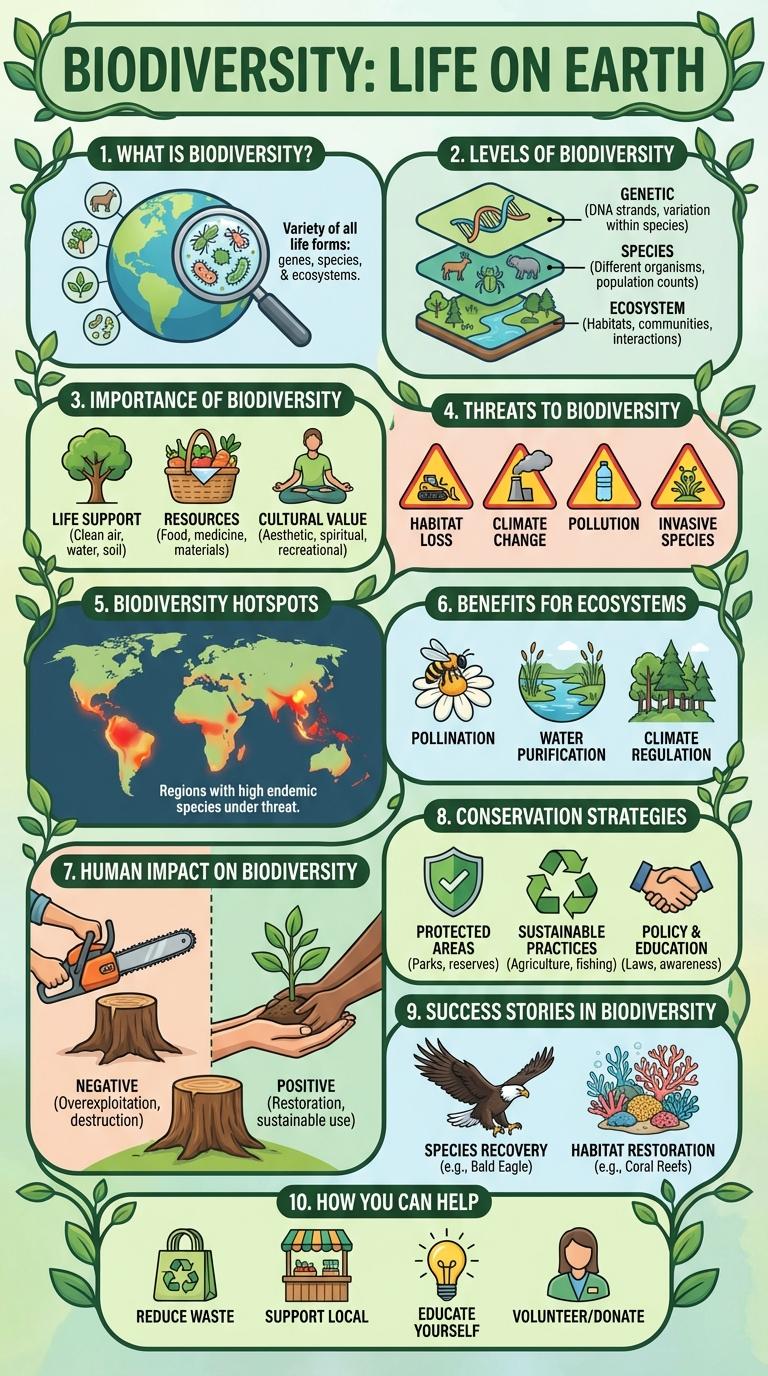
Biodiversity represents the variety of life forms on Earth, from plants and animals to microorganisms, all interacting in complex ecosystems. This infographic highlights key statistics and facts that illustrate the importance of preserving diverse species for ecological balance and human well-being. Protecting biodiversity supports vital processes such as pollination, climate regulation, and natural resource sustainability.
What is Biodiversity?
Biodiversity refers to the variety of all living organisms on Earth, including plants, animals, fungi, and microorganisms. It encompasses genetic, species, and ecosystem diversity across different environments.
- Genetic Diversity - Variation within species that enables adaptation to changing environments.
- Species Diversity - The range and abundance of different species in an ecosystem.
- Ecosystem Diversity - Different habitats and ecological processes supporting life on Earth.
Biodiversity is essential for ecosystem resilience, human well-being, and maintaining the balance of nature.
Levels of Biodiversity
Biodiversity encompasses three primary levels: genetic diversity, species diversity, and ecosystem diversity. Genetic diversity refers to the variation of genes within a species, essential for adaptation and survival. Species diversity involves the number and abundance of different species in a region, while ecosystem diversity covers the variety of habitats and ecological processes present on Earth.
Importance of Biodiversity
Biodiversity encompasses the variety of all living organisms on Earth, including plants, animals, and microorganisms. It plays a critical role in maintaining ecosystem balance and resilience.
Biodiversity supports essential ecosystem services such as pollination, water purification, and nutrient cycling. It ensures food security by contributing to crop diversity and genetic resources. Protecting biodiversity helps mitigate climate change and sustains livelihoods globally.
Threats to Biodiversity
Biodiversity faces numerous threats that jeopardize ecosystems and species survival globally. Understanding these threats is essential for conservation efforts and maintaining ecological balance.
The main threats to biodiversity include habitat loss, pollution, invasive species, overexploitation, and climate change.
- Habitat Loss - Destruction of natural habitats due to agriculture, urbanization, and deforestation reduces living spaces for many species.
- Pollution - Chemicals, plastics, and waste contaminate air, water, and soil, harming flora and fauna.
- Invasive Species - Non-native species disrupt ecosystems by outcompeting or preying on native species.
- Overexploitation - Excessive hunting, fishing, and harvesting deplete populations faster than they can recover.
- Climate Change - Altered temperature and weather patterns affect species distribution, reproduction, and habitat conditions.
Biodiversity Hotspots
Biodiversity hotspots are regions with exceptional levels of endemic species facing significant habitat loss. These areas hold a large portion of the world's biological diversity and are critical for conservation efforts.
- Definition and Criteria - Biodiversity hotspots are defined by having at least 1,500 endemic vascular plants and losing over 70% of their original habitat.
- Global Hotspots - There are 36 recognized biodiversity hotspots worldwide, including the Amazon Rainforest, Madagascar, and the Western Ghats in India.
- Conservation Priority - Protecting hotspots is essential for preserving global biodiversity, supporting ecosystem services, and combating climate change effects.
Benefits for Ecosystems
Biodiversity enhances ecosystem productivity and stability by supporting a wide variety of organisms that perform critical ecological functions. Diverse species contribute to nutrient cycling, soil formation, and water purification, which maintain ecosystem health.
Rich biodiversity also improves resilience against environmental stressors such as climate change and invasive species. Healthy ecosystems provide essential services like pollination, carbon sequestration, and habitat for wildlife, benefiting humans and nature alike.
Human Impact on Biodiversity
How does human activity affect biodiversity worldwide? Human activities such as deforestation, pollution, and urbanization lead to habitat loss and species extinction. These actions disrupt ecosystems and reduce the variety of plant and animal life on Earth.
Conservation Strategies
Conservation strategies are essential to preserving biodiversity and maintaining ecosystem health. These strategies include habitat protection, restoration, and sustainable resource management to ensure species survival.
Protected areas like national parks and wildlife reserves play a crucial role in conserving habitats and reducing human impact. Community-based conservation engages local populations in preserving natural resources and promoting biodiversity-friendly practices.
Success Stories in Biodiversity
Success stories in biodiversity showcase the remarkable recovery of endangered species and thriving ecosystems worldwide. Conservation efforts such as habitat restoration, anti-poaching laws, and community engagement have led to population rebounds in species like the giant panda and humpback whale. These achievements demonstrate the positive impact of coordinated global actions on preserving Earth's biological diversity.