
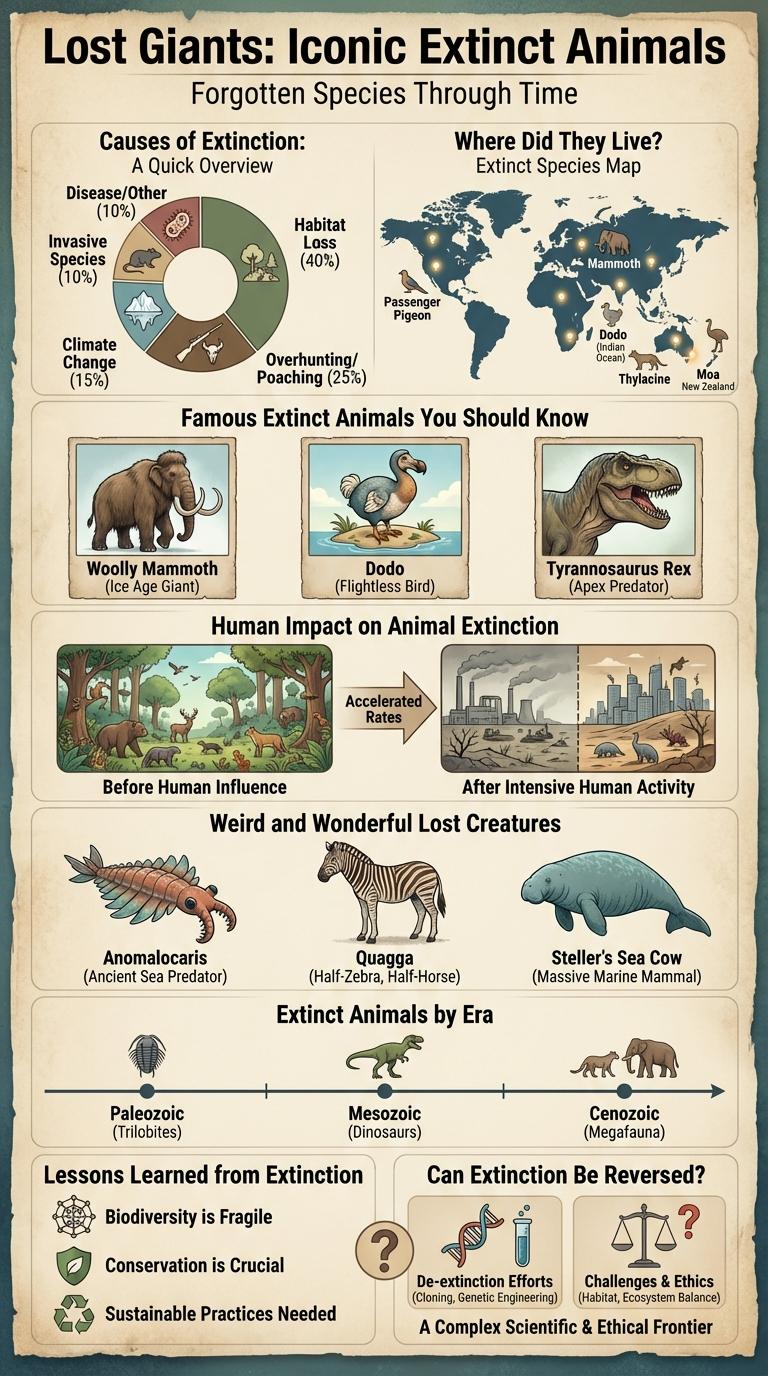
Infographics about extinct animals visually highlight the species that have disappeared from our planet, emphasizing the urgent need for conservation. They provide key information on causes of extinction, historical timelines, and the impact of human activities. Understanding these patterns helps raise awareness and inspire efforts to protect endangered wildlife today.
Lost Giants: Iconic Extinct Animals
Lost giants once roamed the Earth, showcasing the incredible diversity of prehistoric life. These iconic extinct animals captivate scientists and nature enthusiasts alike due to their massive sizes and unique adaptations.
The woolly mammoth, giant ground sloth, dodo bird, and saber-toothed tiger are among the most famous lost giants. Their extinction highlights the impact of climate change and human activity on megafauna survival.
Forgotten Species Through Time
Extinct animals represent species that have completely disappeared from Earth due to natural events or human activities. Forgotten species through time highlight the loss of biodiversity and the impact on ecosystems. Understanding these extinct animals helps emphasize the importance of conservation efforts today.
Causes of Extinction: A Quick Overview
Extinction of animals occurs due to a variety of environmental and human-induced factors. Key causes include habitat destruction, climate change, overhunting, and invasive species introduction.
Habitat loss from deforestation and urbanization reduces the natural living space for many species. Climate change alters ecosystems, making survival challenging for some animals.
Where Did They Live? Extinct Species Map
Extinct animals once roamed diverse ecosystems across the globe, from dense rainforests to vast savannas. An infographic titled "Extinct Species Map" visually presents the historical habitats of these species.
The map highlights regions where iconic extinct animals, such as the dodo of Mauritius, the Tasmanian tiger of Australia, and the woolly mammoth across North America and Eurasia, lived. It provides insight into the geographical spread and environmental conditions that supported these species. Understanding their locations helps in studying extinction causes and preserving current biodiversity.
Famous Extinct Animals You Should Know
| Extinct Animal | Key Facts |
|---|---|
| Dodo | Flightless bird from Mauritius, extinct since late 1600s due to human activity and invasive species |
| Woolly Mammoth | Large elephant relative, lived during Ice Age, extinct around 4,000 years ago from climate change and hunting |
| Passenger Pigeon | Once the most abundant bird in North America, extinct by early 20th century due to overhunting and habitat loss |
| Tasmanian Tiger (Thylacine) | Carnivorous marsupial from Australia and Tasmania, extinct since 1936 because of hunting and disease |
| Great Auk | Large, flightless seabird from North Atlantic, extinct in mid-19th century due to overhunting for feathers and food |
Human Impact on Animal Extinction
Human activities have significantly accelerated animal extinction rates through habitat destruction, pollution, and overhunting. Deforestation and urbanization eliminate crucial wildlife habitats, forcing species into smaller, fragmented areas. Poaching and climate change further threaten biodiversity, driving numerous animals to extinction at an unprecedented pace.
Weird and Wonderful Lost Creatures
What are some of the weirdest and most wonderful extinct animals that once roamed the Earth?
Extinct animals offer a fascinating glimpse into the planet's diverse past. Below are some unique creatures that once thrived but are now lost to history.
| Creature | Interesting Fact |
|---|---|
| Moa | Giant flightless birds from New Zealand that grew up to 12 feet tall. |
| Dodo | Flightless bird from Mauritius, famously extinct since the 17th century. |
| Giant Ground Sloth | Enormous prehistoric mammals that could reach the size of an elephant. |
| Thylacine | Also known as the Tasmanian tiger, a carnivorous marsupial extinct in the 20th century. |
| Woolly Mammoth | Large, elephant-like mammals adapted to cold environments during the Ice Age. |
Extinct Animals by Era
Extinct animals provide critical insights into Earth's changing ecosystems across different eras. Understanding their timeline helps reveal evolutionary patterns and environmental shifts throughout history.
- Triassic Era Extinctions - Giant amphibians and early reptiles vanished due to massive volcanic activity and climate change.
- Jurassic Era Extinctions - Many marine species, including large ichthyosaurs, disappeared as ocean habitats evolved.
- Cretaceous Era Extinctions - Iconic dinosaurs like Tyrannosaurus rex went extinct following an asteroid impact and volcanic disturbances.
Lessons Learned from Extinction
Extinct animals reveal critical insights into biodiversity loss and ecosystem imbalance. Understanding these lessons helps prevent future extinctions and promotes conservation efforts.
- Habitat Preservation is Crucial - Many extinctions occurred due to habitat destruction, emphasizing the need to protect natural environments.
- Human Impact Drives Extinction - Overhunting and pollution significantly contributed to species loss, highlighting responsible human behavior.
- Biodiversity Supports Ecosystem Stability - Loss of species weakens ecosystems, showing the importance of maintaining diverse animal populations.