
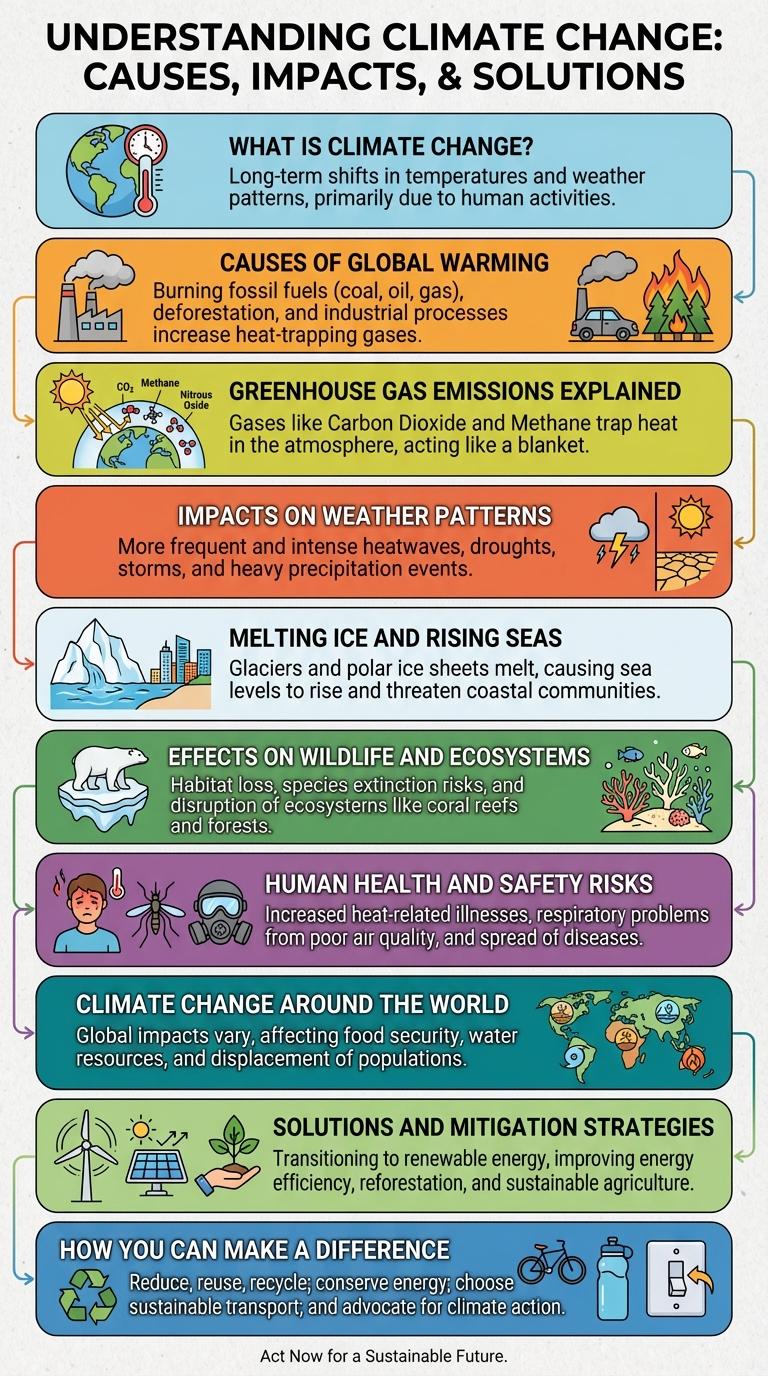
Climate change accelerates global shifts in temperature, weather patterns, and sea levels, impacting ecosystems and human communities. This infographic visually presents key data and trends to enhance understanding of the causes, effects, and urgent need for action. Clear visuals help convey complex information, promoting awareness and inspiring sustainable practices worldwide.
What Is Climate Change?
What is climate change?
Climate change refers to significant, long-term changes in the Earth's climate patterns, especially temperatures and weather conditions. It is mainly driven by human activities like burning fossil fuels, deforestation, and industrial processes.
Causes of Global Warming
Global warming primarily results from the increased concentration of greenhouse gases in the Earth's atmosphere. Carbon dioxide, methane, and nitrous oxide trap heat, leading to a rise in global temperatures.
Human activities such as burning fossil fuels, deforestation, and industrial processes are the main contributors to greenhouse gas emissions. Agricultural practices and waste management also release significant amounts of methane and nitrous oxide.
Greenhouse Gas Emissions Explained
Greenhouse gas emissions are the primary drivers of global climate change. These gases trap heat in the Earth's atmosphere, leading to rising temperatures and altered weather patterns.
- Carbon Dioxide (CO2) - Emitted mainly from burning fossil fuels, it accounts for the largest share of global greenhouse gas emissions.
- Methane (CH4) - Released during agriculture, livestock digestion, and natural gas production, methane is significantly more potent than CO2 over a short period.
- Nitrous Oxide (N2O) - Produced by agricultural activities and industrial processes, it has a high global warming potential.
- Fluorinated Gases - Synthetic gases used in refrigeration and industrial applications, these have a strong heat-trapping ability despite lower quantities.
- Deforestation Impact - Removes carbon sinks and increases CO2 levels, exacerbating the greenhouse effect.
Understanding the sources and impacts of greenhouse gases is essential for effective climate change mitigation strategies.
Impacts on Weather Patterns
Climate change intensifies weather patterns, leading to increased frequency and severity of extreme events such as hurricanes, droughts, and heavy rainfall. Rising global temperatures disrupt atmospheric circulation, altering precipitation distribution and causing unpredictable seasonal shifts. These changes impact ecosystems, agriculture, and human communities by increasing vulnerability to natural disasters and resource scarcity.
Melting Ice and Rising Seas
| Aspect | Data & Impact |
|---|---|
| Global Ice Loss | Since 1994, Earth has lost over 28 trillion tons of ice, primarily from Greenland and Antarctica. |
| Sea Level Rise | The global sea level has risen by approximately 8-9 inches (21-24 cm) since 1880, with about one-third of that occurring in the past 25 years. |
| Greenland Ice Sheet | Melting rate has increased six-fold in recent decades, contributing significantly to sea level rise. |
| Antarctic Ice Sheet | Mass loss increased from 40 billion tons per year in the 1980s to over 250 billion tons per year currently. |
| Impact on Coastal Areas | Rising seas threaten over 200 million people worldwide, causing flooding, erosion, and habitat loss. |
Effects on Wildlife and Ecosystems
Climate change significantly disrupts wildlife habitats and alters ecosystem dynamics. Rising temperatures and shifting weather patterns force species to migrate, adapt, or face extinction.
Coral reefs experience severe bleaching due to ocean warming, endangering marine biodiversity. Forests suffer from increased droughts and wildfires, reducing habitat quality and biodiversity.
Human Health and Safety Risks
Climate change significantly impacts human health by increasing heat-related illnesses and worsening air quality. Rising temperatures contribute to the spread of vector-borne diseases such as malaria and dengue fever. Extreme weather events, including hurricanes and floods, pose direct risks to safety, causing injuries and disrupting healthcare services.
Climate Change Around the World
Climate change impacts every region of the globe, causing shifts in weather patterns, rising sea levels, and increased frequency of extreme events. These changes threaten ecosystems, human health, and economies worldwide.
Polar regions experience accelerated ice melt, contributing to global sea level rise. Tropical areas face intensified storms and droughts, disrupting agriculture and water supplies. Urban centers encounter heatwaves that increase energy demand and health risks.
Solutions and Mitigation Strategies
Climate change poses severe risks to global ecosystems and human health, but effective solutions and mitigation strategies can significantly reduce its impacts. Implementing sustainable practices and transitioning to renewable energy are critical steps toward a resilient future.
- Renewable Energy Adoption - Switching to solar, wind, and hydro power reduces greenhouse gas emissions and dependence on fossil fuels.
- Energy Efficiency Improvements - Enhancing insulation, upgrading appliances, and optimizing industrial processes lowers energy consumption.
- Reforestation and Afforestation - Planting trees absorbs carbon dioxide, restoring natural carbon sinks and enhancing biodiversity.