
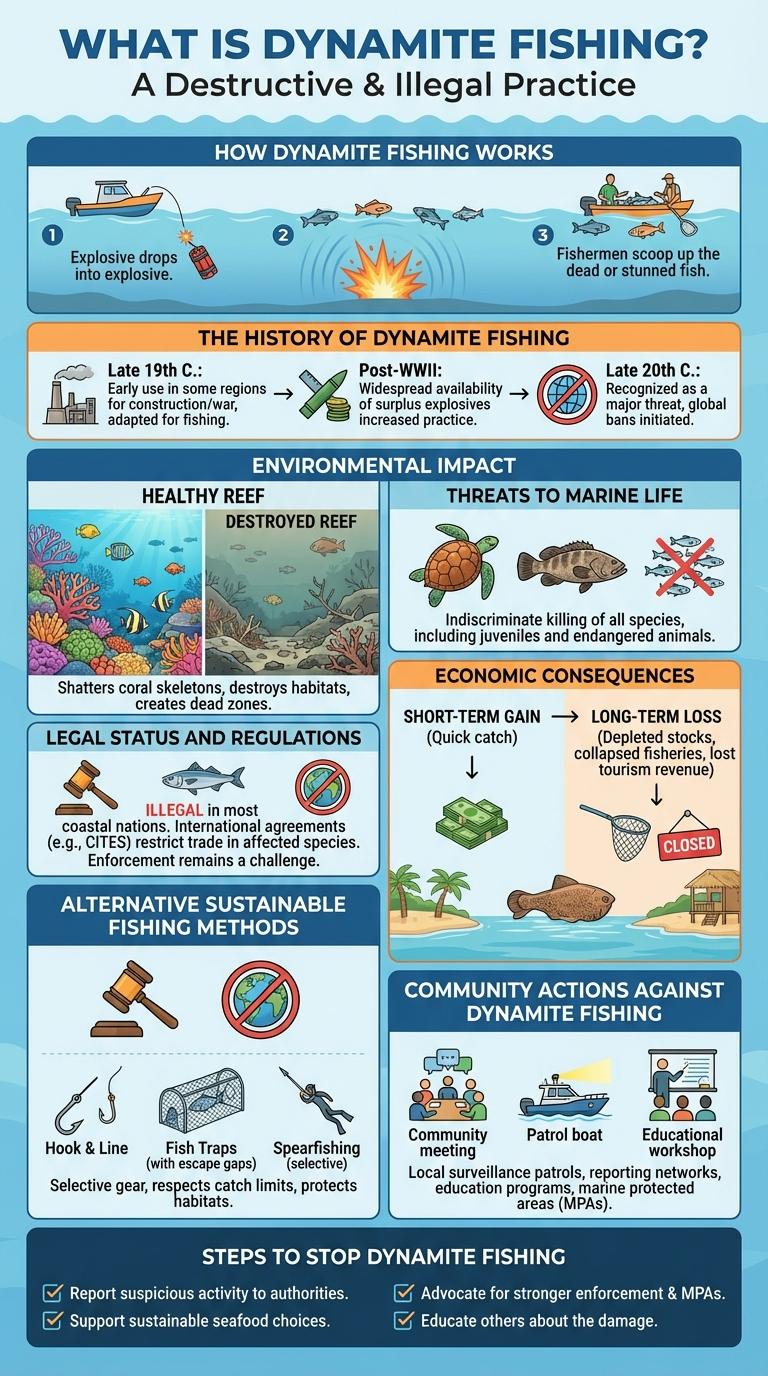
Dynamite fishing, also known as blast fishing, poses significant threats to marine ecosystems by destroying coral reefs and killing non-target species. This destructive method relies on explosives to stun or kill fish, leading to habitat loss and long-term environmental damage. Understanding the impacts and consequences of dynamite fishing is crucial for promoting sustainable fishing practices and protecting aquatic biodiversity.
What is Dynamite Fishing?
Dynamite fishing is an illegal fishing method that uses explosives to stun or kill fish for easy collection. This practice causes massive destruction to marine ecosystems, including coral reefs and fish populations.
The explosions result in significant habitat loss and decrease biodiversity in affected areas. Despite its destructive effects, dynamite fishing persists in some regions due to its immediate catch benefits.
How Dynamite Fishing Works
How does dynamite fishing work? Dynamite fishing involves detonating explosives underwater to stun or kill fish, making them easier to collect. The blast creates a shockwave that damages the fish's swim bladders, causing them to float to the surface.
The History of Dynamite Fishing
Dynamite fishing originated in the early 20th century as a method for fishermen to harvest large quantities of fish quickly. This destructive technique spread rapidly across coastal regions, especially in parts of Southeast Asia and Africa. Despite its initial effectiveness, dynamite fishing caused significant damage to marine ecosystems and fish populations, leading to widespread bans and conservation efforts.
Environmental Impact of Dynamite Fishing
Dynamite fishing causes extensive damage to marine ecosystems by destroying coral reefs and killing a wide variety of aquatic species. The explosive blasts create large underwater shockwaves that devastate habitats essential for fish breeding and growth.
Coral reefs take decades to recover from the destruction caused by dynamite fishing, severely reducing biodiversity. Fish populations plummet as juveniles and adults are indiscriminately killed, disrupting the marine food chain and local fisheries.
Threats to Marine Life
Dynamite fishing poses severe threats to marine ecosystems by destroying coral reefs and killing a variety of aquatic species. Explosions cause immediate, widespread damage that disrupts the balance of marine habitats.
The blasts kill fish indiscriminately, including juvenile and breeding individuals, leading to a decline in fish populations. Coral reefs, vital for shelter and breeding, are shattered, reducing biodiversity and habitat complexity. This destructive practice undermines the long-term sustainability of fisheries and marine life worldwide.
Economic Consequences
Dynamite fishing causes severe damage to marine ecosystems, leading to long-term economic decline in coastal communities. The practice destroys fish populations, reducing the resources available for sustainable fishing and tourism industries.
- Decline in Fish Stocks - Explosions kill large numbers of fish and destroy breeding grounds, causing a sharp decrease in fish populations over time.
- Loss of Income for Fishermen - Reduced fish availability directly impacts fishermen's earnings and the local economy dependent on fisheries.
- Negative Impact on Tourism - Damaged coral reefs and underwater environments deter tourists, decreasing tourism-related revenue.
Legal Status and Regulations
Dynamite fishing is illegal in many countries due to its destructive environmental impact and threat to marine biodiversity. Enforcement of regulations varies, with some regions imposing heavy fines and imprisonment to deter the practice.
Legal frameworks aim to protect coral reefs and fish stocks by banning explosive fishing methods and promoting sustainable alternatives.
- Global Prohibition - The United Nations and various environmental organizations advocate for worldwide bans on dynamite fishing to protect marine ecosystems.
- National Laws - Countries like Indonesia, the Philippines, and Tanzania have implemented strict laws criminalizing dynamite fishing, including severe penalties.
- Enforcement Challenges - Remote coastal regions often face difficulties in monitoring and enforcing anti-dynamite fishing laws due to limited resources.
Alternative Sustainable Fishing Methods
Dynamite fishing causes significant damage to marine ecosystems by destroying coral reefs and killing non-target species. Sustainable fishing methods such as pole-and-line fishing, fish aggregation devices (FADs), and community-managed marine protected areas help preserve biodiversity. These alternatives ensure long-term fish stock health while supporting coastal livelihoods.
Community Actions Against Dynamite Fishing
Dynamite fishing causes severe damage to marine ecosystems and threatens local fish populations. Community-led efforts have proven effective in combating this destructive practice.
- Community Patrols - Local groups organize regular monitoring to detect and report dynamite fishing activities.
- Education Campaigns - Awareness programs inform fishermen and residents about the environmental impact of blast fishing.
- Alternative Livelihoods - Communities promote sustainable fishing methods and alternative income sources to reduce dependency on dynamite fishing.
Collaborative community actions foster marine conservation and support sustainable fisheries development.