
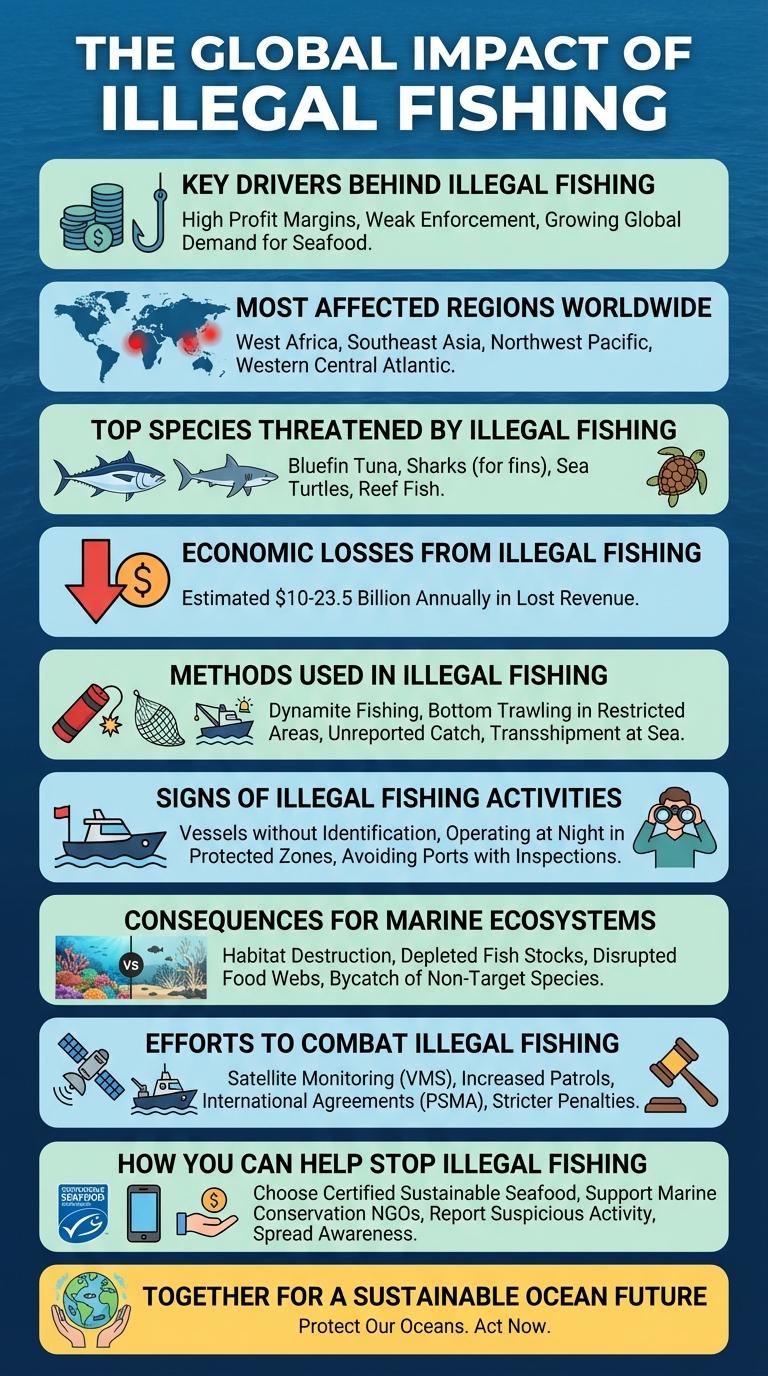
Illegal fishing depletes marine populations, disrupts ecosystems, and undermines sustainable fisheries management. This infographic illustrates the global scale of illicit activities, highlighting hotspots, common methods used, and the economic impacts on coastal communities. Strategies to combat illegal fishing involve improved monitoring, international cooperation, and stricter enforcement of maritime laws.
The Global Impact of Illegal Fishing
| Aspect | Global Impact of Illegal Fishing |
|---|---|
| Economic Loss | Illegal fishing causes estimated global losses of $10-23 billion annually, undermining legal fisheries and coastal economies. |
| Environmental Harm | Overfishing from illegal activities depletes marine biodiversity, damaging ecosystems and reducing fish population resilience. |
| Threat to Food Security | Illegal catch reduces fish availability, affecting millions of communities dependent on seafood for protein and livelihood. |
| Governance Challenges | Weak enforcement and corruption enable illegal fishing, complicating international efforts to manage and protect oceans sustainably. |
| Impact on Marine Protected Areas | Illegal fishing in marine reserves undermines conservation goals, threatening endangered species and habitat recovery. |
Key Drivers Behind Illegal Fishing
Illegal fishing poses a significant threat to global marine ecosystems and fishery sustainability. Its key drivers stem from economic, regulatory, and social factors that complicate effective management.
- Economic Incentives - High market demand for seafood and the profitability of unregulated fishing encourage illegal activities.
- Weak Enforcement - Limited surveillance and inadequate legal frameworks enable poachers to operate with low risk of detection or penalty.
- Poor Governance - Corruption and lack of coordinated policies undermine efforts to control illegal fishing across jurisdictions.
Most Affected Regions Worldwide
Illegal fishing significantly threatens marine ecosystems and local economies, especially in coastal regions. The most affected areas include Southeast Asia, West Africa, and the South Pacific, where enforcement is often limited. These regions suffer from decreased fish stocks, biodiversity loss, and economic instability due to unregulated fishing activities.
Top Species Threatened by Illegal Fishing
Illegal fishing poses a significant threat to marine biodiversity worldwide, targeting some of the most vulnerable species. These activities disrupt ecosystems and jeopardize the survival of critical fish populations.
Top species threatened by illegal fishing include Bluefin Tuna, which suffers from overexploitation due to high market demand. The Patagonian Toothfish faces severe risks as it is often illegally harvested in the Southern Ocean. Sea turtles, particularly the Loggerhead species, are also impacted by illegal fishing nets and bycatch, causing population declines.
Economic Losses from Illegal Fishing
How much economic damage does illegal fishing cause globally?
Illegal fishing results in an estimated $10 billion to $23 billion in economic losses annually worldwide. These losses impact both local economies and international seafood markets.
| Region | Estimated Annual Loss (USD) |
|---|---|
| Southeast Asia | $3 billion |
| Africa | $1.3 billion |
| South America | $2 billion |
| Europe | $1.5 billion |
| Global Total | $15 billion |
Methods Used in Illegal Fishing
Illegal fishing employs various destructive methods that harm marine ecosystems and deplete fish populations. Understanding these techniques is crucial for enforcing regulations and protecting ocean biodiversity.
- Blast Fishing - Fishermen use explosives to stun or kill fish, causing extensive damage to coral reefs and underwater habitats.
- Drift Nets - Large, non-selective nets capture unintended species, leading to high bycatch rates and ecological imbalance.
- Ghost Fishing - Abandoned or lost fishing gear continues to trap marine life, contributing to unnecessary mortality.
- Illegal Trawling - Bottom trawlers drag heavy nets across the sea floor, destroying benthic habitats and juvenile fish populations.
- Use of Toxic Substances - Chemicals such as cyanide are used to stun fish, resulting in long-term environmental contamination and the death of non-target species.
Effective monitoring and stronger enforcement are essential to reduce illegal fishing methods and safeguard marine resources.
Signs of Illegal Fishing Activities
Illegal fishing poses a serious threat to marine ecosystems and global fish stocks. Recognizing the signs of illegal fishing activities helps in early detection and prevention efforts.
Common indicators include fishing in restricted areas, using banned gear such as driftnets or explosives, and fishing during closed seasons. Other signs are vessels without proper registration, lack of identification markings, and nighttime fishing without lights.
Consequences for Marine Ecosystems
Illegal fishing disrupts marine ecosystems by depleting fish populations faster than they can reproduce. This imbalance threatens the food chain and biodiversity in oceans worldwide.
Coral reefs and seagrass beds suffer damage due to destructive fishing methods like bottom trawling. Loss of habitat further endangers marine species and reduces ecosystem resilience.
Efforts to Combat Illegal Fishing
Efforts to combat illegal fishing include international cooperation through agreements like the Port State Measures Agreement (PSMA), which aims to prevent illegally caught fish from entering global markets. Advanced technologies such as satellite tracking and electronic monitoring enhance enforcement by enabling real-time vessel monitoring and identifying suspicious activities. Stakeholders from governments, NGOs, and local communities collaborate to strengthen regulations, increase awareness, and promote sustainable fishing practices worldwide.