
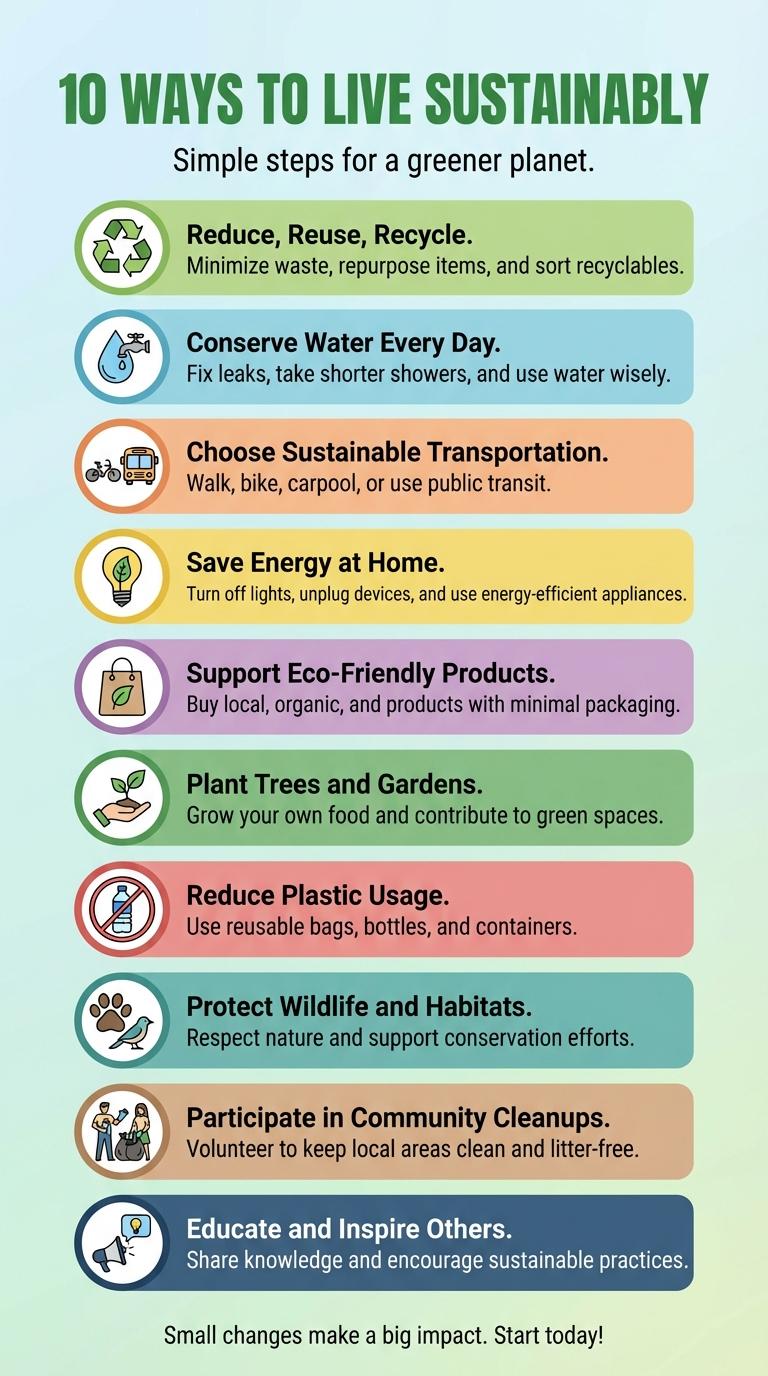
Protecting our environment requires simple, effective actions that everyone can take daily. Reducing waste, conserving water, and minimizing energy consumption are key strategies to lessen our ecological footprint. Embracing sustainable habits fosters a healthier planet for generations to come.
Reduce, Reuse, Recycle
Protecting our environment begins with simple, conscious actions. Reducing waste, reusing materials, and recycling products are key steps everyone can take.
Reduce energy consumption by minimizing the use of single-use plastics and choosing sustainable products. Reuse items like containers, bags, and clothing to extend their life and reduce landfill waste. Recycle materials such as paper, glass, and metals to conserve natural resources and lower pollution levels.
Conserve Water Every Day
| Tip | Description |
|---|---|
| Fix Leaks | Repair dripping taps and pipes to save gallons of water daily. |
| Use Water-Efficient Fixtures | Install low-flow showerheads and faucets to reduce water consumption. |
| Turn Off Taps | Shut off water while brushing teeth or washing dishes to minimize waste. |
| Collect Rainwater | Use rain barrels to gather rainwater for gardening and outdoor cleaning. |
| Water Plants Wisely | Water gardens during early morning or late evening to reduce evaporation. |
Choose Sustainable Transportation
Choosing sustainable transportation reduces carbon emissions and helps combat climate change. Walking, cycling, and using public transit are eco-friendly alternatives to driving personal vehicles.
Electric vehicles produce fewer pollutants compared to gasoline cars and contribute to cleaner air. Carpooling and ride-sharing also minimize traffic congestion and lower overall environmental impact.
Save Energy at Home
Saving energy at home reduces greenhouse gas emissions and lowers utility bills. Simple actions such as turning off lights when not in use, using energy-efficient appliances, and unplugging devices can make a significant impact. Implementing these habits helps conserve natural resources and promotes a healthier environment.
Support Eco-Friendly Products
Supporting eco-friendly products helps reduce pollution and conserve natural resources. Choosing sustainable items promotes a healthier planet for future generations.
- Buy Products with Recycled Materials - These reduce waste by reusing existing resources, minimizing landfill impact.
- Choose Biodegradable Packaging - This packaging breaks down naturally, preventing long-term environmental harm.
- Support Local Eco-Friendly Brands - Local companies often have smaller carbon footprints from reduced transportation.
Plant Trees and Gardens
Planting trees and gardens plays a vital role in protecting our environment by enhancing air quality and supporting biodiversity. These green spaces contribute to carbon sequestration and provide habitats for various wildlife species.
- Increase Oxygen Levels - Trees absorb carbon dioxide and release oxygen, improving air quality for all living beings.
- Prevent Soil Erosion - Roots of plants stabilize soil, reducing erosion and maintaining fertile land.
- Support Wildlife Habitats - Gardens and trees provide shelter and food sources for birds, insects, and other animals.
Reduce Plastic Usage
Reducing plastic usage significantly decreases pollution in oceans and landfills. Single-use plastics are a major contributor to environmental degradation worldwide.
Switching to reusable bags, bottles, and containers helps minimize plastic waste. Choosing biodegradable or natural alternatives supports a healthier planet.
Protect Wildlife and Habitats
How can we protect wildlife and habitats effectively? Conserving natural habitats preserves biodiversity and ensures ecosystem balance. Supporting wildlife protection programs helps prevent species extinction and promotes ecological health.
Participate in Community Cleanups
Participate in community cleanups to reduce litter and prevent pollution in local areas. Engaging in these events helps protect wildlife habitats and preserves natural beauty. Joining cleanup efforts fosters environmental awareness and strengthens community bonds.