
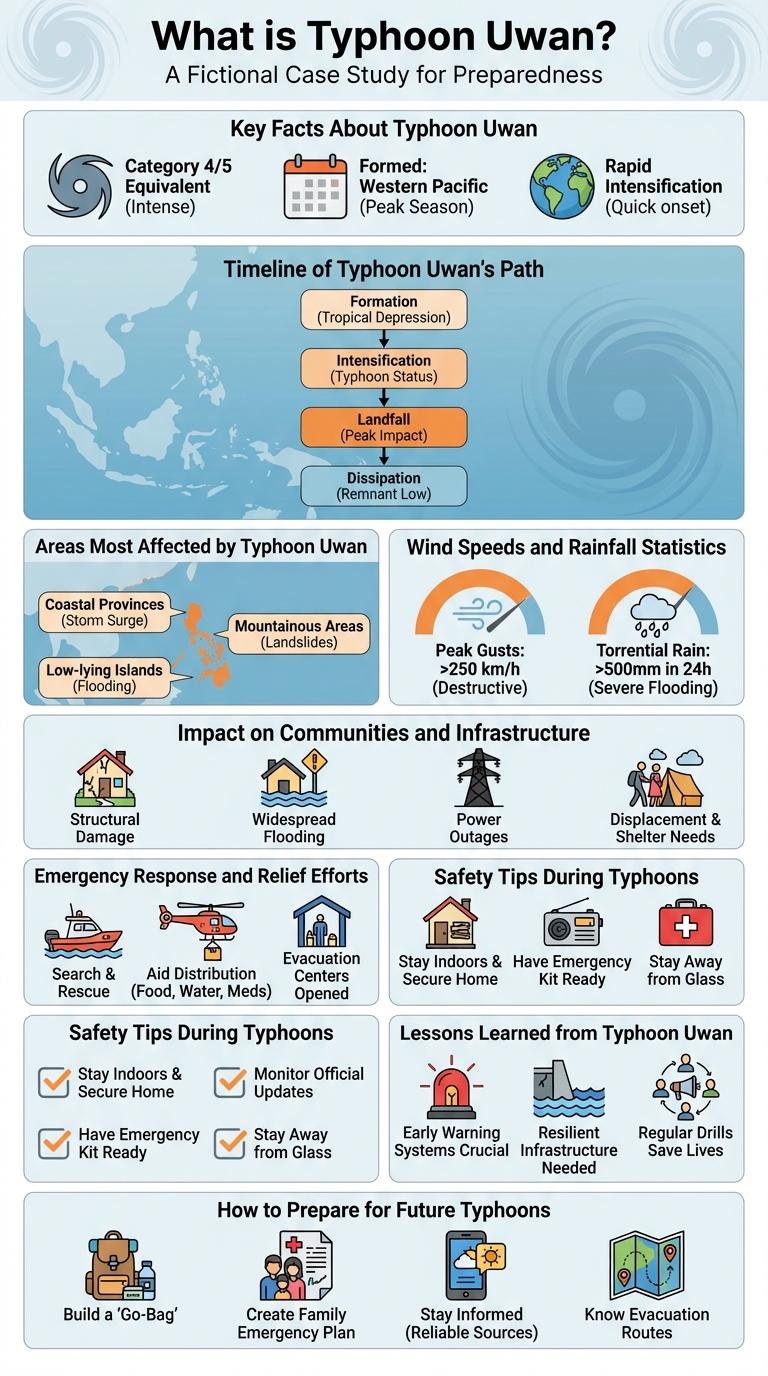
Typhoon Uwan brought intense winds and heavy rainfall, causing significant disruptions across affected regions. This infographic highlights key data including storm path, wind speeds, rainfall amounts, and emergency responses. Residents and authorities can use this information to better understand the storm's impact and improve future preparedness efforts.
What is Typhoon Uwan?
Typhoon Uwan was a significant tropical cyclone that impacted East Asia in September 2015. It brought intense rainfall and strong winds, causing considerable damage in affected regions.
- Formation - Typhoon Uwan developed in the Western Pacific Ocean near the Philippines in early September 2015.
- Intensity - It reached Category 1 typhoon status with sustained winds of up to 75 mph (120 km/h).
- Impact - The typhoon caused severe flooding and landslides, especially across parts of Japan and South Korea.
Typhoon Uwan serves as a reminder of the destructive power of tropical cyclones in the Pacific region.
Key Facts About Typhoon Uwan
Typhoon Uwan was a powerful tropical cyclone that impacted Southeast Asia in 2022. It caused significant damage due to heavy rainfall and strong winds, leading to widespread evacuations and infrastructure damage.
- Formation Date - Typhoon Uwan formed on September 12, 2022, in the western Pacific Ocean.
- Peak Intensity - Uwan reached peak sustained winds of 140 km/h (87 mph) with a minimum pressure of 960 hPa.
- Areas Affected - The typhoon primarily affected the Philippines, Taiwan, and parts of southeastern China.
Timeline of Typhoon Uwan's Path
Typhoon Uwan formed in the western Pacific Ocean and began intensifying as it moved northwestward. It made landfall in the Philippines, causing heavy rainfall and strong winds. The storm then continued toward Taiwan before dissipating over the East China Sea.
Areas Most Affected by Typhoon Uwan
Which areas were most affected by Typhoon Uwan? Typhoon Uwan caused significant damage in the northern Philippines, particularly in the Ilocos and Cagayan Valley regions. Heavy rains and strong winds led to flooding and landslides, impacting thousands of residents in these areas.
| Region | Impact |
|---|---|
| Ilocos Region | Severe flooding and damaged infrastructure |
| Cagayan Valley | Landslides and widespread power outages |
| Central Luzon | Flooded farmlands and disrupted transportation |
| Metro Manila | Localized flooding and traffic disruptions |
| Bicol Region | Strong winds causing uprooted trees and fallen power lines |
Wind Speeds and Rainfall Statistics
Typhoon Uwan exhibited powerful wind speeds reaching up to 150 km/h, significantly impacting affected regions. The storm's intense winds caused widespread damage to infrastructure and vegetation.
Rainfall associated with Typhoon Uwan totaled over 500 mm in certain areas, leading to severe flooding and landslides. The heavy precipitation was recorded over a 48-hour period, overwhelming drainage systems. Emergency services responded promptly to mitigate the impact on communities.
Impact on Communities and Infrastructure
Typhoon Uwan caused widespread damage to communities and critical infrastructure, severely affecting daily life and economic activities. The storm's high winds and heavy rainfall resulted in significant flooding, power outages, and structural damages.
- Flooding in Residential Areas - Thousands of homes were submerged, displacing families and disrupting local services.
- Power Outages - Electrical grids were damaged, leading to prolonged blackouts in affected regions.
- Transportation Disruptions - Roads and bridges were washed out or blocked by debris, hindering emergency response and supply chains.
Emergency Response and Relief Efforts
Typhoon Uwan triggered extensive emergency response efforts across affected regions, mobilizing over 5,000 personnel including rescue teams, medical units, and local government agencies. Immediate actions focused on evacuation, search and rescue, and establishment of temporary shelters for displaced families.
Relief organizations distributed essential supplies such as food, clean water, and medical aid to more than 50,000 individuals. Coordination between national agencies and international partners ensured efficient delivery of resources and continuous monitoring of affected areas for ongoing support needs.
Safety Tips During Typhoons
Typhoon Uwan can bring severe winds, heavy rainfall, and flooding, posing significant risks to safety. Stay indoors, avoid low-lying areas prone to flooding, and secure loose objects outside your home. Always monitor official weather updates and have an emergency kit ready for evacuation if necessary.
Lessons Learned from Typhoon Uwan
Typhoon Uwan demonstrated the critical need for improved early warning systems and community preparedness to minimize damage and casualties. Real-time weather updates and clear evacuation protocols proved essential in managing the storm's impact.
Infrastructure resilience revealed vulnerabilities, emphasizing the importance of stronger building standards and flood control measures. Collaborative disaster response among government agencies, local communities, and aid organizations enhanced recovery efforts.