
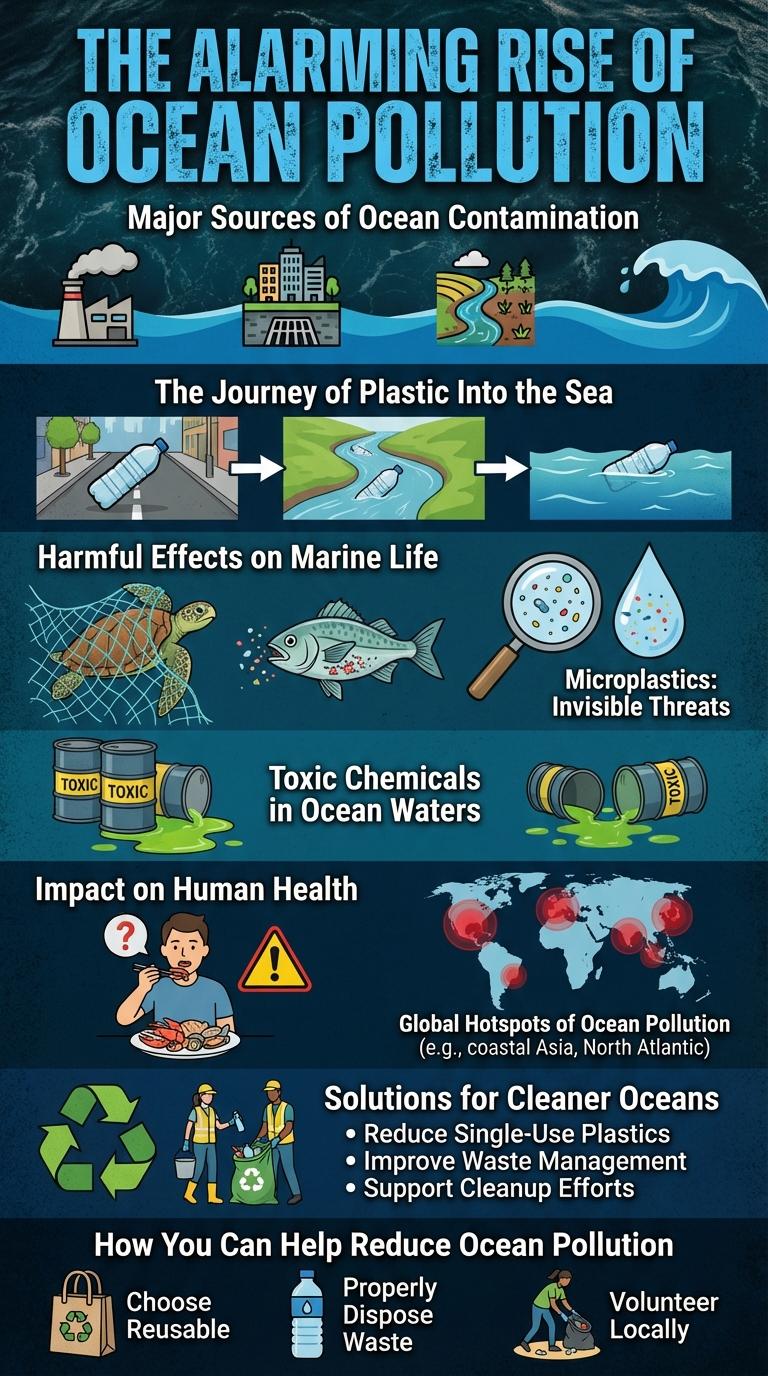
Ocean pollution severely threatens marine ecosystems, contaminating water with plastics, chemicals, and waste that harm wildlife and disrupt natural habitats. Visualizing these impacts through an infographic highlights the sources, consequences, and scale of pollution in a clear and compelling way. This essential tool raises awareness and promotes actions to protect our oceans for future generations.
The Alarming Rise of Ocean Pollution
Ocean pollution has surged dramatically over recent decades, threatening marine ecosystems worldwide. Toxic waste, plastics, and chemical runoffs are the primary contributors to this escalating crisis.
- Plastic Waste Overload - Over 8 million tons of plastic enter oceans annually, harming marine life and habitats.
- Chemical Contaminants - Industrial chemicals and pesticides disrupt aquatic food chains and water quality.
- Oil Spills and Petroleum Waste - Frequent spills release harmful hydrocarbons that poison ocean waters and shorelines.
Major Sources of Ocean Contamination
Ocean pollution primarily stems from sources such as plastic waste, oil spills, and agricultural runoff. These contaminants introduce harmful chemicals and debris into marine ecosystems, threatening aquatic life and biodiversity. Industrial discharge and untreated sewage also significantly contribute to the degradation of ocean water quality.
The Journey of Plastic Into the Sea
| Stage | Description |
|---|---|
| Plastic Production | Billion tons of plastic are manufactured yearly worldwide, much used in packaging and single-use items. |
| Improper Disposal | Littering and lack of effective waste management lead to plastic accumulating in streets and waterways. |
| Runoff to Rivers | Stormwater carries plastic debris from urban areas into rivers, which transport waste toward oceans. |
| Entry Into the Ocean | Millions of tons of plastic enter oceans annually, forming large garbage patches and harming marine life. |
| Breakdown and Impact | Plastic fragments degrade slowly into microplastics, infiltrating the marine food chain and ecosystems. |
Harmful Effects on Marine Life
Ocean pollution severely impacts marine ecosystems, disrupting the balance of aquatic life. Toxic substances and debris cause widespread harm to diverse species inhabiting the oceans.
- Plastic Ingestion - Marine animals often mistake plastic debris for food, leading to digestive blockages and starvation.
- Chemical Contamination - Pollutants like heavy metals and pesticides accumulate in marine organisms, causing toxicity and reproductive failure.
- Habitat Destruction - Pollution damages critical habitats such as coral reefs and seagrass beds, reducing biodiversity and shelter.
Microplastics: Invisible Threats
What are microplastics and why do they pose a hidden danger to our oceans?
Microplastics are tiny plastic particles smaller than 5 millimeters that result from the breakdown of larger plastic debris. These invisible pollutants infiltrate marine ecosystems, harming wildlife and entering the food chain.
Toxic Chemicals in Ocean Waters
Ocean pollution from toxic chemicals poses a severe threat to marine ecosystems and human health. These pollutants include heavy metals, pesticides, and industrial waste that contaminate ocean waters globally.
Heavy metals like mercury and lead accumulate in marine organisms, disrupting food chains and harming wildlife. Pesticides and industrial chemicals cause coral bleaching and reduce biodiversity in affected areas.
Impact on Human Health
Ocean pollution poses significant risks to human health by contaminating seafood and water sources. Toxic substances from marine debris and chemical runoff enter the human body through consumption and direct contact.
- Bioaccumulation of Toxins - Harmful chemicals like mercury and PCBs concentrate in seafood, increasing human exposure to neurotoxins.
- Pathogen Transmission - Polluted waters harbor bacteria and viruses that cause illnesses such as gastroenteritis and skin infections.
- Microplastic Ingestion - Microplastics in fish and shellfish can transfer pollutants, potentially disrupting hormonal and immune systems.
Protecting ocean health is essential for safeguarding human well-being and preventing disease linked to environmental contamination.
Global Hotspots of Ocean Pollution
Ocean pollution poses a significant threat to marine ecosystems worldwide. Identifying global hotspots helps prioritize conservation efforts and reduce environmental damage.
Major pollution hotspots include the North Pacific Gyre, known as the Great Pacific Garbage Patch, where plastic debris accumulates extensively. The Mediterranean Sea experiences high levels of chemical and sewage pollution due to dense coastal populations. The Bay of Bengal faces industrial runoff and plastic waste, impacting marine biodiversity and local fisheries.
Solutions for Cleaner Oceans
Ocean pollution threatens marine ecosystems, but effective solutions can restore health and balance. Reducing plastic waste through recycling and biodegradable materials significantly lowers pollution levels. Supporting sustainable fishing and enforcing strict regulations help protect ocean biodiversity and promote cleaner waters.