
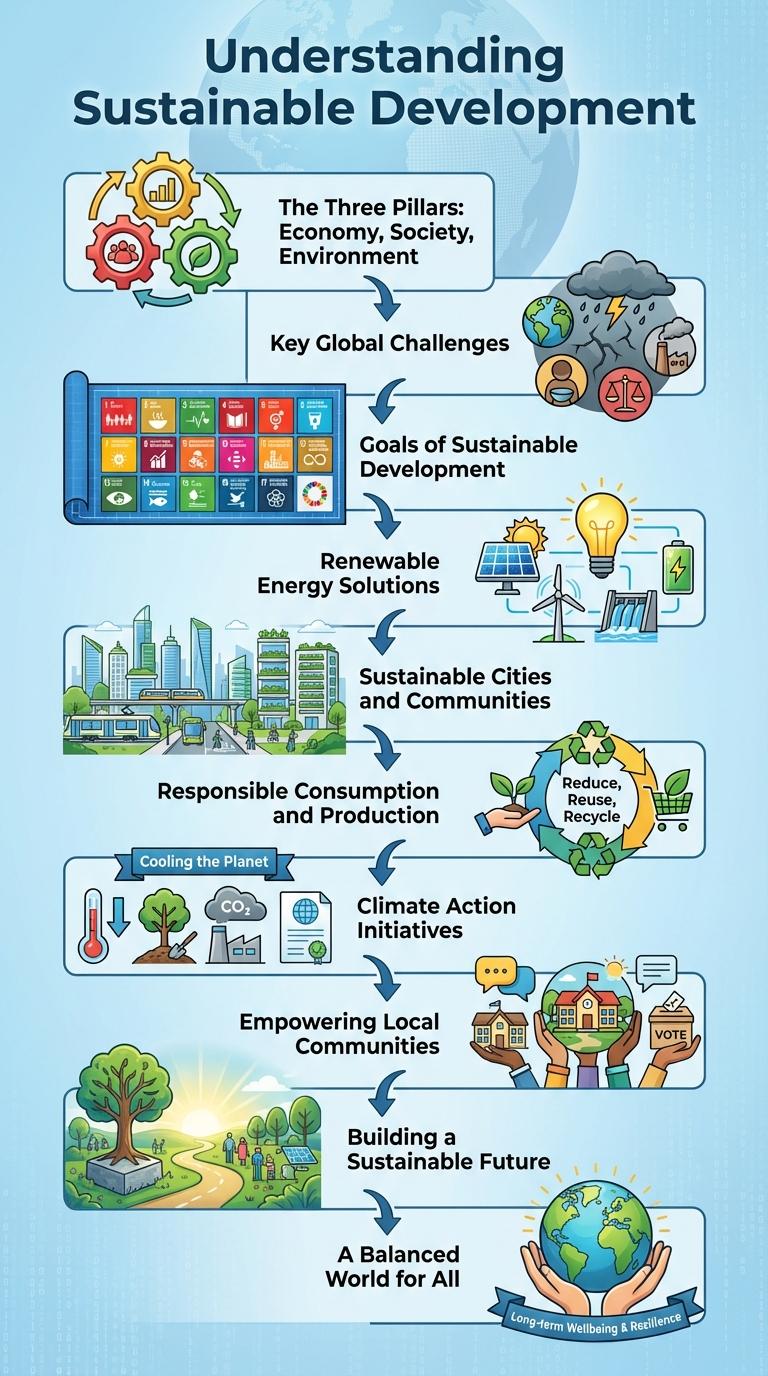
Sustainable development balances economic growth, environmental protection, and social equity to meet present needs without compromising future generations. Infographics visually simplify complex data, making sustainable development goals and strategies more accessible and engaging. This approach enhances understanding and promotes informed decision-making for a greener, more equitable future.
Understanding Sustainable Development
Sustainable development is a holistic approach that meets present needs without compromising the ability of future generations to meet theirs. It integrates economic growth, social inclusion, and environmental protection.
The concept emphasizes long-term strategies that balance resource use, equity, and ecological health. Understanding sustainable development is essential for creating resilient communities and preserving biodiversity.
The Three Pillars: Economy, Society, Environment
Sustainable development is grounded in three interconnected pillars: Economy, Society, and Environment. The economic pillar emphasizes responsible growth that promotes long-term financial stability and resource efficiency. The social pillar focuses on equity, community well-being, and improved quality of life, while the environmental pillar ensures the protection and preservation of natural ecosystems for future generations.
Key Global Challenges
Sustainable development addresses critical global challenges that impact the environment, economy, and society. Identifying these key challenges is essential for effective policy and action.
Global issues demand coordinated efforts for a sustainable future.
- Climate Change - Rising global temperatures cause extreme weather events and threaten ecosystems.
- Poverty and Inequality - Widespread poverty limits access to basic resources and opportunities for many populations.
- Resource Depletion - Overconsumption of natural resources leads to scarcity and environmental degradation.
Goals of Sustainable Development
What are the primary goals of sustainable development? Sustainable development aims to meet the needs of the present without compromising the ability of future generations to meet their own needs. It focuses on balancing economic growth, social inclusion, and environmental protection.
How many goals are set for sustainable development? There are 17 Sustainable Development Goals (SDGs) established by the United Nations in 2015. These goals provide a global blueprint to achieve a better and more sustainable future.
What key areas do these goals address? The SDGs cover areas such as poverty eradication, quality education, clean water, and climate action. Each goal targets specific challenges to ensure holistic progress worldwide.
| Goal | Description |
|---|---|
| No Poverty | End poverty in all its forms everywhere |
| Quality Education | Ensure inclusive and equitable quality education |
| Clean Water | Ensure availability and sustainable management of water and sanitation |
| Climate Action | Take urgent action to combat climate change and its impacts |
| Affordable Energy | Ensure access to affordable, reliable, sustainable energy |
Why is global partnership important for these goals? Collaboration between governments, private sector, and civil society accelerates progress towards achieving the SDGs. Partnership mobilizes resources, expertise, and innovations essential for sustainable development.
Renewable Energy Solutions
Renewable energy solutions play a crucial role in sustainable development by reducing carbon emissions and relying on natural resources like solar, wind, and hydro power. These technologies offer long-term economic benefits through job creation and energy cost savings. Increasing global investment in renewable energy directly supports environmental protection and energy security worldwide.
Sustainable Cities and Communities
Sustainable Cities and Communities aim to create urban spaces that are inclusive, safe, resilient, and environmentally sustainable. This goal supports the well-being of current and future generations through effective resource management and social equity.
- Urban Green Spaces - Integrating parks and natural areas improves air quality and community health.
- Affordable Housing - Ensuring access to affordable living options reduces homelessness and supports diverse populations.
- Efficient Public Transport - Promoting clean and accessible transit lowers carbon emissions and traffic congestion.
Fostering sustainable cities enhances quality of life while addressing climate change and social challenges.
Responsible Consumption and Production
Responsible Consumption and Production is a key goal within sustainable development, aiming to minimize resource use and waste. Prioritizing efficient production processes ensures environmental protection and long-term economic growth.
Adopting sustainable consumption habits reduces the ecological footprint and conserves natural resources.
- Resource Efficiency - Utilizing materials and energy more efficiently lowers environmental impact and production costs.
- Waste Reduction - Implementing recycling and reuse strategies decreases landfill volume and pollution levels.
- Eco-friendly Products - Designing products with sustainability in mind supports sustainable markets and consumer health.
Climate Action Initiatives
Climate action initiatives address the urgent need to reduce greenhouse gas emissions and limit global warming. These efforts include renewable energy adoption, energy efficiency improvements, and reforestation projects.
Governments and organizations invest in climate resilience strategies to protect ecosystems and vulnerable communities. Innovations like carbon capture technology and sustainable transportation contribute to long-term environmental sustainability.
Empowering Local Communities
Empowering local communities is essential for achieving sustainable development goals. It fosters self-reliance and enhances the ability to manage natural resources effectively.
Local communities possess unique knowledge crucial for sustainable practices. Providing access to education, technology, and financial resources strengthens their capacity to innovate. Inclusive participation in decision-making leads to more resilient and adaptive development solutions.