
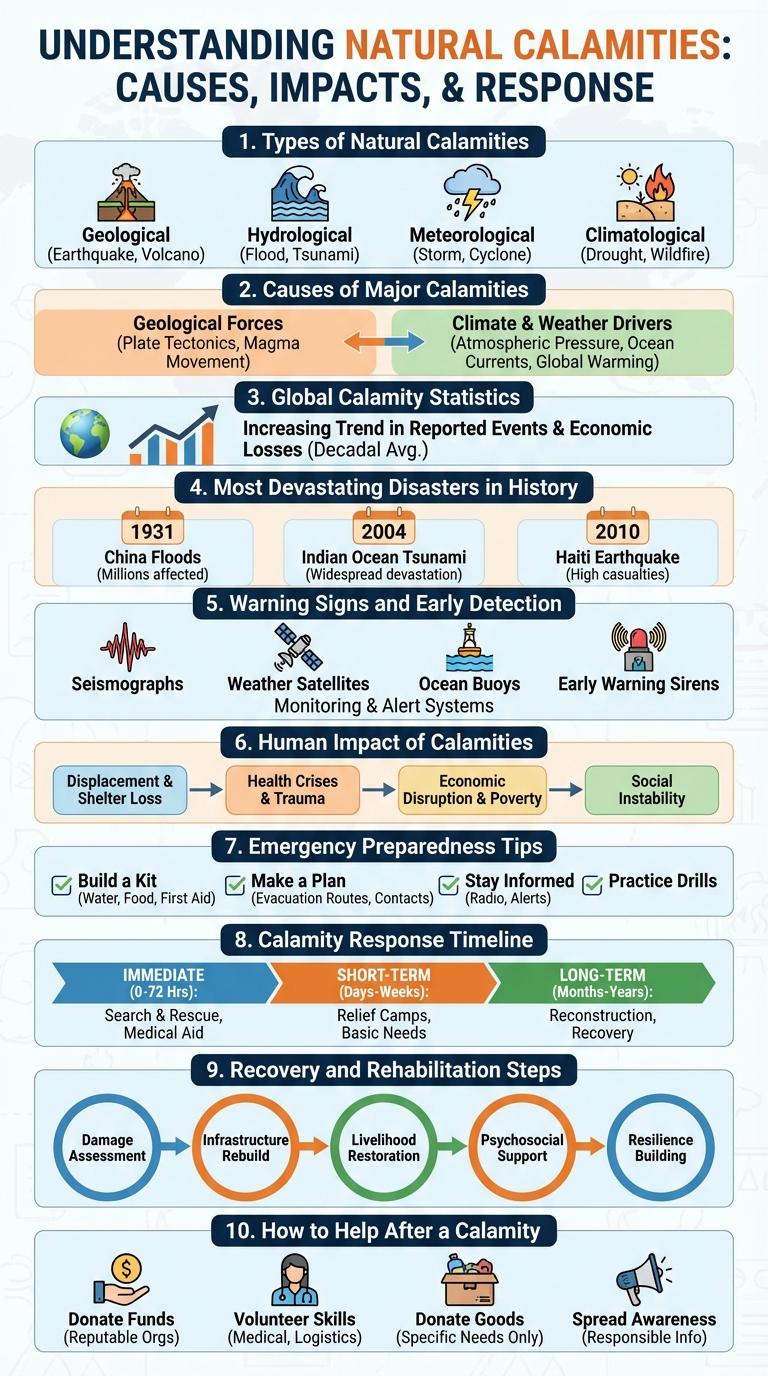
Infographics about calamities visually present critical information on natural disasters, helping people understand causes, impacts, and safety measures. They use clear graphics and concise data to raise awareness and promote preparedness in vulnerable communities. Effective infographics enhance public understanding by simplifying complex information for quick and easy consumption.
Types of Natural Calamities
Natural calamities are catastrophic events caused by natural processes of the Earth, resulting in significant damage and loss. Common types include earthquakes, floods, hurricanes, wildfires, and volcanic eruptions.
Earthquakes occur due to tectonic plate movements, leading to ground shaking and structural damage. Floods happen when water overflows onto land, often caused by heavy rain or storm surges.
Causes of Major Calamities
Calamities arise from natural and human-induced causes that disrupt communities and ecosystems. Understanding these causes helps in preparing and mitigating their devastating impacts.
Natural calamities like earthquakes, floods, hurricanes, and volcanic eruptions occur due to geological and climatic processes. Human activities such as deforestation, urbanization, and pollution exacerbate the frequency and intensity of these events. Climate change significantly contributes to the rise of extreme weather conditions, increasing the occurrence of disasters.
Global Calamity Statistics
| Calamity Type | Global Impact (Annual Average) |
|---|---|
| Floods | 550 million affected, $40 billion in damages |
| Earthquakes | 750,000 affected, $15 billion in damages |
| Hurricanes | 200 million affected, $70 billion in damages |
| Droughts | 1 billion affected, severe food insecurity |
| Wildfires | 100 million hectares burned, $10 billion in damages |
Most Devastating Disasters in History
Throughout history, natural and man-made calamities have caused immense loss of life and property. Understanding the most devastating disasters helps in disaster preparedness and mitigation efforts.
- The 1931 China Floods - Estimated to have caused between 1 to 4 million deaths, these floods remain the deadliest natural disaster on record.
- The 1556 Shaanxi Earthquake - This earthquake in China killed approximately 830,000 people, making it the deadliest earthquake in history.
- The 2004 Indian Ocean Tsunami - Triggered by a massive undersea earthquake, this tsunami caused over 230,000 fatalities across multiple countries.
Disaster impact raises awareness about the importance of global cooperation in emergency response and risk reduction.
Warning Signs and Early Detection
What are the critical warning signs of natural calamities? Early detection of calamities relies on monitoring environmental changes such as unusual weather patterns and seismic activity. Recognizing these signs enables timely evacuation and disaster preparedness, reducing potential damage and loss of life.
Human Impact of Calamities
Calamities significantly affect human lives, causing extensive loss and long-term challenges. Understanding the human impact helps in planning effective disaster response and recovery.
- Casualties - Natural disasters result in thousands of deaths annually worldwide, with earthquakes and floods being the deadliest.
- Displacement - Millions are forced to leave their homes due to calamities, leading to humanitarian crises and overcrowded shelters.
- Psychological Effects - Survivors often face trauma, anxiety, and long-lasting mental health issues after experiencing disasters.
Emergency Preparedness Tips
Emergency preparedness reduces risks and saves lives during calamities such as earthquakes, floods, hurricanes, and wildfires. Having a plan ensures quick, safe responses when disasters strike.
Essential tips include creating an emergency kit with water, food, medications, and important documents. Families should establish communication plans and know local evacuation routes to stay connected and safe.
Calamity Response Timeline
Effective calamity response follows a critical timeline to minimize impact and save lives. Immediate actions include alerts and evacuations within the first 24 hours. Recovery and rebuilding efforts extend from days to months, ensuring community resilience.
Recovery and Rehabilitation Steps
Recovery and rehabilitation after calamities involve coordinated efforts to restore affected communities and rebuild infrastructure. Key steps include damage assessment, resource mobilization, and implementation of resilient rebuilding strategies. Timely psychological support and community engagement play critical roles in sustainable recovery processes.