
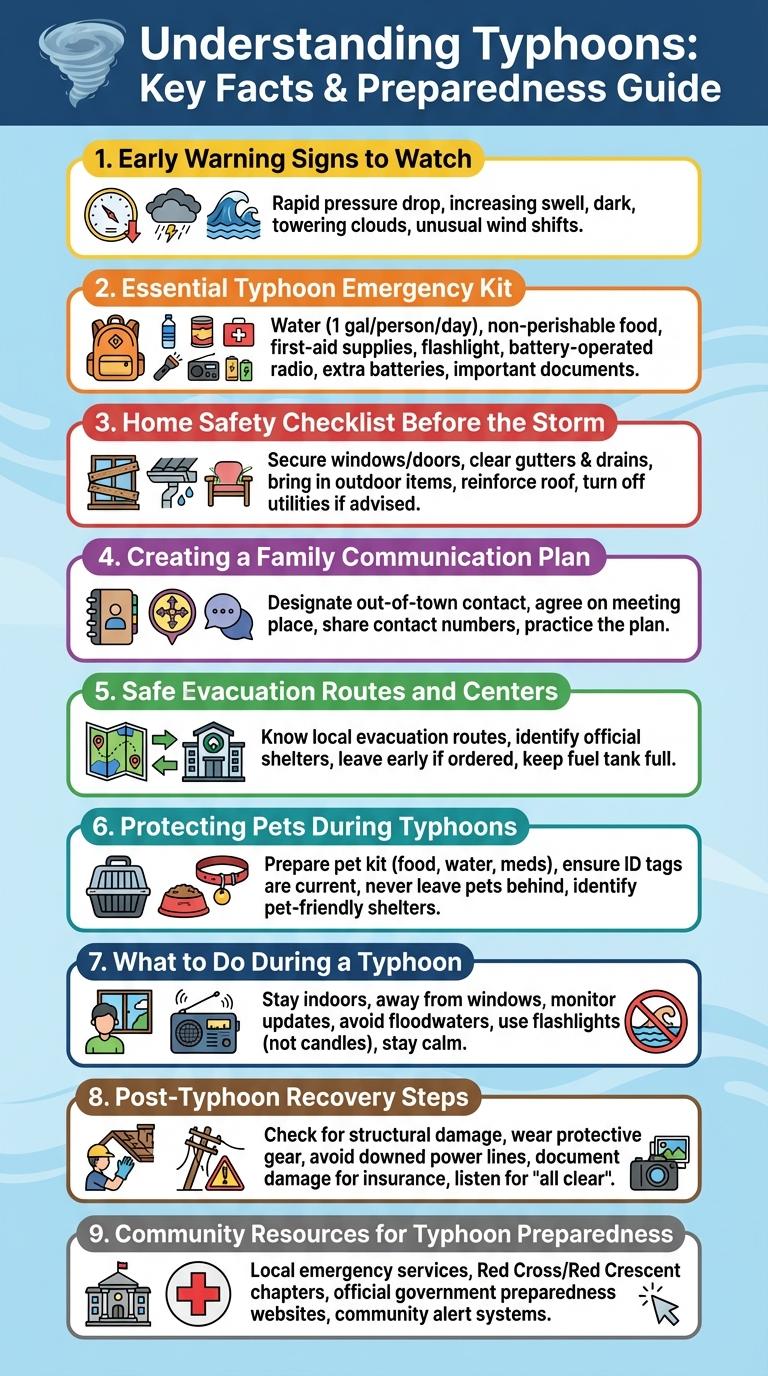
Typhoon preparedness is essential for minimizing damage and ensuring safety during severe storms. This infographic provides clear guidelines on emergency supplies, evacuation plans, and protective measures to help individuals and families stay ready. Understanding these key steps can significantly enhance resilience against the impacts of typhoons.
Understanding Typhoons: Key Facts
Typhoons are powerful tropical storms characterized by strong winds and heavy rainfall. They form over warm ocean waters and can cause extensive damage when they make landfall.
Understanding typhoons involves recognizing their intensity, speed, and potential impact on affected regions. These storms can bring flooding, landslides, and destructive winds exceeding 150 km/h. Early warning systems and preparedness measures are essential to minimize loss and protect communities.
Early Warning Signs to Watch
Recognizing early warning signs of a typhoon is crucial for timely preparedness and safety. Key indicators include sudden changes in weather patterns and unusual cloud formations.
Rapidly dropping atmospheric pressure and increasing wind speeds often signal an approaching typhoon. Monitoring local weather alerts ensures prompt action and protection of lives and property.
Essential Typhoon Emergency Kit
What should you include in an essential typhoon emergency kit? Preparing a well-stocked emergency kit is crucial for safety during a typhoons. It ensures you have necessary supplies when power and water may be unavailable.
| Item | Reason |
|---|---|
| Water (at least 3 days' supply) | Hydration and sanitation when tap water is unsafe or unavailable |
| Non-perishable food | Reliable nutrition without need for refrigeration or cooking |
| First aid kit | Treat injuries and prevent infections during emergencies |
| Flashlight and extra batteries | Light source during power outages |
| Portable phone charger | Maintain communication with rescue and family members |
Home Safety Checklist Before the Storm
Preparing your home before a typhoon can minimize damage and ensure safety for everyone inside. A thorough checklist helps you secure your property and stay protected during the storm.
- Secure Doors and Windows - Install storm shutters or board up windows to prevent breakage from high winds and flying debris.
- Clear Gutters and Drains - Remove debris to ensure proper water flow and reduce the risk of flooding around your home.
- Protect Outdoor Items - Bring in or firmly anchor outdoor furniture, plants, and loose objects that could become dangerous projectiles.
Creating a Family Communication Plan
Creating a family communication plan is vital for typhoon preparedness to ensure all members stay connected during emergencies. Designate a primary and secondary meeting spot and share important contact numbers with everyone. Store emergency contacts on mobile devices and keep a written copy accessible in case of power outages or lost phones.
Safe Evacuation Routes and Centers
Understanding safe evacuation routes and centers is essential for typhoon preparedness. Identifying these locations early ensures rapid and secure response during emergencies.
- Map Evacuation Routes - Locate and memorize designated evacuation paths to avoid hazardous areas during a typhoon.
- Identify Evacuation Centers - Find nearby shelters equipped to provide safety and basic needs during the storm.
- Prepare Emergency Kits - Pack essentials such as water, food, and medical supplies to bring along to evacuation centers.
Protecting Pets During Typhoons
Protecting pets during typhoons is essential to ensure their safety and well-being. Prepare an emergency kit containing food, water, medications, and important documents for your pets to sustain them during the storm.
Create a secure, comfortable shelter indoors away from windows and heavy objects that could fall. Keep pets calm by maintaining a routine and providing familiar toys or blankets to reduce anxiety during the typhoon.
What to Do During a Typhoon
During a typhoon, stay indoors and away from windows to avoid injury from flying debris. Keep emergency supplies like water, food, and medications within easy reach. Continuously monitor weather updates through a battery-powered radio or mobile device to stay informed about the typhoon's progress.
Post-Typhoon Recovery Steps
| Recovery Step | Key Actions |
|---|---|
| Safety Assessment | Check for structural damage, avoid downed power lines, and ensure safe drinking water. |
| Communication | Inform family and emergency services of your status, use emergency radios for updates. |
| Clean-Up | Remove debris, disinfect water sources, and properly dispose of damaged materials. |
| Health Precautions | Monitor for injuries, prevent waterborne diseases, and maintain hygiene. |
| Rebuilding | Repair infrastructure focusing on resilience, seek aid from relief organizations. |