
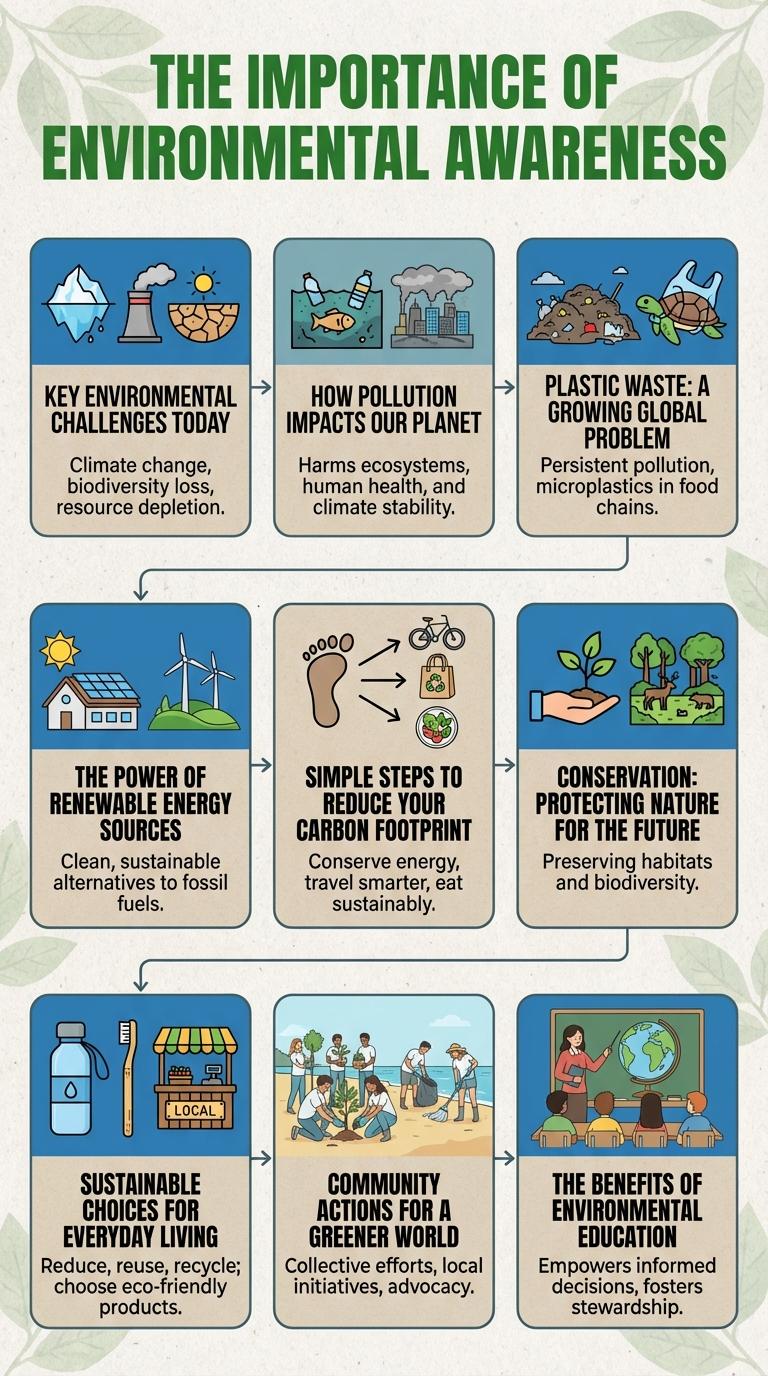
Environmental awareness highlights the importance of understanding human impact on natural ecosystems. Infographics effectively present key data on pollution, conservation efforts, and sustainable practices visually. This format enhances public engagement and encourages eco-friendly behaviors through clear, concise information.
The Importance of Environmental Awareness
Environmental awareness is crucial for sustainable living and protecting natural resources for future generations. Understanding human impact on ecosystems empowers individuals to make responsible choices.
- Preserves Biodiversity - Raising awareness helps protect endangered species and maintain ecological balance.
- Reduces Pollution - Educated communities are more likely to adopt eco-friendly practices that lower pollution levels.
- Promotes Resource Conservation - Awareness encourages efficient use of water, energy, and raw materials to prevent depletion.
Key Environmental Challenges Today
Environmental awareness is crucial for addressing the pressing ecological issues facing our planet. Understanding key environmental challenges helps individuals and communities take informed actions toward sustainability.
- Climate Change - Rising global temperatures disrupt weather patterns and threaten biodiversity worldwide.
- Pollution - Air, water, and soil pollution degrade ecosystems and pose health risks to humans and animals.
- Deforestation - The loss of forests reduces carbon absorption and destroys habitats for many species.
How Pollution Impacts Our Planet
Pollution significantly harms air, water, and soil quality, disrupting ecosystems and endangering wildlife. Toxic substances from industrial waste and vehicle emissions contribute to climate change and health issues globally. Raising environmental awareness is vital to reduce pollution and protect the planet's future sustainability.
The Power of Renewable Energy Sources
Renewable energy sources such as solar, wind, and hydroelectric power play a crucial role in reducing global carbon emissions. These sustainable alternatives provide clean energy that does not deplete natural resources.
Solar panels convert sunlight into electricity, making it one of the fastest-growing renewable technologies worldwide. Wind turbines harness kinetic energy from wind, generating power without air pollution or greenhouse gases.
Simple Steps to Reduce Your Carbon Footprint
Reducing your carbon footprint plays a vital role in combating climate change and preserving natural resources. Simple actions like using energy-efficient appliances, reducing car travel, and minimizing waste can significantly lower greenhouse gas emissions. Embracing sustainable habits contributes to a healthier planet and a more sustainable future for all.
Conservation: Protecting Nature for the Future
| Aspect | Key Information |
|---|---|
| Definition | Conservation involves managing natural resources to prevent depletion and preserve biodiversity for future generations. |
| Importance | Protecting ecosystems maintains clean air, pure water, and fertile soil essential for human health and wildlife survival. |
| Threats | Deforestation, pollution, habitat loss, and climate change accelerate the decline of natural habitats and species. |
| Actions | Reforestation, pollution control, sustainable agriculture, and wildlife protection programs promote ecosystem resilience. |
| Future Impact | Effective conservation secures natural resources, supports economic stability, and enhances global biodiversity for coming generations. |
Sustainable Choices for Everyday Living
How can sustainable choices impact everyday living? Small changes in daily habits reduce carbon footprints significantly. Choosing eco-friendly products conserves resources and supports a healthier planet.
What are easy sustainable options for home energy use? Switching to LED bulbs lowers energy consumption and cost. Utilizing smart thermostats optimizes heating and cooling efficiency.
Why prioritize reusable items over disposables? Reusable bags and containers minimize plastic waste accumulation. This practice cuts landfill pressure and protects wildlife habitats.
How does sustainable transportation contribute to environmental health? Biking or walking reduces greenhouse gas emissions. Using public transit decreases individual carbon footprints consistently.
What role does mindful water use play in sustainability? Fixing leaks prevents water waste and conserves a vital resource. Simple actions like shorter showers help maintain ecosystem balance.
Plastic Waste: A Growing Global Problem
Plastic waste has become one of the most pressing environmental challenges worldwide. Millions of tons of plastic debris pollute oceans, landscapes, and ecosystems every year.
Plastic production exceeds 300 million tons annually, with over 8 million tons entering oceans each year. Marine life suffers due to ingestion and entanglement, threatening biodiversity. Recycling rates remain low, below 20% globally, exacerbating pollution and health risks.
Community Actions for a Greener World
Community actions play a crucial role in promoting environmental awareness and creating sustainable habits. Collective efforts such as local clean-up drives, tree planting, and recycling programs significantly reduce pollution and enhance green spaces.
Grassroots initiatives empower individuals to contribute to climate change mitigation by adopting eco-friendly practices. Encouraging public participation fosters a shared responsibility towards preserving natural resources for future generations.