
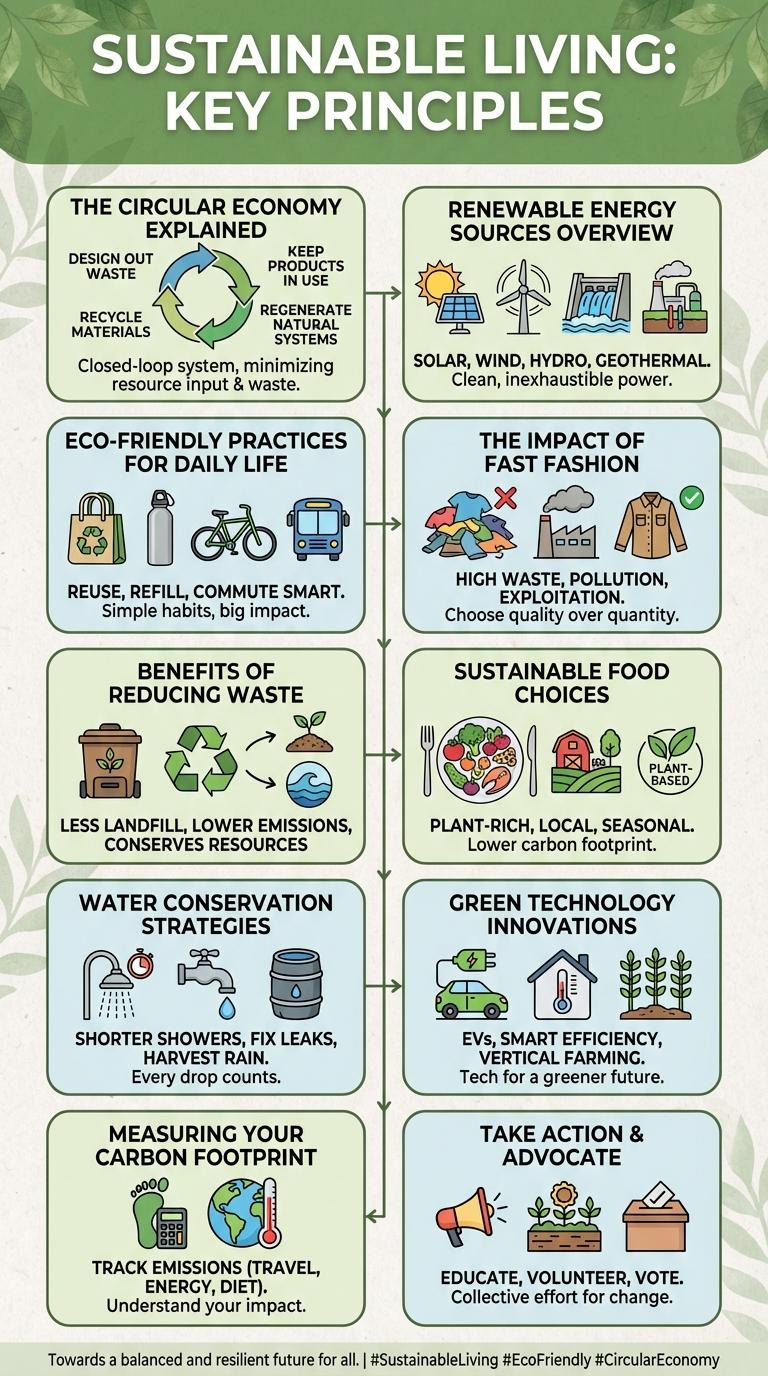
Sustainability is essential for preserving natural resources and ensuring a healthy planet for future generations. This infographic highlights key environmental, social, and economic factors that contribute to sustainable living. Understanding these elements empowers individuals and organizations to make informed, eco-friendly decisions.
Sustainable Living: Key Principles
Sustainable living involves adopting practices that reduce environmental impact and conserve natural resources for future generations. Key principles include minimizing waste, conserving energy and water, and supporting eco-friendly products and local communities. Embracing these habits promotes a healthier planet and a more resilient lifestyle.
The Circular Economy Explained
| Concept | Description |
|---|---|
| Definition | The circular economy is an economic system aimed at eliminating waste and the continual use of resources through reuse, recycling, and regeneration. |
| Core Principles | Design out waste and pollution, keep products and materials in use, regenerate natural systems. |
| Benefits | Reduces resource extraction, lowers carbon emissions, creates sustainable jobs, enhances economic resilience. |
| Key Strategies | Product redesign, sustainable sourcing, resource recovery, business model innovation. |
| Examples | Material recycling, product leasing, repair services, regenerative agriculture practices. |
Renewable Energy Sources Overview
Renewable energy sources harness natural processes to generate power without depleting resources. These sources contribute to reducing greenhouse gas emissions and combating climate change.
Solar, wind, hydro, geothermal, and biomass energy are the primary types of renewable energy. Solar power converts sunlight into electricity using photovoltaic cells. Wind energy captures kinetic energy from wind using turbines to produce clean power.
Eco-Friendly Practices for Daily Life
Adopting eco-friendly practices in daily life significantly reduces environmental impact and promotes sustainability. Simple changes in habits can lead to a healthier planet and conserve natural resources.
- Reduce Single-Use Plastics - Minimize plastic waste by using reusable bags, bottles, and containers to protect ecosystems and decrease landfill overflow.
- Conserve Water - Implement water-saving techniques like fixing leaks and using low-flow fixtures to preserve freshwater resources.
- Choose Sustainable Transportation - Opt for walking, cycling, or public transit to lower carbon emissions and reduce air pollution.
The Impact of Fast Fashion
Fast fashion significantly contributes to environmental degradation through resource overuse and waste generation. Understanding its impact is crucial for promoting sustainable consumer habits.
- Water Consumption - Fast fashion uses approximately 79 billion cubic meters of water annually, enough to meet the water needs of five million people.
- Carbon Emissions - The industry is responsible for 10% of global carbon emissions, surpassing emissions from international flights and maritime shipping combined.
- Waste Generation - Around 92 million tons of textile waste are produced yearly, with most ending up in landfills or incinerated.
Benefits of Reducing Waste
Reducing waste conserves natural resources by minimizing the need for raw material extraction, leading to decreased environmental degradation. It lowers greenhouse gas emissions, helping combat climate change and improve air quality. Waste reduction also saves energy and reduces landfill use, which supports sustainable ecosystems and reduces pollution.
Sustainable Food Choices
Sustainable food choices reduce environmental impact by promoting the consumption of locally sourced, seasonal, and plant-based foods. These choices help conserve natural resources and lower greenhouse gas emissions.
Adopting sustainable eating habits supports biodiversity and improves soil health through responsible farming practices. Choosing organic and minimally processed foods contributes to a healthier planet and personal well-being.
Water Conservation Strategies
How can households effectively conserve water to promote sustainability?
Implementing water-saving devices such as low-flow faucets and toilets reduces water usage significantly. Regular maintenance of leaks and mindful water usage during daily activities also contribute to conservation efforts.
What agricultural practices support water conservation in farming?
Techniques like drip irrigation and rainwater harvesting optimize water use in agriculture. Crop selection based on climate and soil moisture further improves water efficiency.
How does landscaping impact water conservation?
Using native plants and xeriscaping minimizes the need for frequent watering. Mulching and soil preparation help retain moisture, reducing irrigation requirements.
Which technologies enhance water conservation in industries?
Closed-loop water systems and water recycling technologies reduce industrial water consumption. Monitoring systems identify leaks and inefficiencies promptly.
What role do community initiatives play in water conservation?
Public education campaigns raise awareness about water-saving habits. Local policies incentivize reduced water use through pricing and regulations.
Green Technology Innovations
Green technology innovations are transforming the way industries reduce their environmental impact. These advancements focus on sustainable practices that promote energy efficiency and resource conservation.
- Solar Photovoltaic Systems - Convert sunlight into electricity, reducing reliance on fossil fuels and lowering carbon emissions.
- Wind Energy Turbines - Harness wind power to generate clean energy, supporting renewable energy grids worldwide.
- Smart Grid Technology - Optimizes electricity distribution through advanced monitoring and control, enhancing energy efficiency.
- Electric Vehicles (EVs) - Reduce greenhouse gas emissions by using battery-powered propulsion instead of conventional fuels.
- Green Building Materials - Use sustainable resources to create energy-efficient structures with a smaller ecological footprint.
Investing in green technology innovations is essential for achieving global sustainability goals and combating climate change.