
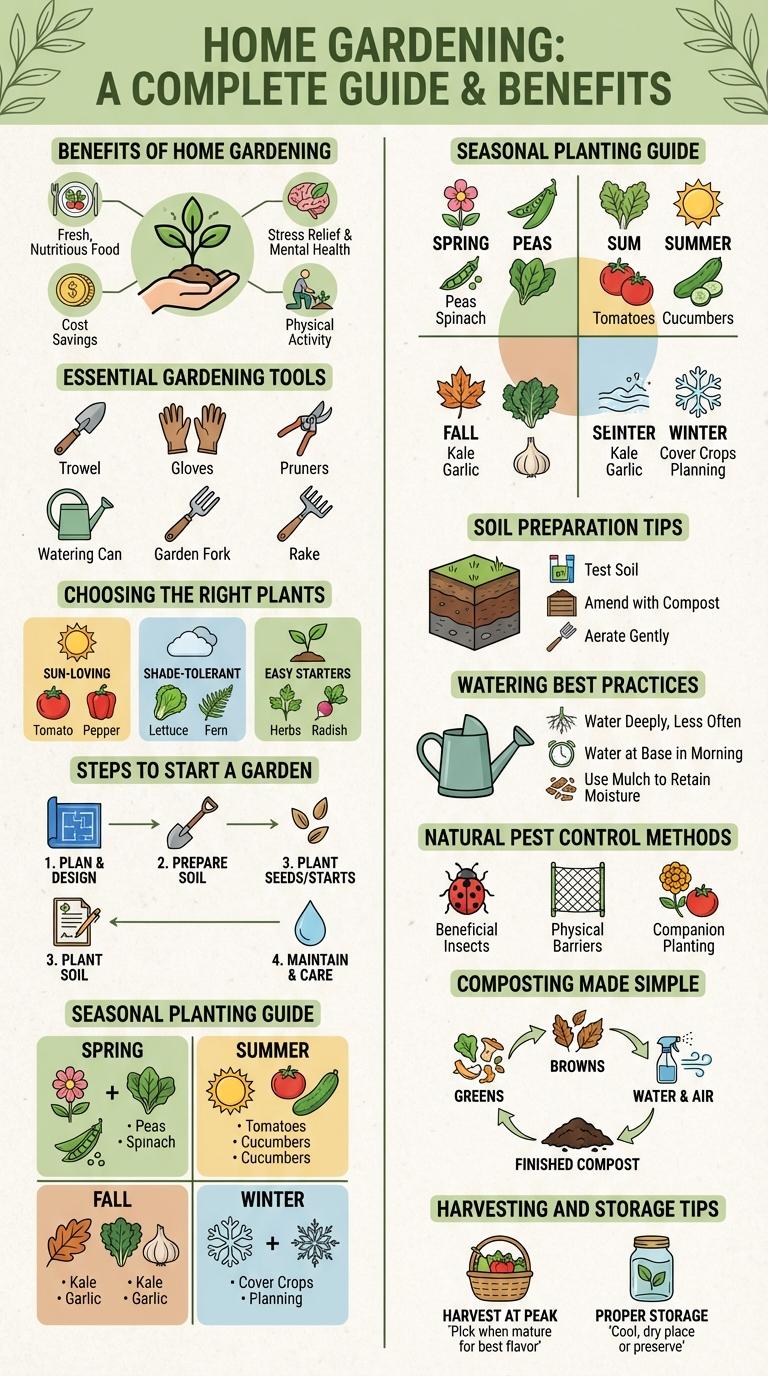
Gardening infographics offer a visual guide to planting techniques, seasonal tips, and essential tools for successful cultivation. They simplify complex information into easy-to-understand graphics that enhance learning and inspire green-thumb creativity. These infographics help gardeners of all levels optimize growth and maintain healthy plants efficiently.
Benefits of Home Gardening
Why is home gardening beneficial? Home gardening enhances mental well-being by reducing stress and promoting relaxation. It also provides fresh, organic produce, improving nutrition and overall health.
What environmental impacts does home gardening have? Gardening supports biodiversity by attracting pollinators like bees and butterflies. It reduces carbon footprint by minimizing the need for transported food.
How does gardening improve physical health? Regular gardening activities increase physical fitness through moderate exercise. Exposure to sunlight boosts vitamin D levels, strengthening bones and immune function.
Can home gardening save money? Growing your own fruits and vegetables lowers grocery bills. It also reduces waste by using kitchen scraps for compost.
What educational benefits does home gardening offer? It teaches valuable skills in plant care and sustainability. Gardening fosters responsibility and patience for both adults and children.
Essential Gardening Tools
Gardening requires a set of essential tools to ensure a healthy and thriving garden. Proper tools make planting, pruning, and soil preparation efficient and enjoyable.
Key gardening tools include a trowel, pruning shears, a garden fork, a watering can, and gloves. Each tool serves a specific purpose to help maintain plants and improve garden productivity.
Choosing the Right Plants
| Factor | Details |
|---|---|
| Climate Zone | Select plants suited to USDA Hardiness Zones for optimal growth and survival. |
| Soil Type | Match plants with soil pH and texture, such as sandy, loamy, or clay soils. |
| Sunlight Requirements | Choose full sun, partial shade, or shade plants based on garden light exposure. |
| Water Needs | Select drought-tolerant or moisture-loving plants according to water availability. |
| Purpose | Decide on plants for aesthetics, food production, or habitat support for wildlife. |
Steps to Start a Garden
Starting a garden involves careful planning and preparation to ensure healthy plant growth. Choosing the right location with adequate sunlight and soil quality is crucial for a successful garden.
Begin by selecting the type of plants suited to your climate and soil conditions. Next, prepare the soil by removing weeds, loosening the earth, and adding organic compost for nutrient enrichment.
Seasonal Planting Guide
Seasonal planting ensures optimal growth by aligning plant types with the best weather conditions. Spring welcomes planting of tomatoes, lettuce, and carrots, benefiting from warming soil. Fall suits hardy greens like kale, spinach, and broccoli, thriving in cooler temperatures.
| Season | Recommended Plants |
|---|---|
| Spring | Tomatoes, Lettuce, Carrots |
| Summer | Peppers, Beans, Cucumbers |
| Fall | Kale, Spinach, Broccoli |
| Winter | Garlic, Onions, Cover Crops |
Soil Preparation Tips
Proper soil preparation is essential to ensure healthy plant growth and maximize garden productivity. Understanding soil composition and fertility can significantly improve your gardening results.
- Test Soil pH - Determine the acidity or alkalinity to match plant needs and optimize nutrient availability.
- Remove Debris - Clear rocks, weeds, and old roots to create a clean planting environment and reduce competition.
- Loosen Soil - Break up compacted soil to improve aeration and water drainage for robust root development.
- Add Organic Matter - Incorporate compost or aged manure to enhance soil structure and nutrient content.
- Level the Soil - Smooth the surface to ensure even planting depth and facilitate irrigation.
Watering Best Practices
Effective watering is crucial for healthy garden growth and water conservation. Proper techniques ensure plants receive adequate moisture without wastage.
- Water Early or Late - Water plants during early morning or late evening to minimize evaporation and enhance soil absorption.
- Use Drip Irrigation - Drip irrigation delivers water directly to plant roots, reducing runoff and promoting efficient use.
- Check Soil Moisture - Test soil regularly to avoid overwatering, which can lead to root rot and nutrient loss.
Natural Pest Control Methods
Natural pest control methods in gardening use biological and organic techniques to manage harmful insects without chemicals. Common approaches include introducing beneficial insects like ladybugs, using neem oil, and planting companion plants that repel pests. These eco-friendly methods promote healthier plants, protect the environment, and maintain biodiversity in the garden.
Composting Made Simple
Composting transforms organic waste into nutrient-rich soil, promoting healthier plants and reducing landfill waste. This natural decomposition process turns kitchen scraps and garden debris into valuable compost.
Start by collecting fruit and vegetable peels, coffee grounds, and grass clippings in a compost bin or pile. Ensure proper aeration by turning the compost regularly to speed up decomposition. Avoid adding meat, dairy, or oily foods to prevent pests and odors.