
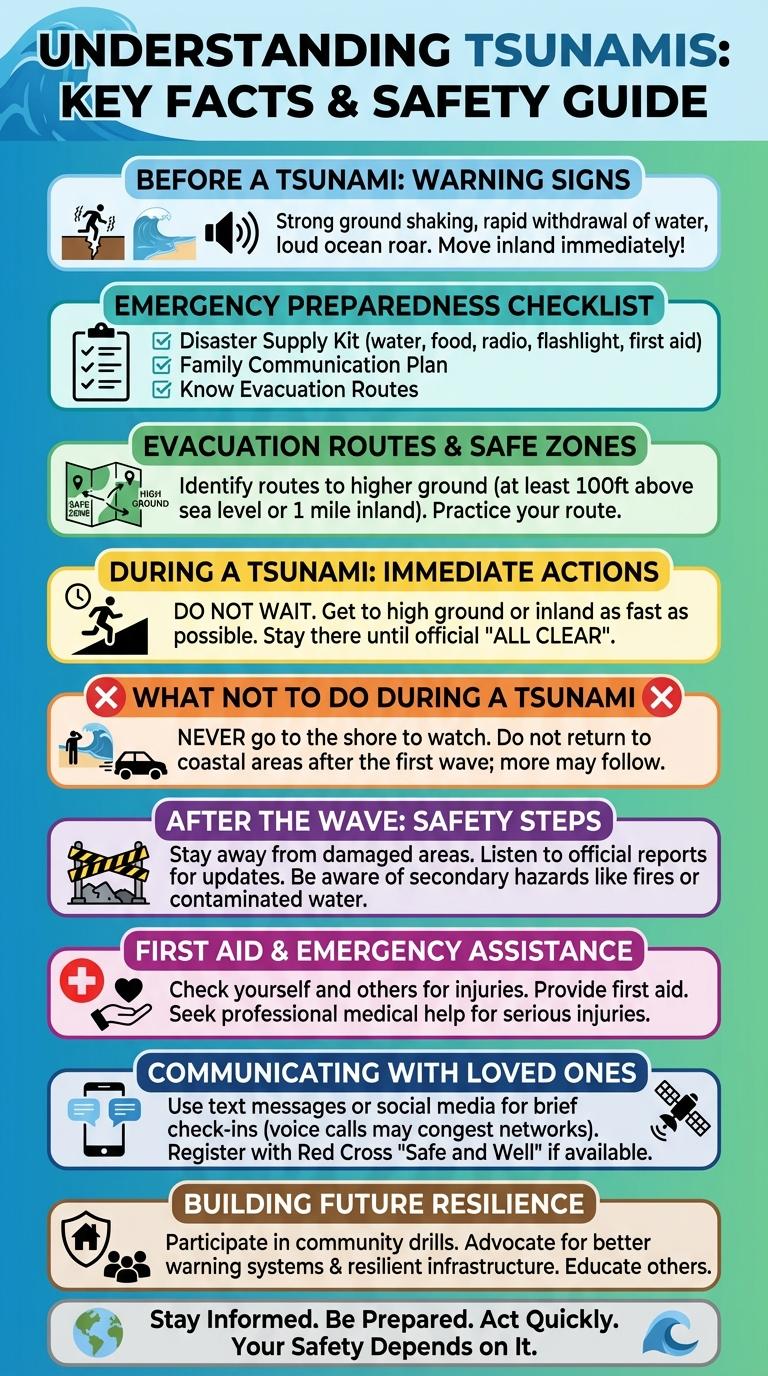
Tsunamis are massive ocean waves caused by underwater earthquakes, volcanic eruptions, or landslides that can result in widespread devastation. Understanding the key signs and safety measures before, during, and after a tsunami is crucial for survival and minimizing damage. This infographic provides clear guidance on recognizing alerts, taking immediate action, and conducting recovery efforts effectively.
Understanding Tsunamis: Key Facts
Tsunamis are powerful ocean waves caused by underwater earthquakes or volcanic eruptions. Understanding their behavior before, during, and after an event is crucial for safety and preparedness.
- Before a Tsunami - Early signs include strong ground shaking and unusual sea level changes, prompting immediate evacuation from coastal areas.
- During a Tsunami - Massive waves can travel at high speeds, causing widespread flooding and destruction along coastlines.
- After a Tsunami - Rescue operations begin promptly, and safety measures focus on avoiding additional hazards like contaminated water and unstable structures.
Before a Tsunami: Warning Signs
| Before a Tsunami | Warning Signs |
|---|---|
| Earthquake Near Coast | Strong or long-lasting shaking felt near coastal areas, typically lasting 20 seconds or more, indicates potential tsunami risk. |
| Unusual Sea Behavior | Rapid rise or fall of sea level, exposing the ocean floor or receding water dramatically before a wave arrives. |
| Official Warnings | Alerts from tsunami warning centers and emergency services provide real-time information and evacuation instructions. |
| Animal Behavior Changes | Wildlife such as birds and marine animals often act restless or move to higher ground ahead of a tsunami event. |
| Ground Shaking Felt Inland | Seismic activity detectable beyond the immediate coastline can suggest a tsunami formation originating from distant earthquakes. |
Emergency Preparedness Checklist
Tsunamis are powerful natural disasters that require immediate action for safety. Preparing an emergency kit with essentials like water, food, and a first aid kit is crucial. Knowing evacuation routes and staying informed through official alerts can save lives during and after a tsunami event.
Evacuation Routes & Safe Zones
Evacuation routes and safe zones are critical components in tsunami preparedness. Clear signage and public awareness ensure people can quickly reach safety before a tsunami strikes.
During a tsunami, following marked evacuation routes helps avoid hazardous areas and reduces chaos. Safe zones are typically elevated locations or sturdy buildings designed to withstand flooding and strong waves.
After a tsunami, it is vital to remain in designated safe zones until authorities confirm it is safe to return. Returning too soon can expose survivors to secondary hazards such as debris and contaminated water.
During a Tsunami: Immediate Actions
During a tsunami, the immediate priority is to move to higher ground or an inland location away from the coastline. Avoid low-lying areas and do not wait to see the tsunami waves.
Listen for official emergency alerts and follow evacuation instructions from local authorities. Stay away from the beach until officials declare it safe to return.
What NOT to Do During a Tsunami
Tsunamis are powerful and destructive natural events that require immediate and informed responses to ensure safety. Understanding what actions to avoid during a tsunami can save lives and minimize harm.
- Do Not Stay Near the Shore - Staying close to coastal areas during a tsunami puts you at high risk of being caught in the incoming waves.
- Do Not Return Early - Returning to evacuated areas before authorities declare it safe can expose you to secondary waves or flooding.
- Do Not Ignore Evacuation Orders - Ignoring official warnings and orders increases your chances of injury or death during the tsunami event.
After the Wave: Safety Steps
After a tsunami, immediate safety measures are crucial to protect survivors and prevent further harm. Understanding the key steps promotes recovery and minimizes risks associated with flooding, debris, and infrastructure damage.
- Stay Away from the Shoreline - Tsunami waves can continue for hours, making it dangerous to return to coastal areas prematurely.
- Follow Official Instructions - Emergency services provide updates and evacuation orders critical for public safety.
- Check for Injuries and Provide Aid - Attend to anyone injured while waiting for medical assistance to reduce fatalities.
Adhering to these safety steps ensures better protection and prepares communities for effective disaster response.
First Aid & Emergency Assistance
What immediate first aid measures are essential during a tsunami? Protect yourself from debris and check for injuries; apply pressure to stop bleeding and perform CPR if necessary. Stay calm and assist others in moving to higher ground safely.
How should you provide first aid after a tsunami strikes? Clean and dress wounds to prevent infection and treat for shock by keeping the injured warm and comfortable. Seek professional medical help as soon as possible for serious injuries.
What emergency assistance actions are crucial before a tsunami? Prepare a first aid kit with essential supplies and identify safe evacuation routes and shelters. Inform family members about emergency procedures and establish a communication plan.
How can you support emergency responders after a tsunami? Share accurate information about injuries and hazards and avoid obstructing rescue operations. Volunteer only if trained in disaster response and follow instructions from authorities.
What are key safety tips for tsunami victims needing medical help? Avoid contaminated water and food to reduce health risks and do not move seriously injured people unless in immediate danger. Prioritize reaching designated medical stations or emergency shelters promptly.
Communicating with Loved Ones
Before a tsunami, establish a clear communication plan with loved ones, including designated meeting points and emergency contacts. During the tsunami, use text messages or social media to conserve battery and network capacity while informing family members of your safety. After the tsunami, prioritize reconnecting with loved ones through emergency hotlines and notify authorities if someone is missing or in need of help.