
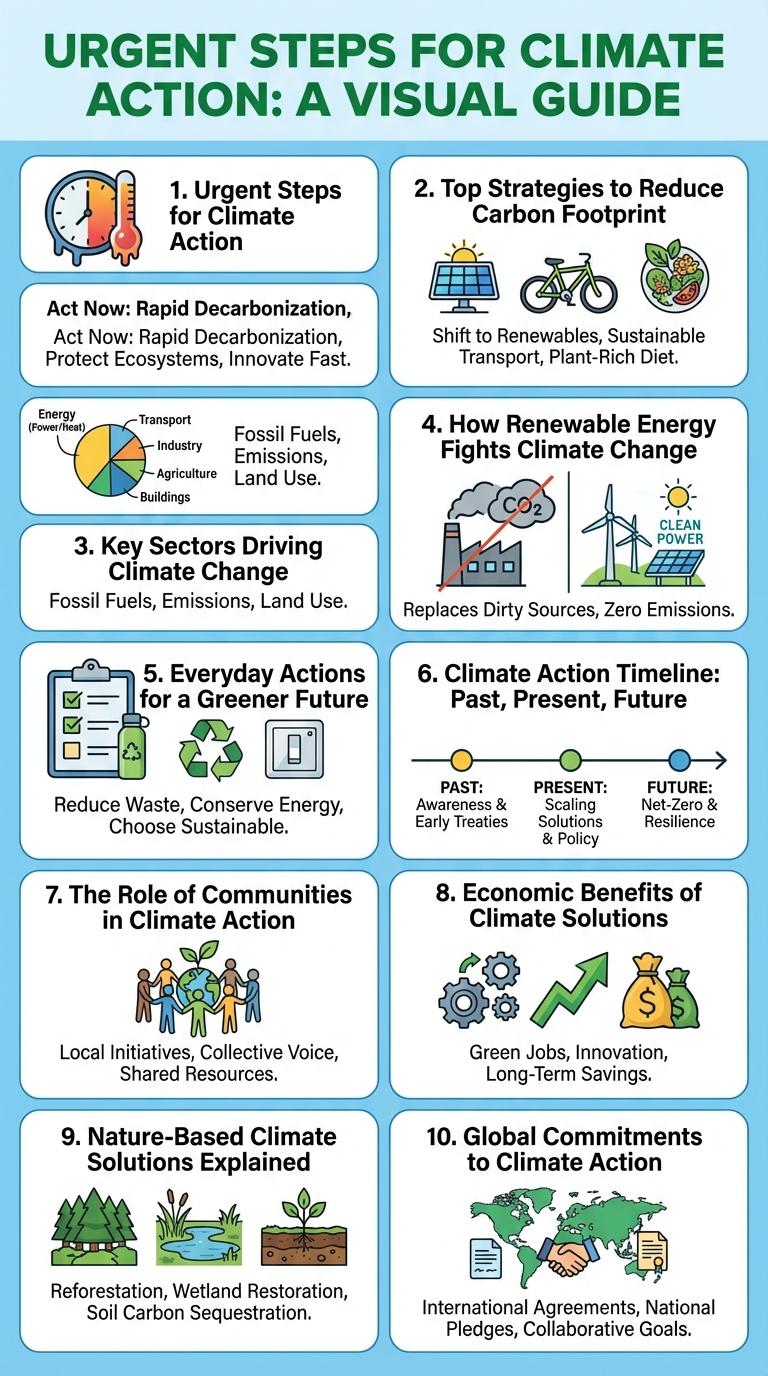
Climate action plays a crucial role in combating global warming and preserving ecosystems for future generations. This infographic highlights key strategies such as reducing carbon emissions, adopting renewable energy, and promoting sustainable practices. Understanding these measures empowers individuals and communities to contribute effectively to environmental protection.
Urgent Steps for Climate Action
Climate action requires immediate and decisive steps to reduce greenhouse gas emissions and limit global warming to 1.5degC. Strong policies and community engagement are essential components to drive sustainable change.
Transitioning to renewable energy, improving energy efficiency, and protecting forests can significantly lower carbon footprints. Collective efforts across governments, businesses, and individuals accelerate progress toward a resilient future.
Top Strategies to Reduce Carbon Footprint
Implementing renewable energy sources such as solar and wind power significantly cuts greenhouse gas emissions. Enhancing energy efficiency in buildings, transportation, and industries reduces overall carbon consumption. Promoting sustainable lifestyle choices, including reduced meat consumption and increased recycling, supports long-term carbon footprint reduction.
Key Sectors Driving Climate Change
Climate change is primarily driven by emissions from several key sectors. Targeting these sectors is essential for effective climate action and reducing global greenhouse gas emissions.
- Energy Production - The burning of fossil fuels for electricity and heat accounts for over 40% of global CO2 emissions.
- Transportation - Vehicles powered by gasoline and diesel contribute approximately 25% of global carbon dioxide emissions.
- Industry - Manufacturing and construction release significant greenhouse gases through fossil fuel use and chemical processes.
How Renewable Energy Fights Climate Change
How does renewable energy combat climate change?
Renewable energy reduces greenhouse gas emissions by replacing fossil fuels with clean power sources like solar, wind, and hydro. These sustainable options generate electricity without releasing carbon dioxide, helping to slow global warming.
| Renewable Energy Type | Climate Impact |
|---|---|
| Solar Power | Generates electricity with zero emissions during operation |
| Wind Energy | Uses wind turbines to produce clean energy, lowering carbon footprint |
| Hydroelectric Power | Harnesses water flow to create renewable energy without fossil fuels |
| Geothermal Energy | Provides stable power by utilizing Earth's heat, reducing reliance on coal and gas |
| Biomass Energy | Converts organic material into energy with lower carbon emissions than fossil fuels |
Everyday Actions for a Greener Future
| Everyday Action | Impact on Climate |
|---|---|
| Reduce Energy Use | Lower carbon emissions by conserving electricity and using energy-efficient appliances |
| Choose Sustainable Transport | Decrease air pollution and fossil fuel consumption through walking, cycling, or public transit |
| Minimize Waste | Cut methane emissions from landfills by recycling and composting organic materials |
| Support Renewable Energy | Promote clean energy sources that reduce reliance on coal and oil |
| Consume Responsibly | Reduce carbon footprint by choosing eco-friendly products and eating locally sourced food |
Climate Action Timeline: Past, Present, Future
The Climate Action Timeline highlights key moments shaping global environmental efforts. From early awareness in the 1970s, through the Paris Agreement of 2015, to future goals of carbon neutrality by 2050, this infographic tracks progress and challenges. It emphasizes the urgent need for continued innovation and policy commitment to combat climate change effectively.
The Role of Communities in Climate Action
Communities play a crucial role in driving effective climate action by fostering local engagement and resilience. Grassroots initiatives empower individuals to reduce carbon footprints and adapt to environmental changes.
Local groups implement sustainable practices such as urban gardening, renewable energy projects, and waste reduction programs that directly impact their carbon emissions. Community-led climate education raises awareness and promotes behavior change at the individual and collective levels. By collaborating with governments and organizations, communities enhance policy implementation and resource management for climate mitigation and adaptation.
Economic Benefits of Climate Solutions
Investing in climate solutions drives economic growth by creating millions of green jobs across renewable energy, energy efficiency, and sustainable agriculture sectors. These initiatives reduce costs associated with climate-related disasters and health impacts, boosting overall economic resilience.
Clean energy investments attract billions in new capital and innovation, enhancing global competitiveness. Long-term savings from reduced fossil fuel dependence and improved air quality contribute significantly to national GDP growth.
Nature-Based Climate Solutions Explained
Nature-Based Climate Solutions harness natural processes to combat climate change by restoring and conserving ecosystems. These approaches offer sustainable and cost-effective means to reduce greenhouse gas emissions and enhance resilience to climate impacts.
Integrating biodiversity conservation with climate action maximizes environmental benefits and supports human well-being.
- Carbon Sequestration - Forests, wetlands, and soil capture and store atmospheric carbon dioxide, reducing greenhouse gas concentrations.
- Habitat Restoration - Rehabilitating degraded ecosystems improves biodiversity and strengthens carbon absorption capacity.
- Coastal Protection - Mangroves, salt marshes, and seagrasses shield shorelines from storms while storing carbon.