
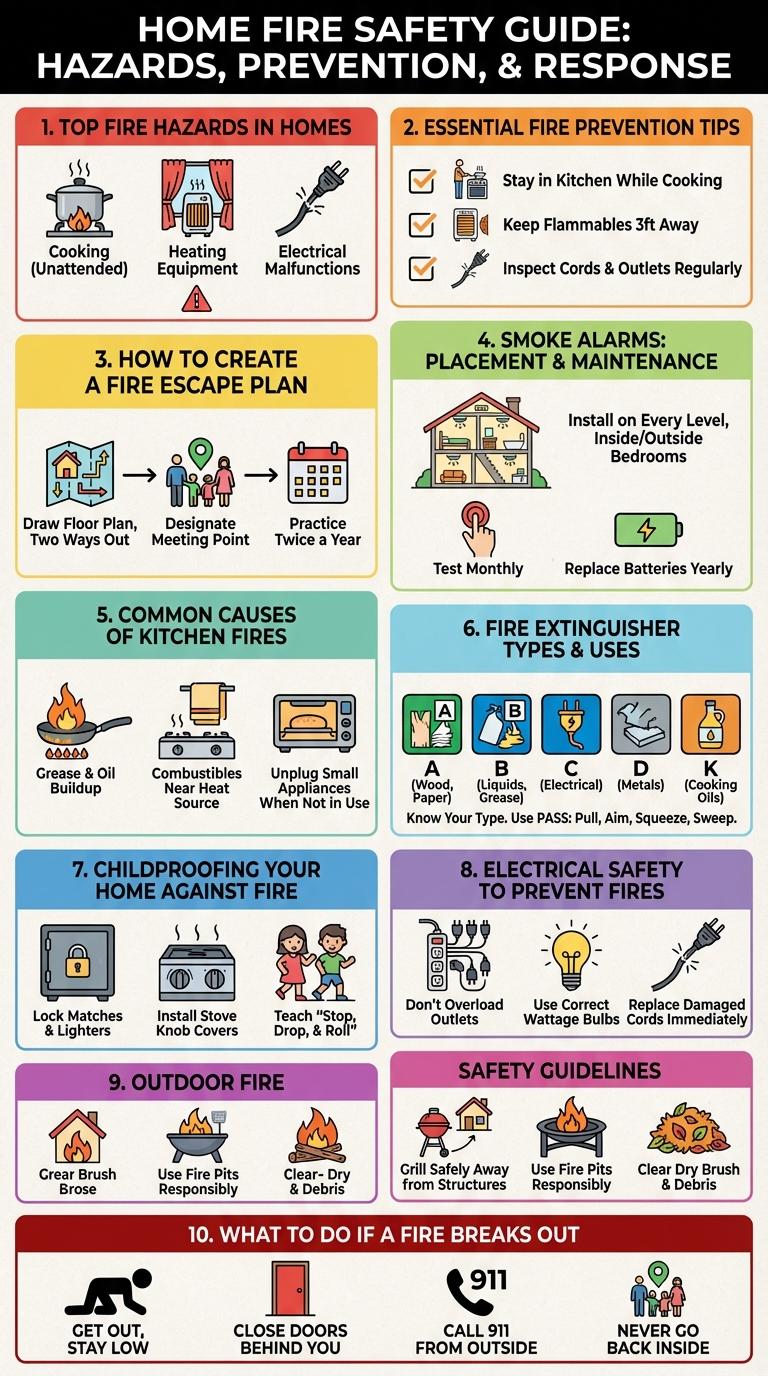
Effective fire prevention relies on understanding key safety measures, recognizing common fire hazards, and implementing practical steps to reduce risk. Infographics visually simplify these critical guidelines, making it easier for individuals and communities to grasp essential information quickly. Clear visuals and concise data enhance awareness, promoting proactive behavior to prevent fire-related incidents.
Top Fire Hazards in Homes
Fire hazards in homes pose significant risks, with cooking equipment being the leading cause of residential fires. Electrical malfunctions, such as faulty wiring or overloaded outlets, contribute heavily to fire incidents. Heating devices, candles, and smoking materials also remain common fire sources, emphasizing the need for vigilance and proper safety measures.
Essential Fire Prevention Tips
How can you reduce the risk of fire in your home? Implementing essential fire prevention tips significantly lowers the chance of fire hazards. Regular maintenance and awareness are key to safety.
| Tip | Description |
|---|---|
| Install Smoke Alarms | Place smoke alarms on every floor and test them monthly for proper functionality. |
| Avoid Overloading Outlets | Use power strips with surge protectors and do not plug too many devices into one socket. |
| Maintain Heating Equipment | Schedule annual inspections and cleanings for heaters, chimneys, and fireplaces. |
| Store Flammable Materials Safely | Keep gasoline, paint, and other flammable liquids in approved containers away from heat sources. |
| Create an Escape Plan | Develop and practice a fire escape plan with all household members for emergencies. |
How to Create a Fire Escape Plan
Creating a fire escape plan is essential for ensuring the safety of everyone in your home. A well-prepared plan increases the chances of a quick and organized exit during a fire emergency.
Follow these steps to develop an effective fire escape plan.
- Identify all exits - Locate and mark all possible escape routes including doors and windows in every room.
- Create a meeting point - Choose a safe place outside your home where everyone can gather after escaping.
- Practice regularly - Conduct fire drills at least twice a year to ensure everyone knows the plan and can evacuate quickly.
Smoke Alarms: Placement and Maintenance
| Smoke Alarm Placement | Maintenance Tips |
|---|---|
| Install smoke alarms inside each bedroom | Test alarms monthly to ensure functionality |
| Place alarms outside sleeping areas in hallways | Replace batteries at least once a year |
| Mount alarms on ceilings or high on walls | Clean alarms regularly to remove dust and debris |
| Avoid placing alarms near windows, doors, or vents | Replace entire smoke alarm unit every 10 years |
| Use interconnected alarms for enhanced safety | Follow manufacturer instructions for installation and upkeep |
Common Causes of Kitchen Fires
Kitchen fires are a leading cause of home fires, often resulting from unattended cooking or grease buildup. Understanding the common causes can help prevent dangerous incidents.
Unattended cooking is the most frequent cause, where food is left on the stove or in the oven too long. Grease fires occur when oil overheats and ignites, spreading quickly if not controlled. Faulty appliances or electrical issues also contribute to kitchen fire risks.
Fire Extinguisher Types and Uses
Fire prevention is crucial for safety in homes and workplaces. Knowing the correct fire extinguisher types and their uses can save lives and property.
- Water Extinguishers - Effective for Class A fires involving wood, paper, and textiles.
- Foam Extinguishers - Suitable for Class A and B fires, especially flammable liquids.
- CO2 Extinguishers - Best for electrical fires and Class B flammable liquids without leaving residue.
- Dry Powder Extinguishers - Versatile for Class A, B, and C fires including flammable gases.
- Wet Chemical Extinguishers - Designed for Class F fires, commonly involving cooking oils and fats.
Select the fire extinguisher based on the fire type to ensure effective fire suppression and safety.
Childproofing Your Home Against Fire
Childproofing your home against fire involves securing potential hazards and teaching children fire safety. Install smoke alarms in every room, keep matches and lighters out of reach, and use outlet covers to prevent electrical fires. Regular fire drills and clear escape plans enhance preparedness and safety for the entire family.
Electrical Safety to Prevent Fires
Electrical fires are a leading cause of home fires, often resulting from faulty wiring and overloaded outlets. Practicing electrical safety can significantly reduce the risk of fire hazards in residential and commercial buildings.
Regularly inspect electrical cords and replace damaged ones immediately to prevent sparks and short circuits. Avoid overloading power strips and use certified electrical devices to ensure safe operation.
Outdoor Fire Safety Guidelines
Outdoor fire safety is essential to prevent wildfires and protect natural habitats. Following proper guidelines reduces the risk of accidental fires caused by campfires, grills, and discarded smoking materials.
Always clear the area around a fire pit of dry leaves and debris to create a safe zone. Keep a bucket of water, sand, or a fire extinguisher nearby to quickly control flare-ups.