
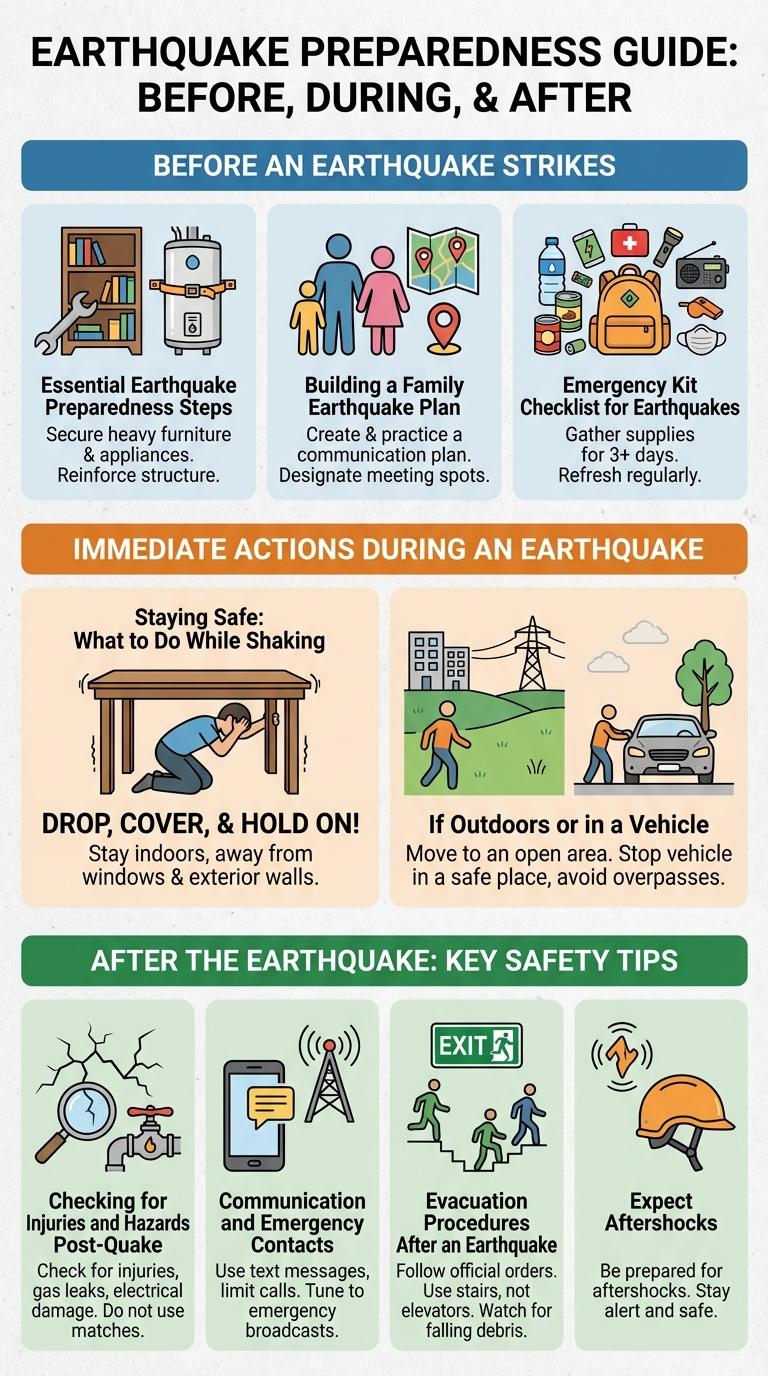
Understanding the critical actions before, during, and after an earthquake can significantly increase safety and reduce damage. Preparing emergency kits and securing heavy furniture help mitigate risks prior to seismic events. Knowing how to protect yourself during shaking and the steps to take immediately after can save lives and facilitate swift recovery.
What to Do Before an Earthquake Strikes
Preparing for an earthquake involves securing heavy furniture and appliances to walls and creating a family emergency plan. Store emergency supplies, including water, food, and first aid kits, in easily accessible locations. Identify safe spots in each room, such as under sturdy tables or against interior walls, to take cover during shaking.
Essential Earthquake Preparedness Steps
Earthquake preparedness involves understanding key safety measures to protect yourself and your loved ones. Knowing what to do before, during, and after an earthquake significantly reduces risks of injury and damage.
Before an earthquake, secure heavy furniture, create an emergency supply kit, and develop a family communication plan. Identifying safe spots in each room and practicing regular drills enhances readiness.
During an earthquake, drop to your hands and knees, cover your head and neck, and take shelter under sturdy furniture or against an interior wall. Avoid windows, exterior walls, and elevators to minimize injury from falling debris.
After an earthquake, check for injuries and provide first aid when necessary. Inspect your environment for hazards like gas leaks, damaged electrical wires, and structural damage before moving to safer places or seeking help.
Immediate Actions During an Earthquake
Earthquakes strike without warning, requiring rapid and decisive action to protect yourself. Knowing what to do during the shaking can save lives and reduce injuries.
- Drop, Cover, and Hold On - Immediately drop to your hands and knees, take cover under sturdy furniture, and hold on until shaking stops.
- Avoid Doorways - Contrary to common belief, doorways are not the safest place; seek shelter under a table or desk instead.
- Stay Indoors - Do not run outside during shaking since falling debris poses a greater risk than remaining inside a safe spot.
Quick, informed actions during an earthquake increase your chances of staying safe and minimizing harm.
Staying Safe: What to Do While Shaking
Earthquakes strike without warning, making it vital to know how to stay safe during the shaking. Immediate actions can greatly reduce injury risk and save lives.
Drop to your hands and knees to prevent falling. Cover your head and neck with your arms and seek shelter under sturdy furniture. Hold on until the shaking stops, staying away from windows and heavy objects.
Emergency Kit Checklist for Earthquakes
Preparing an emergency kit before an earthquake ensures safety and readiness. Having essential supplies during and after the event supports survival and recovery.
- Water Supply - Store at least one gallon of water per person per day for at least three days.
- Non-Perishable Food - Include canned goods, energy bars, and dried foods that don't require refrigeration.
- First Aid Kit - Equip with bandages, antiseptics, medications, and basic medical tools for injuries.
- Emergency Tools - Pack a flashlight, batteries, whistle, and multi-purpose tool to assist during emergencies.
- Important Documents - Keep copies of identification, insurance policies, and emergency contacts in a waterproof bag.
After the Earthquake: Key Safety Tips
After the earthquake, check yourself and others for injuries and provide first aid if necessary. Inspect your surroundings for hazards such as gas leaks, damaged electrical wires, and unstable structures. Stay informed through battery-powered radios and follow instructions from local authorities to ensure ongoing safety.
Checking for Injuries and Hazards Post-Quake
After an earthquake, promptly check yourself and others for injuries to ensure immediate medical attention if needed. Look for visible signs of harm such as bleeding, broken bones, or unconsciousness.
Survey your surroundings for hazards like gas leaks, damaged electrical wires, or structural instability. Turn off utilities if you detect leaks or sparks to prevent fires and further damage.
Communication and Emergency Contacts
How can effective communication save lives before, during, and after an earthquake?
Establishing clear emergency contacts and communication plans ensures prompt information sharing. Reliable communication channels help coordinate rescue efforts and provide critical updates.
What communication strategies are vital during an earthquake?
Using text messages or social media reduces network congestion compared to calls. Emergency alerts should be followed, and family check-ins prioritized to confirm safety.
Why is maintaining contact information important after an earthquake?
Updated emergency contacts aid in reunification and resource distribution. Authorities and relief organizations rely heavily on communication to assess damage and coordinate aid.
Evacuation Procedures After an Earthquake
| Phase | Evacuation Procedures After an Earthquake |
|---|---|
| Before Earthquake | Prepare an emergency kit with essentials. Identify and plan evacuation routes. Secure heavy furniture to prevent hazards. |
| During Earthquake | Drop, cover, and hold on. Stay indoors until shaking stops. Avoid using elevators. Protect head and neck from falling debris. |
| After Earthquake | Check for injuries and provide first aid. Evacuate buildings with visible damage or gas leaks. Use marked evacuation routes. Follow emergency broadcasts for shelter locations. |