
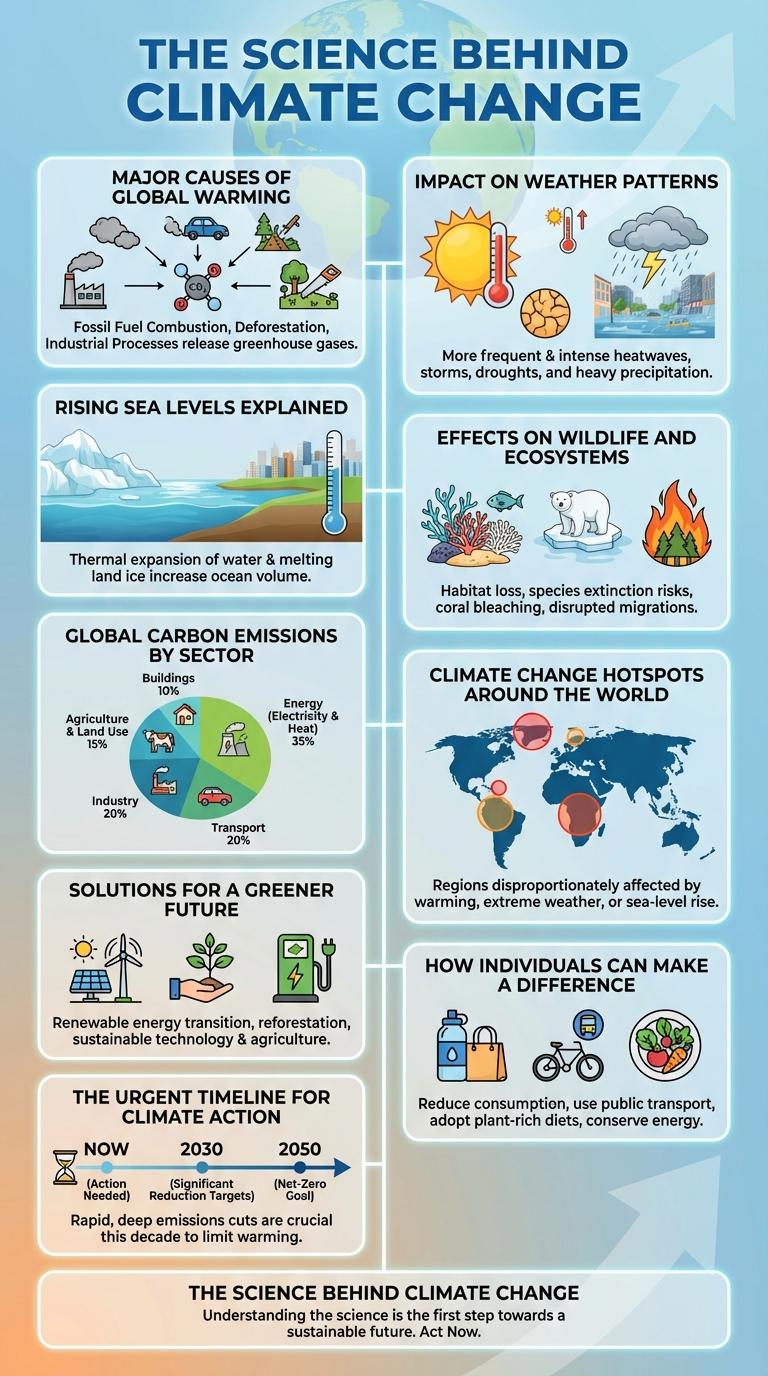
Climate change affects ecosystems and communities worldwide, highlighting the urgent need for awareness and action. Infographics visually simplify complex information, making the science and impact of climate change accessible to a broad audience. Illustrations in climate change drawings emphasize key data and foster deeper understanding of environmental challenges.
The Science Behind Climate Change
Climate change is driven primarily by the increase of greenhouse gases like carbon dioxide and methane in the atmosphere. These gases trap heat from the sun, causing Earth's average temperature to rise.
Scientific data shows that human activities such as burning fossil fuels and deforestation have significantly increased greenhouse gas levels. This leads to global warming, altering weather patterns and impacting ecosystems worldwide.
Major Causes of Global Warming
Climate change results primarily from human activities that increase greenhouse gas emissions. Understanding the major causes of global warming is essential to mitigating its impact.
- Fossil Fuel Combustion - Burning coal, oil, and natural gas releases large amounts of carbon dioxide into the atmosphere.
- Deforestation - Clearing forests reduces carbon absorption, increasing atmospheric CO2 levels.
- Industrial Processes - Manufacturing and chemical production emit significant greenhouse gases, including methane and nitrous oxide.
Addressing these causes is vital for reducing global temperature rise and protecting the environment.
Impact on Weather Patterns
Climate change significantly alters weather patterns worldwide, leading to more frequent and intense extreme weather events such as hurricanes, droughts, and heavy rainfall. These shifts disrupt ecosystems, agriculture, and water supplies, impacting both natural habitats and human communities.
Rising global temperatures increase the atmosphere's capacity to hold moisture, intensifying storms and precipitation in some regions while causing prolonged dry spells in others. Changes in jet streams and ocean currents further exacerbate unpredictable weather, challenging adaptation efforts and infrastructure resilience.
Rising Sea Levels Explained
Rising sea levels are a direct consequence of global climate change, causing widespread coastal impacts. Understanding the mechanisms behind sea level rise helps predict future environmental and societal challenges.
The primary drivers of rising sea levels include melting ice sheets and thermal expansion of seawater due to global warming.
- Melting Ice Sheets - Large ice masses in Greenland and Antarctica are melting faster, adding substantial amounts of water to the oceans.
- Thermal Expansion - As ocean water warms, it expands in volume, contributing significantly to sea level rise.
- Coastal Flooding Risks - Elevated sea levels increase the frequency and severity of flooding events in coastal cities worldwide.
Effects on Wildlife and Ecosystems
| Effect on Wildlife | Shifts in species distribution; Loss of habitat; Increased risk of extinction |
|---|---|
| Effect on Ecosystems | Altered food chains; Coral bleaching; Changes in phenology and biodiversity |
| Temperature Rise | Disrupts breeding cycles; Expands invasive species range |
| Sea Level Rise | Flooding of coastal habitats; Loss of mangroves and wetlands |
| Extreme Weather | Habitat destruction; Increased stress on animal populations |
Global Carbon Emissions by Sector
An infographic illustrating global carbon emissions by sector highlights the major contributors to climate change. The energy sector leads with approximately 42% of total emissions, followed by industry at 24%. Transportation, agriculture, and buildings represent 16%, 14%, and 4% respectively, emphasizing the need for targeted mitigation strategies.
Climate Change Hotspots Around the World
Climate change hotspots are regions experiencing the most rapid and severe impacts of global warming. These areas face extreme weather, rising temperatures, and significant ecological shifts.
- Arctic Region - Melting ice caps and rising temperatures threaten polar ecosystems and global sea levels.
- Amazon Rainforest - Increased deforestation and droughts disrupt biodiversity and carbon storage.
- Sub-Saharan Africa - Extended droughts and desertification impact agriculture and water resources.
- Southeast Asia - Rising sea levels and stronger storms threaten coastal communities and infrastructure.
- Coral Triangle - Ocean warming and acidification cause coral bleaching and marine biodiversity loss.
Solutions for a Greener Future
What practical steps can individuals take to combat climate change? Planting trees and reducing energy consumption significantly help lower carbon footprints. Supporting renewable energy sources like solar and wind accelerates the transition to a greener planet.
How do sustainable transportation methods contribute to a greener future? Using public transport, cycling, or electric vehicles cuts down greenhouse gas emissions. These actions reduce air pollution and dependence on fossil fuels.
Which lifestyle changes support climate-friendly living? Adopting a plant-based diet and minimizing waste reduce environmental impact. Conserving water and choosing eco-friendly products further promote sustainability.
What role do governments and communities play in climate solutions? Implementing policies that incentivize clean energy and conservation fosters systemic change. Community awareness programs encourage eco-conscious behavior among citizens.
How can technology aid in the fight against climate change? Innovations in energy storage and carbon capture enhance efficiency and reduce emissions. Smart grids and sustainable urban planning optimize resource use for future resilience.
How Individuals Can Make a Difference
Climate change poses a significant threat to the planet, but individuals have the power to drive positive change through daily actions. Simple lifestyle adjustments can collectively reduce carbon footprints and promote environmental sustainability.
Using energy-efficient appliances, reducing waste by recycling, and choosing sustainable transportation methods are effective ways to lower greenhouse gas emissions. Conserving water and supporting renewable energy initiatives also contribute to mitigating climate change. Small efforts by many lead to substantial environmental benefits over time.