
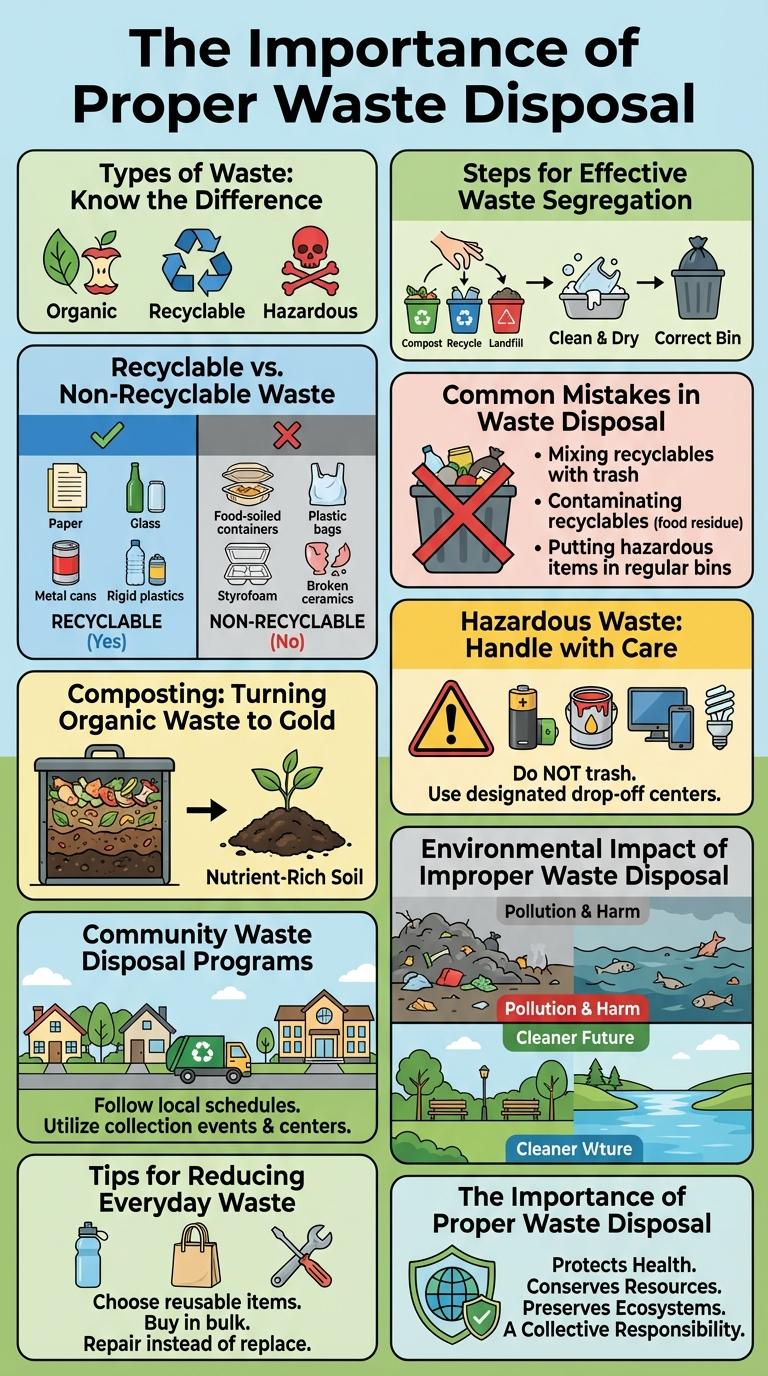
Proper waste disposal is essential for maintaining environmental cleanliness and public health. Understanding how to categorize and dispose of various types of waste reduces pollution and conserves natural resources. This infographic provides clear guidelines to help individuals manage waste effectively and support sustainable living.
The Importance of Proper Waste Disposal
Proper waste disposal helps protect the environment by reducing pollution and conserving natural resources. It prevents harmful substances from contaminating soil, water, and air.
Effective waste management supports public health by minimizing the spread of diseases and reducing accidents. Recycling and composting reduce landfill use, saving energy and reducing greenhouse gas emissions.
Types of Waste: Know the Difference
Proper waste disposal is crucial for environmental protection and public health. Understanding different types of waste helps in managing them effectively.
- Organic Waste - Biodegradable materials like food scraps and garden waste that decompose naturally.
- Recyclable Waste - Items such as paper, plastic, glass, and metals that can be processed and reused.
- Hazardous Waste - Waste containing harmful substances like batteries, chemicals, and medical products requiring special handling.
- Electronic Waste - Discarded electronic devices including phones, computers, and appliances that need proper recycling.
- General Waste - Non-recyclable and non-hazardous waste typically destined for landfill disposal.
Separating waste according to type ensures safer disposal and promotes recycling efforts for a cleaner environment.
Steps for Effective Waste Segregation
Proper waste disposal is essential to minimize environmental pollution and promote recycling. Effective waste segregation separates materials to ensure safe handling and resource recovery.
- Identify Waste Types - Categorize waste into organic, recyclable, hazardous, and general waste for accurate processing.
- Use Separate Containers - Place specific waste types into designated bins labeled by material or disposal method.
- Clean Recyclables - Rinse containers and materials to prevent contamination and improve recycling quality.
- Dispose of Hazardous Waste Safely - Handle batteries, chemicals, and medical waste according to local guidelines to avoid harm.
- Regular Waste Collection - Schedule timely disposal to reduce odors, pests, and environmental risks.
Recyclable vs. Non-Recyclable Waste
| Recyclable Waste | Non-Recyclable Waste |
|---|---|
| Paper, cardboard | Soiled paper, tissues |
| Plastic containers, bottles | Plastic bags, wrappers |
| Glass bottles, jars | Broken glass, ceramics |
| Metal cans, aluminum foil | Paint cans, hazardous metals |
| E-waste (properly sorted) | Food waste, organic material |
Common Mistakes in Waste Disposal
Improper waste disposal can lead to environmental pollution and health hazards. Common mistakes include mixing recyclable materials with general trash and disposing of hazardous waste in regular bins. Proper sorting and disposal methods are essential to reduce landfill overflow and protect ecosystems.
Composting: Turning Organic Waste to Gold
Composting transforms organic waste into nutrient-rich soil, reducing landfill waste and greenhouse gas emissions. This natural process supports sustainable gardening and improves soil health effectively.
- Reduces Landfill Waste - Composting diverts food scraps and yard waste from landfills, lowering methane emissions.
- Enriches Soil Quality - Organic compost enhances soil fertility by providing essential nutrients and improving texture.
- Promotes Sustainability - Using compost supports eco-friendly gardening by recycling natural materials responsibly.
Hazardous Waste: Handle with Care
Proper disposal of hazardous waste is essential to protect human health and the environment from toxic substances. Items like batteries, paints, chemicals, and electronic waste must be separated from regular trash and taken to designated disposal facilities. Safe handling practices prevent contamination, accidents, and long-term ecological damage.
Community Waste Disposal Programs
Community waste disposal programs play a crucial role in managing household and commercial waste efficiently. These programs promote recycling, composting, and proper disposal methods to reduce environmental impact.
Local governments often provide designated collection points and scheduled pickups for different waste types such as recyclables, organic waste, and hazardous materials. Participation in these programs helps keep neighborhoods clean and supports sustainability goals.
Environmental Impact of Improper Waste Disposal
Improper waste disposal significantly harms the environment by contaminating soil, water, and air quality. Toxic substances from unregulated waste sites seep into ecosystems, causing long-term damage.
Hazardous chemicals from improper waste disposal pollute groundwater, affecting drinking water sources and aquatic life. Burning waste releases harmful gases, contributing to air pollution and respiratory illnesses. Plastic waste in oceans endangers marine species and disrupts food chains.