
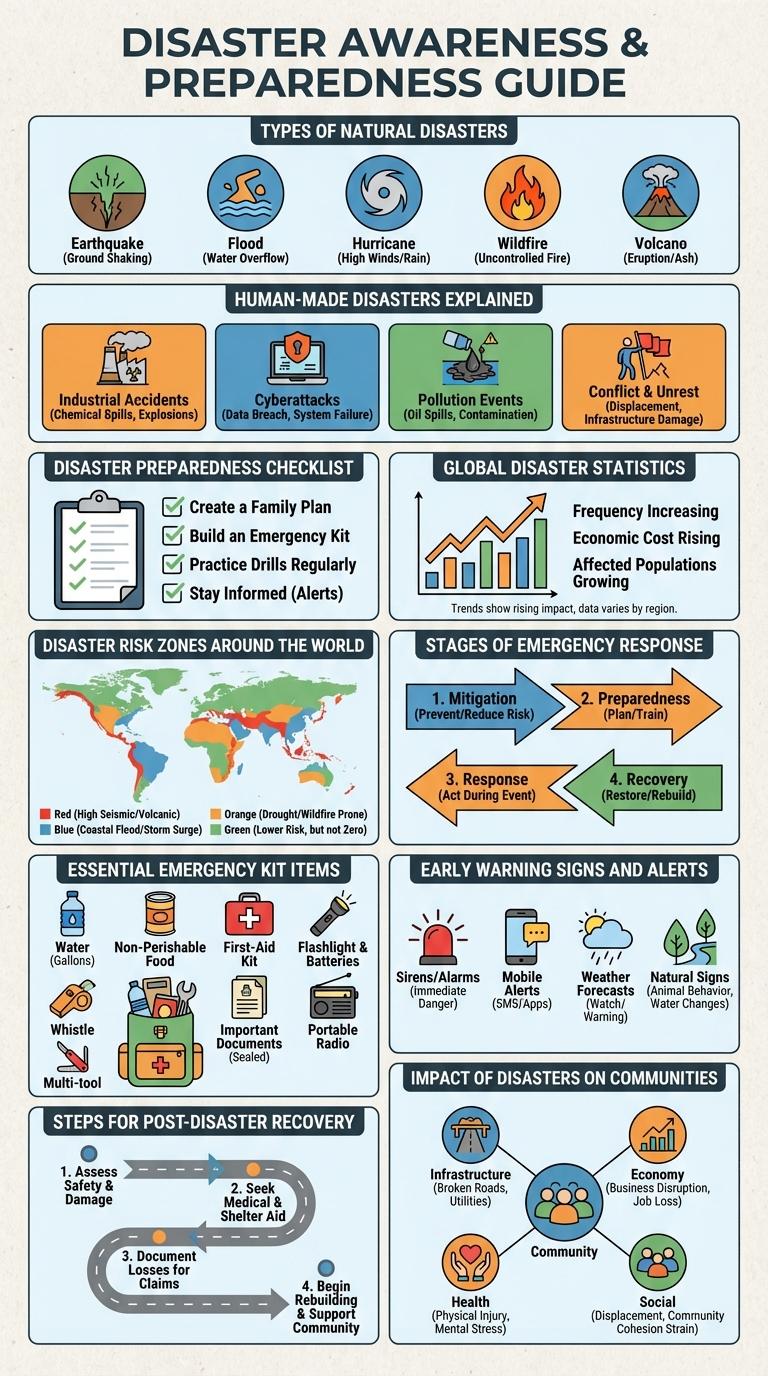
Disasters can strike unexpectedly, causing widespread damage and disruption to communities and environments. Understanding the types, causes, and impacts of disasters is crucial for effective planning and response. This infographic provides clear, concise data to help individuals and organizations prepare and protect themselves.
Types of Natural Disasters
Natural disasters are catastrophic events caused by natural processes of the Earth. Common types include earthquakes, hurricanes, floods, wildfires, and tornadoes. Each disaster type poses unique risks and requires specific preparedness measures to minimize damage and protect lives.
Human-Made Disasters Explained
| Human-Made Disaster | Explanation |
|---|---|
| Industrial Accidents | Events such as chemical spills, explosions, and factory fires that result from unsafe industrial practices or equipment failure. |
| Environmental Pollution | Contamination of air, water, or soil caused by human activities like waste disposal, emissions, and oil spills, leading to severe health and ecological damage. |
| Technological Failures | Breakdowns in infrastructure or technology, including power grid outages, nuclear power plant disasters, and transportation system failures. |
| Armed Conflicts | Violence and destruction generated by wars, terrorist attacks, and civil unrest, causing significant human and property losses. |
| Urban Fires | Large scale fires in densely populated areas triggered by human error or negligence, often spreading rapidly and causing widespread damage. |
Disaster Preparedness Checklist
Are you ready for an emergency disaster? Preparing in advance can save lives and minimize damage. A Disaster Preparedness Checklist helps you stay organized and ensures you have essential supplies on hand.
What items should be included in your emergency kit? Basic essentials include water, non-perishable food, a flashlight, batteries, and a first aid kit. These supplies support safety and sustenance during unexpected disasters.
How important is a communication plan during a disaster? Establishing contacts and meeting places keeps families connected and informed. Clear communication reduces panic and coordinates aid effectively.
Why must you secure important documents before a disaster strikes? Documents such as IDs, insurance policies, and medical records are critical for recovery. Storing them in waterproof containers ensures they remain safe and accessible.
| Checklist Item | Purpose |
|---|---|
| Water (1 gallon per person per day) | Hydration during emergencies |
| Non-perishable Food | Nutrition without refrigeration |
| First Aid Kit | Basic medical treatment |
| Flashlight and Batteries | Visibility and signaling |
| Important Documents | Proof of identity and insurance |
Global Disaster Statistics
Global disaster statistics reveal a significant increase in natural and man-made catastrophes over the past two decades, impacting millions worldwide. Earthquakes, floods, hurricanes, and wildfires account for the majority of these events, with Asia and the Americas being the most affected regions. Effective disaster management and preparedness strategies are essential to reduce fatalities and economic losses from future disasters.
Disaster Risk Zones Around the World
Disaster risk zones around the world highlight regions prone to natural hazards such as earthquakes, floods, hurricanes, and volcanic eruptions. Understanding these zones helps governments and communities prepare and mitigate damage effectively.
Asia experiences the highest number of disaster risk zones, particularly in countries like Japan, Indonesia, and the Philippines. The Pacific Ring of Fire is a significant area for earthquakes and volcanic activity. Coastal regions in the United States and Caribbean islands face frequent hurricanes, increasing the risk of severe weather disasters.
Stages of Emergency Response
Effective emergency response relies on a structured approach to manage disasters efficiently. Understanding the stages of emergency response ensures timely action and resource allocation.
- Preparedness - Planning, training, and resource organization to handle potential emergencies.
- Response - Immediate actions to protect life, property, and environment during a disaster.
- Recovery - Restoring normalcy through rebuilding, rehabilitation, and support services after the emergency.
Essential Emergency Kit Items
Preparing an essential emergency kit is crucial for disaster readiness. Having the right supplies ensures safety and sustenance during unexpected events.
- Water - Store at least one gallon per person per day for a minimum of three days.
- Non-perishable Food - Include ready-to-eat canned goods and energy bars lasting several days.
- First Aid Kit - Equip with bandages, antiseptics, and necessary medications for basic medical care.
- Flashlight and Batteries - Ensure reliable light sources in case of power outages.
- Multitool - Carry a versatile tool for various emergency repairs and tasks.
Early Warning Signs and Alerts
Early warning signs and alerts play a crucial role in disaster preparedness by providing timely information to communities at risk. Recognizing these signs enables individuals and authorities to take prompt action and minimize damage.
Common early warning signs include unusual weather patterns, sudden environmental changes, and emergency broadcasts from official sources. Effective alert systems combine technology, communication channels, and community education to ensure rapid dissemination of critical information.
Steps for Post-Disaster Recovery
Recovering from a disaster requires a structured approach to restore communities and infrastructure effectively. Post-disaster recovery focuses on rebuilding while minimizing future risks and promoting resilience.
- Assessment of Damage - Conduct a thorough evaluation of the physical, social, and economic impacts caused by the disaster.
- Restoration of Basic Services - Prioritize the restoration of water, electricity, healthcare, and communication systems to support affected populations.
- Community Engagement - Involve local residents and stakeholders in planning to ensure recovery efforts meet community needs.
- Rebuilding Infrastructure - Implement reconstruction using disaster-resilient materials and techniques to reduce vulnerability.
- Long-Term Recovery Planning - Develop strategies focused on sustainable development, risk reduction, and economic revitalization.
Effective post-disaster recovery strengthens community resilience and reduces the impact of future emergencies.