
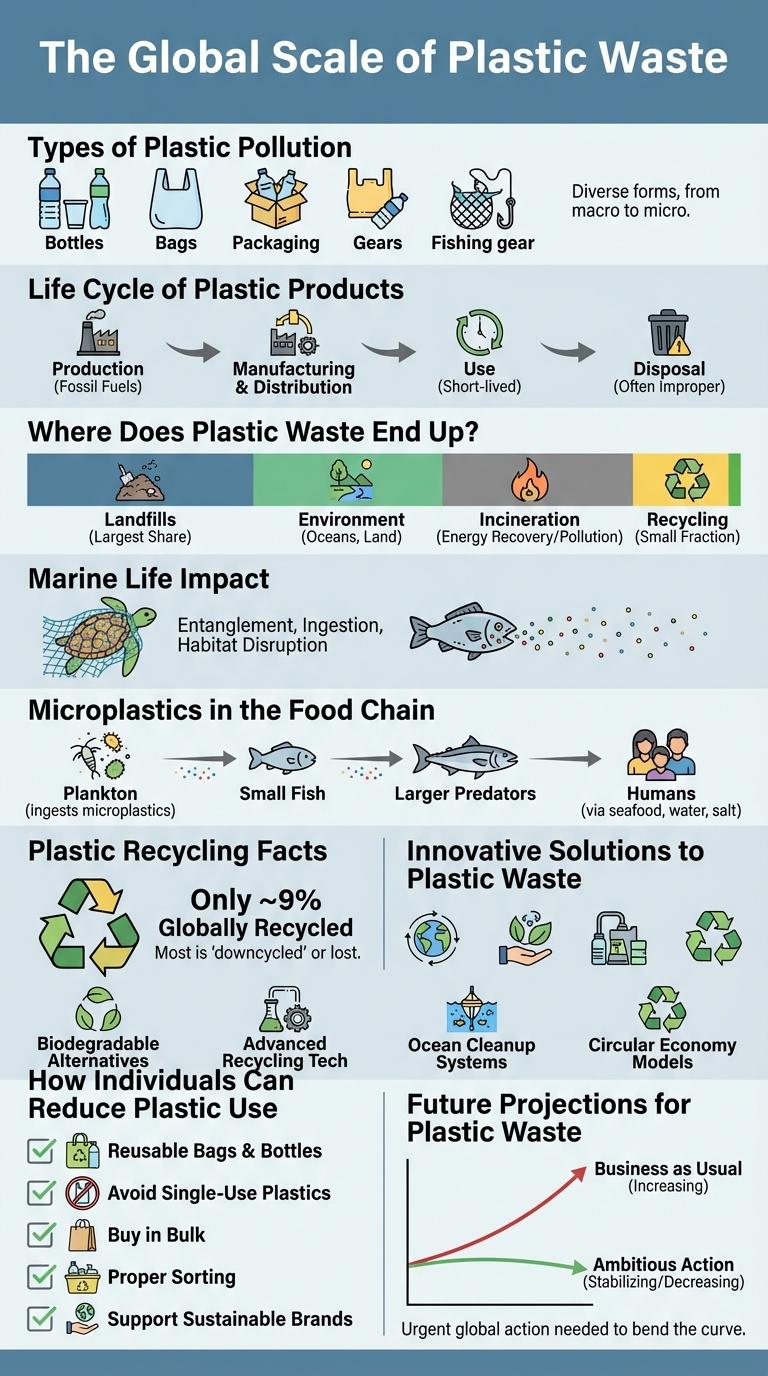
Plastic waste poses a significant threat to marine ecosystems and wildlife, accumulating rapidly in oceans and landfills worldwide. Understanding the sources, impact, and recycling processes of plastic debris is crucial for effective waste management and environmental preservation. This infographic highlights key statistics, challenges, and actionable steps to reduce plastic pollution.
The Global Scale of Plastic Waste
How much plastic waste is generated worldwide each year? Over 300 million tons of plastic are produced globally, with a significant portion becoming waste. Plastic pollution affects oceans, wildlife, and human health on a massive scale.
| Fact | Data |
|---|---|
| Annual global plastic production | Over 300 million tons |
| Percentage of plastic waste not recycled | More than 79% |
| Plastic waste entering oceans yearly | Approximately 8 million tons |
| Number of plastic particles in the ocean | Over 5 trillion |
| Estimated years for plastic to degrade | Up to 1000 years |
Types of Plastic Pollution
| Type of Plastic Pollution | Description |
|---|---|
| Microplastics | Small plastic particles less than 5mm, originating from broken down larger plastics and microbeads in cosmetics. |
| Macroplastics | Large plastic debris such as bottles, bags, and packaging materials that cause visible pollution. |
| Marine Plastic | Plastic waste found in oceans, including fishing gear, plastic bags, and microplastics threatening marine life. |
| Industrial Plastic Waste | Plastic by-products and packaging discarded by factories contributing significantly to land and water pollution. |
| Plastic Fibers | Synthetic fibers shed from clothing and textiles, entering water systems and affecting aquatic environments. |
Life Cycle of Plastic Products
Plastic products begin their life cycle as raw materials like petroleum and natural gas, which undergo chemical processing to create plastic polymers. These polymers are then molded into various products used in everyday life, such as packaging, containers, and household items. After use, plastic waste often ends up in landfills, recycling facilities, or the environment, where it can persist for hundreds of years without breaking down.
Where Does Plastic Waste End Up?
Plastic waste affects global ecosystems by accumulating in various environments. Understanding where plastic waste ends up is crucial for addressing pollution.
Most plastic waste ends up in oceans, creating massive floating garbage patches. A significant portion is also buried in landfills, where it can take centuries to degrade. Some plastic waste is incinerated, releasing harmful pollutants into the atmosphere.
Marine Life Impact
Plastic waste in oceans poses a severe threat to marine life, with millions of tons entering the water each year. Marine animals ingest or become entangled in plastic debris, leading to injury and death.
Microplastics have been found in the digestive systems of over 1000 marine species, disrupting food chains and ecosystems. Preventing plastic pollution is crucial to protecting biodiversity and maintaining healthy oceans.
Microplastics in the Food Chain
Microplastics are tiny plastic particles measuring less than 5 millimeters that infiltrate the food chain globally. These particles originate from larger plastic debris breaking down and from products containing microbeads.
- Ingestion by Marine Life - Small aquatic organisms consume microplastics, mistaking them for food, which introduces plastics into the food web.
- Bioaccumulation - Microplastics accumulate in the bodies of fish and shellfish, increasing in concentration as they move up the food chain.
- Human Exposure - Humans ingest microplastics through seafood consumption, raising concerns about potential health risks and toxic chemical transfer.
Efforts to reduce plastic pollution and monitor microplastic contamination in seafood are critical to safeguarding food safety and ecosystem health.
Plastic Recycling Facts
Plastic waste poses a significant environmental challenge worldwide. Recycling plastic reduces pollution and conserves resources efficiently.
- Only 9% of plastic waste is recycled - The majority of plastic ends up in landfills or oceans, causing environmental harm.
- Recycling plastic saves up to 70% of energy - Compared to producing new plastic from raw materials, recycling reduces energy consumption substantially.
- Plastic takes hundreds of years to decompose - Proper recycling helps minimize plastic accumulation and preserves ecosystems.
Innovative Solutions to Plastic Waste
Innovative solutions to plastic waste are transforming how we manage and reduce environmental pollution. Advanced recycling technologies and biodegradable materials are at the forefront of this revolution.
Chemical recycling breaks down plastics into their original components for reuse, enhancing circular economy efforts. Bioplastics made from renewable resources offer sustainable alternatives to traditional plastics, reducing dependence on fossil fuels.
How Individuals Can Reduce Plastic Use
Plastic waste significantly harms marine life, pollutes ecosystems, and contributes to global climate change. Individuals can reduce plastic use by opting for reusable bags, bottles, and containers instead of single-use plastics. Supporting products with minimal packaging and participating in local recycling programs also play key roles in decreasing plastic pollution.