
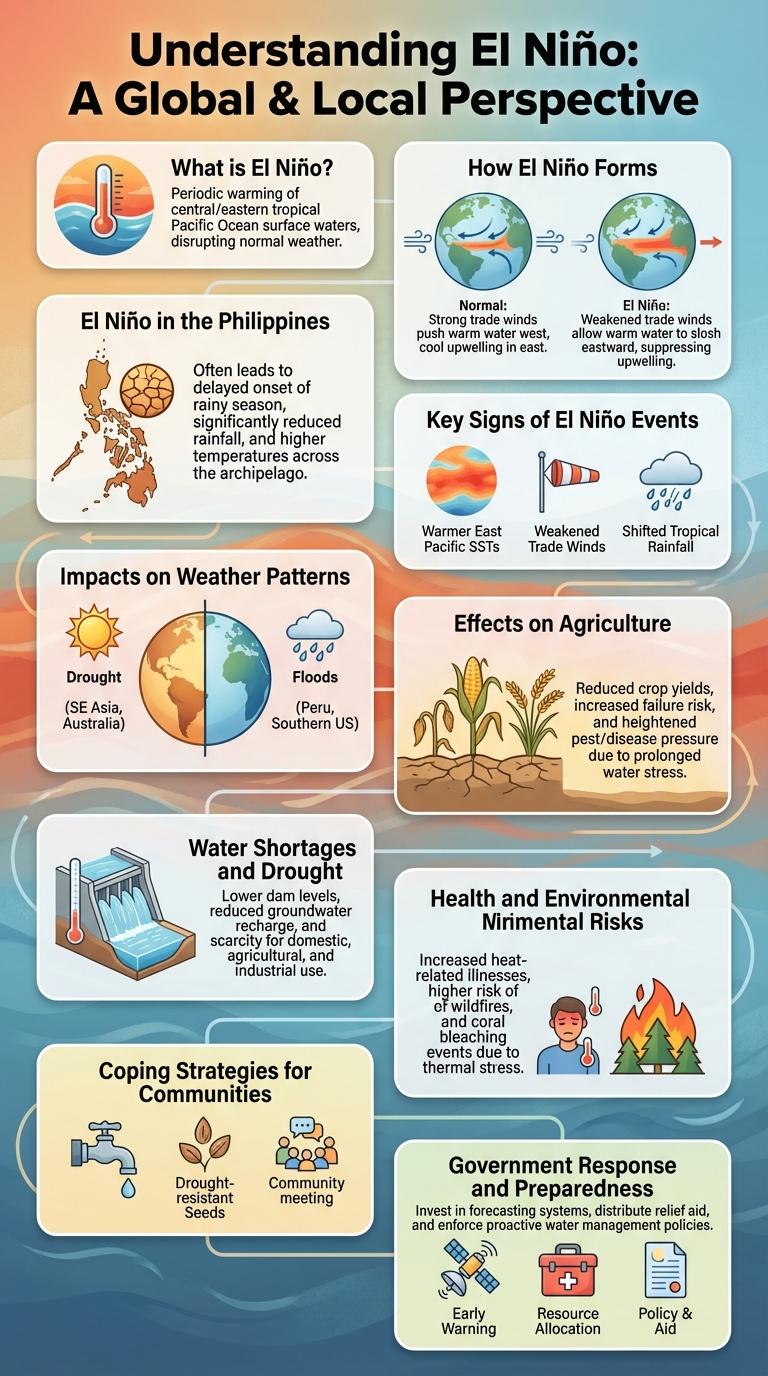
El Nino significantly impacts the Philippines, causing prolonged droughts and severe water shortages that affect agriculture and daily life. This infographic highlights key patterns, historical data, and the socio-economic consequences of El Nino events in the region. Understanding these insights helps improve preparedness and resilience against future climate challenges.
What is El Niño?
El Nino is a climate phenomenon characterized by the periodic warming of sea surface temperatures in the central and eastern Pacific Ocean. It significantly impacts global weather patterns, including those in the Philippines.
In the Philippines, El Nino typically causes prolonged dry spells and drought conditions, affecting agriculture, water supply, and increasing the risk of wildfires. Understanding El Nino helps in preparing for its effects and mitigating the associated socio-economic challenges.
How El Niño Forms
El Nino is a climate phenomenon characterized by the warming of the central and eastern tropical Pacific Ocean, which significantly impacts weather patterns in the Philippines. This warming disrupts normal atmospheric circulation, leading to dry spells and drought conditions across the region.
Understanding how El Nino forms is crucial for predicting its effects on agriculture, water resources, and disaster preparedness in the Philippines.
- Warm Ocean Surface Temperatures - El Nino begins when the surface waters of the central and eastern Pacific Ocean become unusually warm due to weakened trade winds.
- Weakened Trade Winds - Normally, easterly trade winds push warm water westward; during El Nino, these winds weaken or reverse, allowing warm water to accumulate near the Americas.
- Atmospheric Pressure Shifts - Changes in air pressure across the Pacific Ocean disrupt the Walker Circulation, altering weather patterns and reducing rainfall in the Philippines.
El Niño in the Philippines
El Nino significantly impacts the Philippines' weather patterns, causing prolonged droughts and water shortages. It disrupts agriculture, energy supply, and everyday life across the country.
- Temperature Increase - El Nino raises average temperatures by 1 to 3 degrees Celsius, intensifying heatwaves in affected regions.
- Reduced Rainfall - It leads to decreased rainfall, resulting in drought conditions that affect farming and water resources.
- Agricultural Damage - Crop yields drop due to insufficient water, threatening food security and farmers' livelihoods.
Preparedness and early warning systems improve resilience against El Nino impacts in the Philippines.
Key Signs of El Niño Events
El Nino is a climate phenomenon characterized by the warming of the Pacific Ocean, significantly impacting weather patterns in the Philippines. Recognizing the key signs of El Nino helps in preparing for its effects on agriculture, water resources, and daily life.
- Reduced Rainfall - El Nino causes a pronounced decrease in rainfall, leading to dry spells and drought conditions across the Philippines.
- Rising Temperatures - Temperatures often increase during El Nino events, resulting in hotter than normal days nationwide.
- Depleted Water Resources - Rivers, lakes, and groundwater levels drop due to prolonged dry periods caused by El Nino.
Impacts on Weather Patterns
El Nino significantly alters weather patterns in the Philippines, causing prolonged dry spells and reduced rainfall. These changes disrupt normal seasonal cycles, leading to drought conditions in many regions.
Reduced rainfall during El Nino events affects agricultural productivity and water resource availability. The shift in weather patterns also increases the risk of forest fires and negatively impacts ecosystems across the country.
Effects on Agriculture
El Nino significantly impacts agriculture in the Philippines by causing prolonged droughts and water shortages. These conditions lead to reduced crop yields and increased vulnerability of farming communities.
Crop production, especially rice and corn, suffers due to insufficient rainfall, resulting in lower harvests and economic losses for farmers. Livestock farming also faces challenges as water and fodder become scarce, affecting animal health and productivity. The government and farmers implement adaptive measures such as drought-resistant crops and efficient irrigation to mitigate El Nino's adverse effects on agriculture.
Water Shortages and Drought
| Impact | Description |
|---|---|
| Water Shortages | El Nino causes reduced rainfall, leading to decreased river flows and reservoir levels across the Philippines. |
| Drought Areas | Prolonged dry spells affect regions such as Luzon and Visayas, resulting in critical water deficits for households and agriculture. |
| Agricultural Effects | Crop failures occur due to lack of irrigation water, impacting rice, corn, and root crop production. |
| Water Supply Systems | Municipal water systems face rationing and restrictions, affecting daily consumption and sanitation. |
| Government Response | Implementation of water conservation programs and support for affected farmers through drought mitigation initiatives. |
Health and Environmental Risks
El Nino significantly impacts the Philippines by causing prolonged droughts, leading to water scarcity and increased risk of heat-related illnesses such as heatstroke and dehydration. Environmental consequences include reduced agricultural productivity, loss of biodiversity, and heightened vulnerability of ecosystems to wildfires. These health and environmental risks strain local resources and demand urgent mitigation strategies to protect communities and natural habitats.
Coping Strategies for Communities
How do communities in the Philippines cope with the impacts of El Nino? The Philippines faces prolonged dry spells and water shortages during El Nino events, requiring adaptive strategies. Communities implement water conservation, diversify crops, and enhance disaster preparedness to reduce vulnerability.
| Strategy | Description |
|---|---|
| Water Conservation | Rainwater harvesting and efficient irrigation reduce water scarcity in affected areas. |
| Crop Diversification | Planting drought-resistant crops minimizes agricultural losses during dry periods. |
| Livelihood Support | Alternative income sources are promoted to sustain families when farming is impacted. |
| Community Education | Awareness campaigns help residents prepare and respond effectively to El Nino. |
| Disaster Preparedness | Early warning systems and emergency plans enhance community resilience to prolonged drought. |