
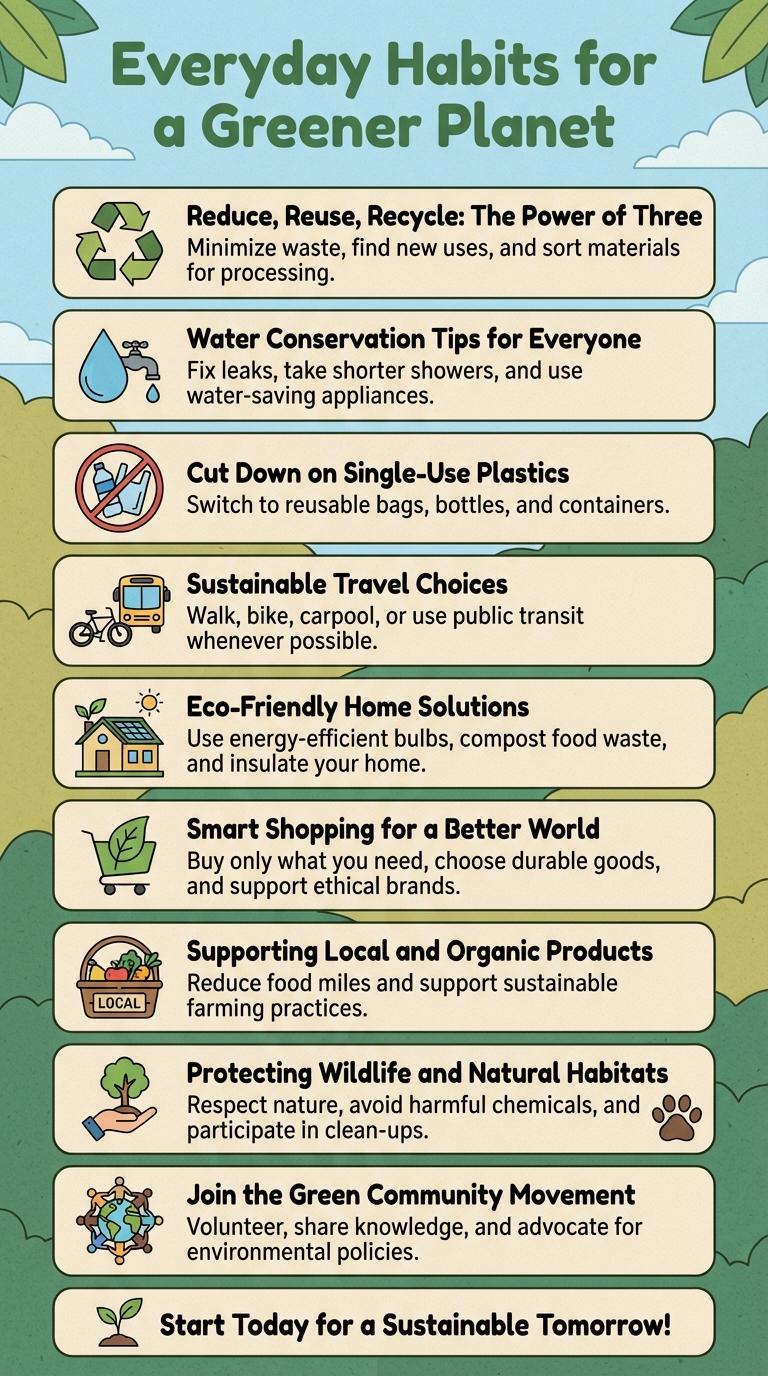
Protecting the environment requires simple yet effective daily actions that collectively make a significant impact. This infographic highlights practical tips for reducing waste, conserving water, and minimizing energy use to foster a healthier planet. Embracing these eco-friendly habits supports sustainability and helps preserve natural resources for future generations.
Everyday Habits for a Greener Planet
Everyday habits like reducing plastic use, conserving water, and recycling waste play a crucial role in protecting the environment. Choosing energy-efficient appliances and using public transportation help lower carbon footprints significantly. Small changes in daily routines contribute to a greener planet and a sustainable future for generations to come.
Reduce, Reuse, Recycle: The Power of Three
Protecting the environment is essential for a sustainable future. Small changes in daily habits can significantly reduce environmental impact.
- Reduce - Minimize waste by cutting down on unnecessary consumption and choosing eco-friendly products.
- Reuse - Extend the life of items by finding new uses or donating rather than discarding them.
- Recycle - Properly sort and process materials like paper, plastic, and metal to conserve resources and energy.
Embracing the power of three--Reduce, Reuse, Recycle--helps preserve natural resources and lowers pollution levels worldwide.
Water Conservation Tips for Everyone
Water conservation is essential for preserving our planet's valuable resources. Everyone can contribute by adopting simple habits to reduce water waste.
Fixing leaks promptly prevents gallons of water from being lost daily. Using water-efficient appliances helps minimize unnecessary consumption. Turning off the tap while brushing teeth can save up to 8 gallons of water each day.
Cut Down on Single-Use Plastics
How can reducing single-use plastics benefit the environment? Cutting down on single-use plastics significantly decreases plastic pollution in oceans and landfills. This reduction helps protect wildlife and conserves natural resources.
Sustainable Travel Choices
Choosing sustainable travel methods reduces carbon footprints and preserves natural resources. Eco-friendly travel promotes healthier environments worldwide.
- Use Public Transportation - Buses and trains emit less pollution per passenger compared to private vehicles.
- Opt for Biking or Walking - These zero-emission options support physical health and lower environmental impact.
- Choose Eco-Friendly Accommodations - Hotels with green certifications use energy and water efficiently to minimize waste.
Eco-Friendly Home Solutions
Creating an eco-friendly home reduces environmental impact and promotes sustainable living. Simple changes in daily habits contribute significantly to conserving natural resources and reducing waste.
Energy-efficient appliances lower electricity consumption and decrease greenhouse gas emissions. Using natural cleaning products minimizes harmful chemicals and protects indoor air quality.
Smart Shopping for a Better World
Smart shopping plays a crucial role in protecting the environment by reducing waste and conserving resources. Making informed choices helps create a sustainable future for the planet.
- Buy Local Products - Purchasing locally reduces carbon emissions connected to transportation and supports regional economies.
- Choose Reusable Items - Opting for reusable over single-use products decreases landfill waste and pollution.
- Select Eco-Friendly Packaging - Prioritizing products with minimal or biodegradable packaging limits plastic pollution and environmental damage.
Supporting Local and Organic Products
Supporting local and organic products reduces the carbon footprint associated with long-distance transportation and harmful pesticides. Choosing organic foods promotes biodiversity and healthier soil by avoiding synthetic chemicals. Buying from local farmers boosts the economy and encourages sustainable farming practices in your community.
Protecting Wildlife and Natural Habitats
| Action | Description |
|---|---|
| Preserve Natural Habitats | Maintain forests, wetlands, and grasslands to support biodiversity and ecosystem health. |
| Reduce Pollution | Minimize the use of harmful chemicals and properly dispose of waste to protect wildlife from toxins. |
| Support Conservation Efforts | Contribute to wildlife protection programs and habitat restoration projects to sustain animal populations. |
| Promote Sustainable Land Use | Encourage agriculture, development, and resource extraction practices that avoid habitat destruction. |
| Raise Awareness | Educate communities about the importance of wildlife preservation and natural habitat protection. |