
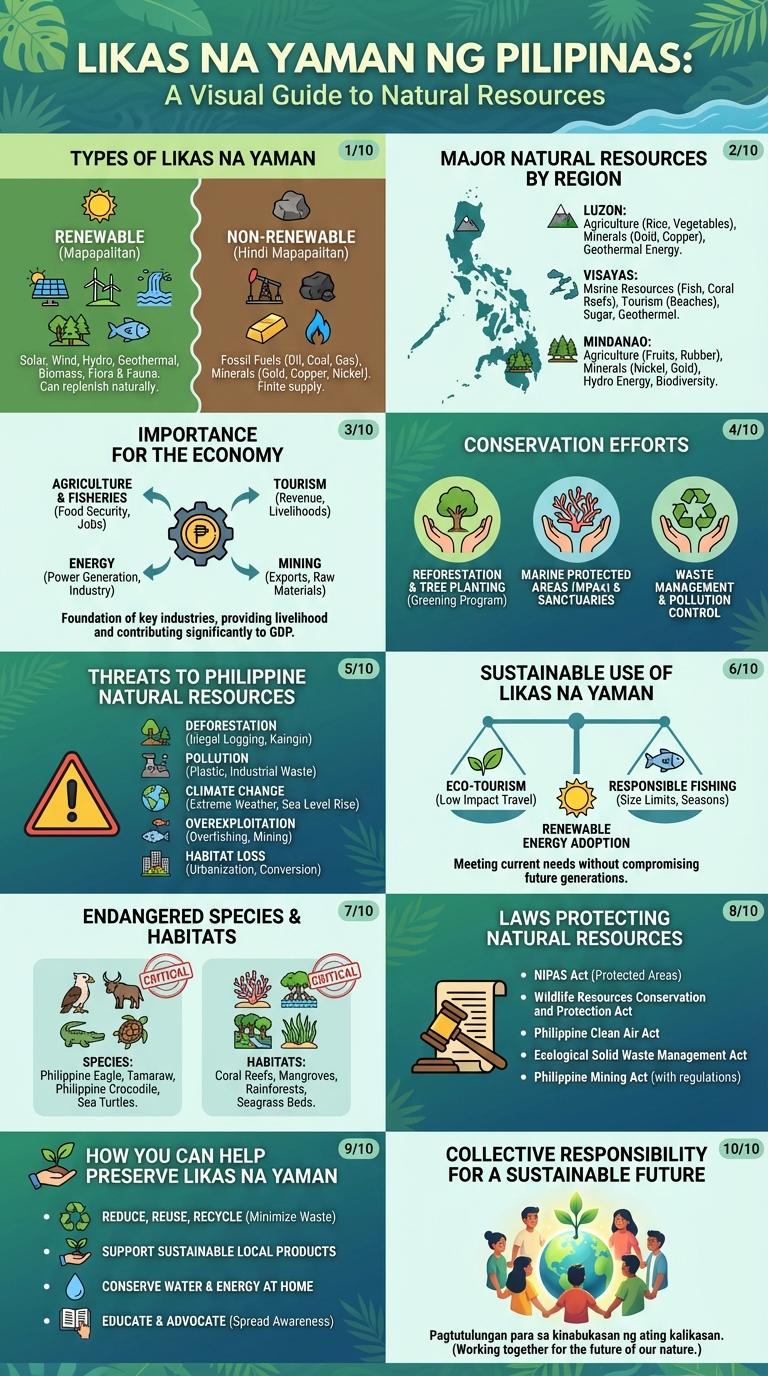
Likas na yaman, or natural resources, are essential elements found in the environment that sustain life and support economic activities. This infographic highlights the various types of natural resources, including renewable and non-renewable categories, and emphasizes their importance in maintaining ecological balance. It also showcases how responsible usage and conservation efforts can ensure the availability of these resources for future generations.
Types of Likas na Yaman in the Philippines
The Philippines is rich in natural resources, known locally as likas na yaman. These resources are vital to the country's economy and environmental sustainability.
- Mineral Resources - The Philippines possesses abundant mineral deposits such as gold, nickel, and copper, making mining a significant industry.
- Forest Resources - Vast tropical forests provide timber, wildlife habitats, and contribute to biodiversity conservation.
- Water Resources - Numerous rivers, lakes, and coastal areas support agriculture, fisheries, and hydropower generation.
Renewable vs Non-renewable Resources
Likas na yaman refers to the natural resources found in the environment that are essential for human survival and economic activities. These resources are categorized into renewable and non-renewable based on their availability and regeneration rate.
Renewable resources, such as solar energy, wind, water, and forests, replenish naturally within a short time and can be used sustainably. Non-renewable resources, including coal, petroleum, natural gas, and minerals, exist in finite quantities and take millions of years to form.
Major Natural Resources by Region
The Philippines is rich in natural resources distributed across its various regions. These resources play a vital role in the country's economy and environmental sustainability.
- Region I (Ilocos Region): Minerals - Ilocos is known for its significant deposits of gold, copper, and chromite minerals supporting mining activities.
- Region III (Central Luzon): Agriculture - Central Luzon features vast rice and sugarcane plantations, making it the "Rice Granary of the Philippines."
- Region VII (Central Visayas): Marine Resources - This region boasts abundant fisheries and coral reefs, crucial for seafood production and tourism.
Importance of Likas na Yaman for the Economy
Likas na yaman, or natural resources, form the backbone of any economy by providing essential materials for production and consumption. These resources include minerals, forests, water, and soil, which directly contribute to economic stability and growth.
The sustainable management of likas na yaman ensures long-term economic benefits, creating jobs and supporting industries such as agriculture, mining, and tourism. Exploiting these resources responsibly increases national income and improves the quality of life for citizens. Efficient utilization of natural resources drives export revenue and attracts foreign investment, fueling overall economic development.
Conservation Efforts for Natural Resources
Conservation efforts for likas na yaman (natural resources) are essential to preserve biodiversity and maintain ecological balance. Sustainable practices help protect forests, rivers, minerals, and wildlife from depletion and environmental degradation.
Reforestation, clean water initiatives, and responsible mining are key strategies in conserving natural resources. Community involvement and government policies play vital roles in ensuring long-term resource sustainability and environmental health.
Threats to Philippine Natural Resources
The Philippines is rich in likas na yaman, including forests, minerals, and marine biodiversity. Threats such as deforestation, illegal mining, and overfishing are rapidly depleting these natural resources. Climate change and urbanization further intensify the vulnerability of the country's environment.
Sustainable Use of Likas na Yaman
What are the key principles of sustainable use of likas na yaman?
Sustainable use of likas na yaman ensures that natural resources meet present needs without compromising future generations. This approach balances environmental protection, economic growth, and social equity.
How can communities contribute to the sustainable management of likas na yaman?
Communities play a vital role by practicing responsible resource harvesting and supporting conservation programs. Local knowledge and participation enhance biodiversity preservation and resource renewal.
Which natural resources are prioritized in sustainable likas na yaman management?
Forests, water resources, minerals, and soil are prioritized to maintain ecosystem services. Protecting these resources prevents degradation and supports livelihoods dependent on them.
| Resource | Sustainable Practice |
|---|---|
| Forests | Controlled logging and reforestation |
| Water | Efficient usage and watershed protection |
| Soil | Crop rotation and erosion control |
| Minerals | Regulated mining and land rehabilitation |
| Marine Resources | Fishing quotas and habitat conservation |
Endangered Species and Habitats
Likas na yaman or natural resources include endangered species and their habitats that are crucial for biodiversity. Many species face threats from habitat destruction, pollution, and climate change, leading to a significant decline in population numbers. Protecting these species and their environments is essential for maintaining ecological balance and ensuring sustainability for future generations.
Laws Protecting Natural Resources
The Philippines enforces several laws to protect its rich natural resources, ensuring sustainable use and conservation. These laws address forest management, wildlife protection, and environmental preservation to safeguard biodiversity for future generations.
- Republic Act No. 9147 (Wildlife Resources Conservation and Protection Act) - This law conserves and protects wildlife species and their habitats in the Philippines.
- Republic Act No. 9072 (National Caves and Cave Resources Management and Protection Act) - It regulates the exploration, management, and preservation of cave resources.
- Republic Act No. 7611 (Strategic Environmental Plan for Palawan Act) - This law promotes sustainable development and conservation in the ecologically sensitive Palawan region.
Strict enforcement of these laws helps maintain ecological balance and promotes responsible stewardship of the nation's natural wealth.