
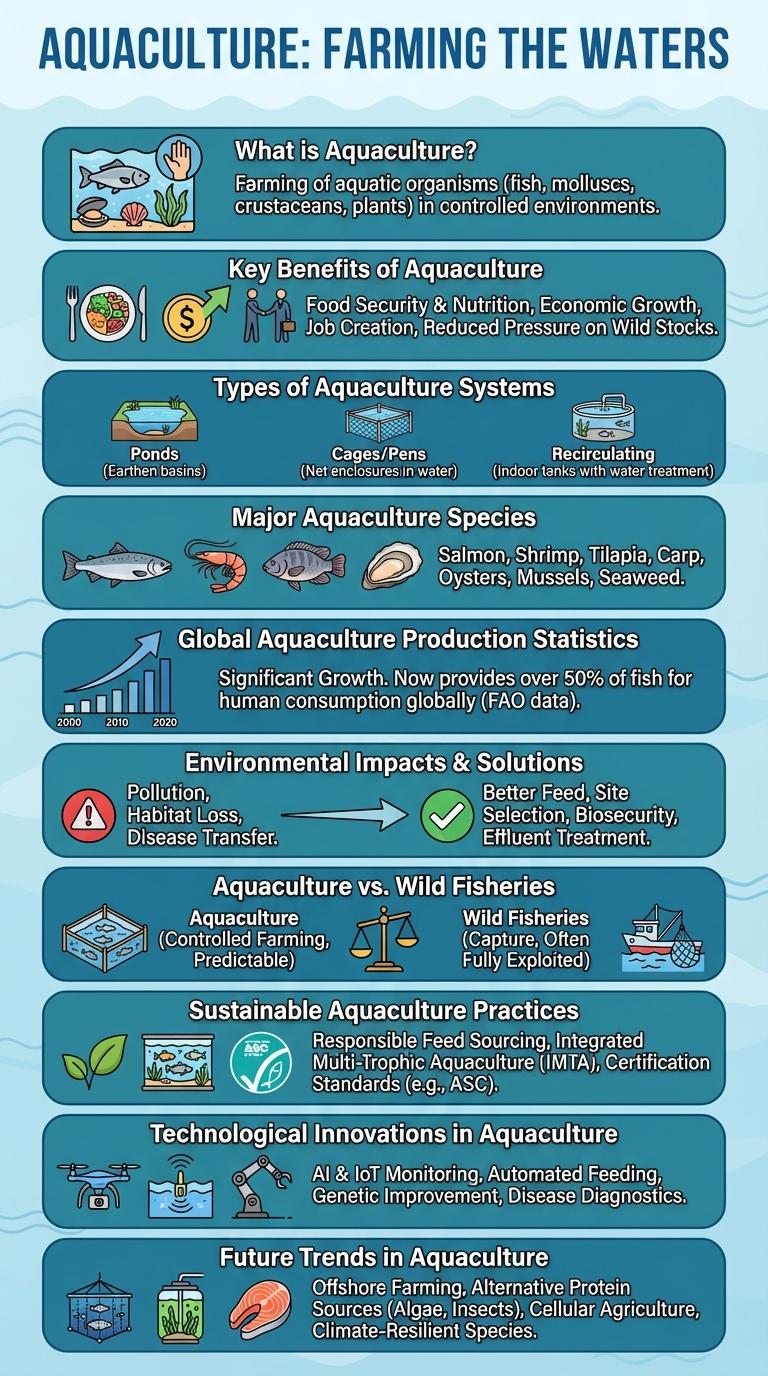
Aquaculture is a rapidly expanding industry crucial for meeting global seafood demand while preserving wild fish populations. This infographic highlights key statistics, sustainable practices, and innovative technologies shaping modern fish farming. Understanding these elements provides insights into how aquaculture supports food security and environmental stewardship.
What is Aquaculture?
Aquaculture is the farming of aquatic organisms such as fish, crustaceans, mollusks, and aquatic plants. It involves cultivating these species under controlled conditions in various water environments.
This practice supports food security, provides livelihoods, and helps meet the global demand for seafood. Aquaculture includes freshwater and marine farming techniques that optimize growth and sustainability.
Key Benefits of Aquaculture
Aquaculture, the farming of fish, shellfish, and aquatic plants, plays a crucial role in meeting global seafood demand. It supports biodiversity by reducing pressure on wild fish populations and natural habitats.
Key benefits of aquaculture include sustainable food production, economic growth, and job creation in coastal communities. It also enhances food security by providing a reliable source of protein and essential nutrients worldwide.
Types of Aquaculture Systems
Aquaculture encompasses various systems designed to cultivate aquatic organisms efficiently. Common types include pond culture, cage culture, and recirculating aquaculture systems (RAS), each suited for different species and environments. Selecting the appropriate system depends on factors such as water availability, species requirements, and production scale.
Major Aquaculture Species
Aquaculture is the farming of aquatic organisms such as fish, crustaceans, mollusks, and aquatic plants. It plays a crucial role in global food production and supports millions of livelihoods.
- Tilapia - A freshwater fish widely farmed for its fast growth and adaptability in diverse environments.
- Salmon - A high-value marine species known for its rich omega-3 fatty acids and popular in global seafood markets.
- Shrimp - A leading crustacean in aquaculture, cultivated extensively in coastal regions due to its economic importance.
Global Aquaculture Production Statistics
| Year | Global Aquaculture Production (Million Tonnes) |
|---|---|
| 2018 | 114.5 |
| 2019 | 120.6 |
| 2020 | 124.5 |
| 2021 | 127.4 |
| 2022 | 132.7 |
Environmental Impacts & Solutions
What are the primary environmental impacts of aquaculture?
Aquaculture can lead to water pollution, habitat destruction, and loss of biodiversity due to waste discharge and use of chemicals. Escaped farmed species may disrupt local ecosystems and wild populations.
How can sustainable practices reduce the negative impacts of aquaculture?
Implementing integrated multi-trophic aquaculture and improving waste management helps minimize pollution and restore ecological balance. Using native species and better feed formulations decreases the risk to surrounding habitats and wild fish stocks.
Why is monitoring water quality essential in aquaculture operations?
Monitoring ensures early detection of pollutants and disease outbreaks that can harm aquatic life and water bodies. Maintaining optimal water conditions promotes healthier farmed species and reduces environmental contamination.
What role does habitat restoration play in aquaculture sustainability?
Restoring mangroves and wetlands near farms enhances natural filtration and provides refuge for wildlife. These habitats act as buffers, improving coastal resilience and biodiversity conservation alongside aquaculture activities.
How can policy and regulation support eco-friendly aquaculture?
Strict environmental standards and certification programs encourage responsible farming practices and reduce ecological footprints. Government incentives for innovation in sustainable technologies promote long-term industry viability and ecosystem health.
Aquaculture vs. Wild Fisheries
Aquaculture involves the farming of aquatic organisms such as fish, shellfish, and algae in controlled environments, while wild fisheries rely on harvesting from natural water bodies. Aquaculture supports sustainable seafood production by reducing pressure on wild fish populations and contributing to food security worldwide. Wild fisheries face challenges like overfishing and habitat destruction, making aquaculture a vital component of future marine resource management.
Sustainable Aquaculture Practices
Aquaculture plays a crucial role in meeting global seafood demand while reducing pressure on wild fish stocks. Sustainable aquaculture practices focus on environmentally friendly methods to ensure long-term industry viability.
- Integrated Multi-Trophic Aquaculture (IMTA) - Combines different species like fish, shellfish, and seaweed to recycle nutrients and minimize waste.
- Use of Eco-Friendly Feed - Utilizes alternative protein sources such as insects and algae to reduce reliance on wild-caught fishmeal.
- Water Quality Management - Implements advanced filtration and monitoring systems to maintain healthy aquatic environments and reduce pollution.
- Selective Breeding Programs - Enhances disease resistance and growth rates to improve productivity without expanding farmed areas.
- Habitat Conservation Efforts - Protects mangroves and wetlands, essential for biodiversity and natural water filtration, alongside aquaculture sites.
Sustainable aquaculture ensures seafood supply while protecting aquatic ecosystems for future generations.
Technological Innovations in Aquaculture
Aquaculture integrates advanced technologies to enhance productivity and sustainability in fish farming. Technological innovations drive efficiency and environmental stewardship in modern aquaculture practices.
- Automated Feeding Systems - Utilize sensors and AI to optimize feed distribution, reducing waste and promoting healthy growth.
- Recirculating Aquaculture Systems (RAS) - Maintain water quality and recycle resources, enabling year-round fish production in controlled environments.
- Genetic Improvement Technologies - Apply selective breeding and genomics to develop disease-resistant and faster-growing fish species.