
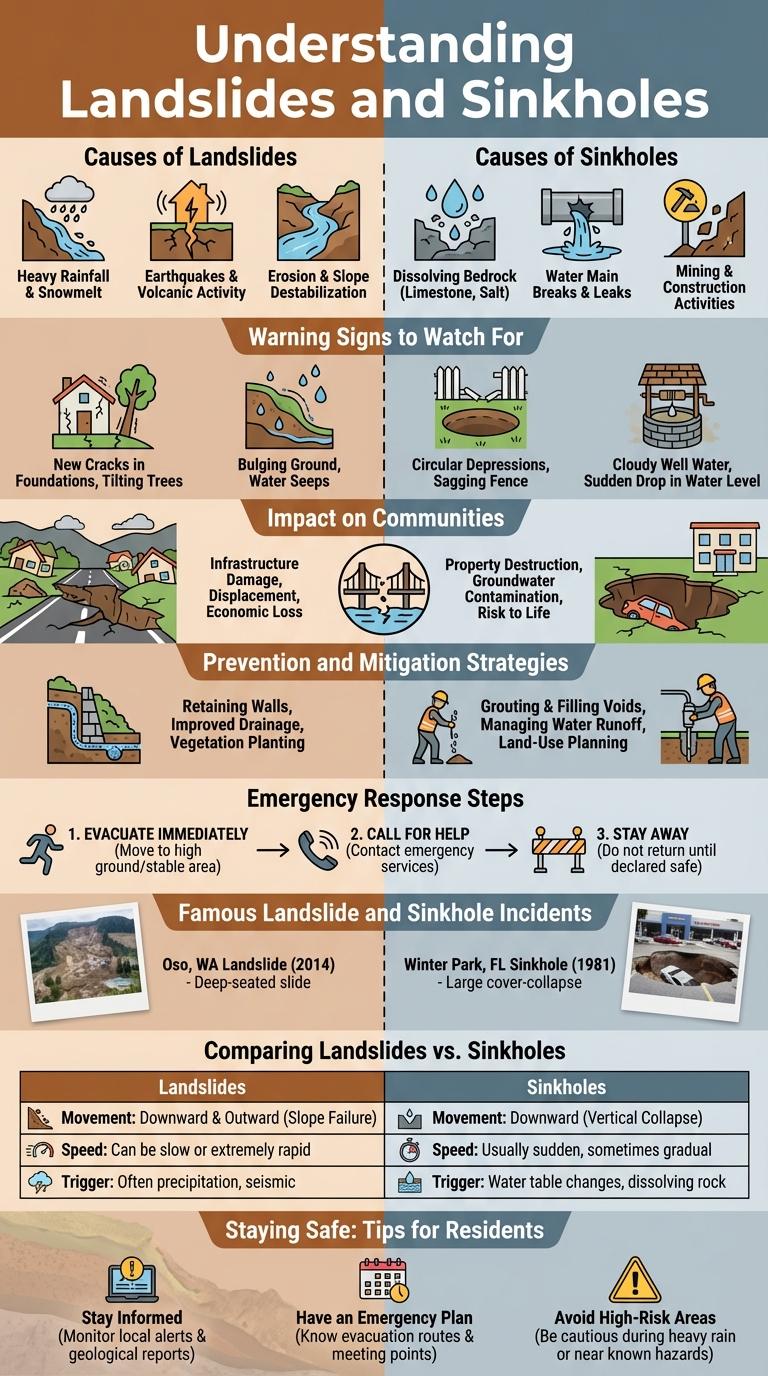
Landslides and sinkholes pose significant risks to both natural landscapes and human structures. Understanding their causes, warning signs, and impact is essential for effective prevention and emergency preparedness. Visualizing this information through an infographic provides a clear, concise overview that aids in raising awareness and promoting safety measures.
Understanding Landslides and Sinkholes
Landslides occur when soil, rock, and debris move down a slope due to gravity, often triggered by heavy rainfall, earthquakes, or human activities. Sinkholes form when the ground surface collapses into an underground cavity, commonly caused by water erosion of soluble rock like limestone. Both phenomena pose significant risks to infrastructure and safety, requiring careful geological assessment and monitoring.
Causes of Landslides
Landslides occur when soil, rock, and other debris move down a slope due to gravity. They are often triggered by natural events such as heavy rainfall or earthquakes.
Human activities like deforestation, construction, and mining can also destabilize slopes and cause landslides. The combination of weak soil structure and water saturation increases the risk significantly.
Causes of Sinkholes
Sinkholes form when the ground beneath the surface dissolves due to natural processes or human activities. Common causes include the erosion of soluble bedrock such as limestone, gypsum, or salt beds, leading to underground voids.
Excessive groundwater withdrawal and heavy rainfall can accelerate sinkhole formation by destabilizing the soil. Construction and mining activities disturb the earth and often trigger sudden collapses, posing significant risks to infrastructure and safety.
Warning Signs to Watch For
What are the warning signs of landslides and sinkholes? Watch for cracks in the ground, walls, or pavement that appear suddenly and widen over time. Unusual bulging or tilting of the ground surface may indicate unstable soil or underground voids.
How can you detect early signs of a landslide? Look for changes in water drainage patterns and new springs or wet areas that were previously dry. Trees, fences, or utility poles leaning or moving downhill can signal shifting earth beneath the surface.
What signs suggest a developing sinkhole? Notice any sudden depressions or holes forming in the ground, especially after heavy rainfalls. Windows and doors that stick or won't close properly might reflect ground subsidence due to voids underground.
How to recognize ground movement related to these hazards? Slumping soil, falling rocks, or soil sliding away from foundations imply potential landslide activity. Pay attention to unusual sounds such as popping or cracking noises underground or in nearby structures.
What immediate actions should follow warning signs? Evacuate the area if noticeable ground changes or surface disruptions occur. Contact local authorities or geological experts to assess and mitigate the risk before further damage happens.
Impact on Communities
| Landslide Impact | Sinkhole Impact |
|---|---|
| Destruction of homes and infrastructure | Collapse of roads and buildings |
| Displacement of residents causing temporary shelters | Sudden loss of property leading to financial strain |
| Disruption of transportation and emergency services | Interruptions in utility services like water and electricity |
| Soil erosion leading to reduced agricultural productivity | Contamination of groundwater from surface debris |
| Psychological trauma and increased risk of health issues | Long-term economic decline in affected neighborhoods |
Prevention and Mitigation Strategies
Landslides and sinkholes pose significant risks to infrastructure and human safety, requiring proactive prevention and mitigation strategies. Understanding these hazards enables communities to implement effective measures that reduce damage and loss.
- Slope Stabilization - Techniques like retaining walls and terracing help prevent landslides by reinforcing soil and controlling erosion.
- Drainage Control - Proper water management systems reduce groundwater buildup, minimizing sinkhole formation and slope failure risks.
- Land Use Planning - Restricting construction in high-risk areas decreases vulnerability to landslides and sinkholes, promoting safer development.
Emergency Response Steps
Landslides and sinkholes pose significant risks to life and infrastructure, requiring swift emergency actions. Effective response minimizes injury and property damage during these natural disasters.
- Assess the Situation - Quickly evaluate the extent of the landslide or sinkhole to identify immediate dangers and affected areas.
- Evacuate Affected Areas - Move all individuals to safer locations away from the hazard zone to prevent injury.
- Contact Emergency Services - Notify local authorities and disaster response teams to provide professional assistance and resources.
- Secure the Area - Restrict access to unstable regions to prevent accidents and ensure public safety.
- Provide First Aid - Administer medical care to injured persons while awaiting emergency responders' arrival.
Famous Landslide and Sinkhole Incidents
Landslides and sinkholes are natural disasters causing significant damage worldwide. Famous incidents highlight the risks and impacts on communities.
- Vargas Tragedy, Venezuela (1999) - A massive landslide triggered by heavy rain killed over 10,000 people and destroyed entire towns.
- The Xiaolin Landslide, Taiwan (2009) - Typhoon Morakot caused this devastating landslide, burying the village of Xiaolin and resulting in hundreds of deaths.
- The Winter Park Sinkhole, Florida (1981) - A large sinkhole swallowed a home and caused extensive property damage, drawing attention to Florida's karst terrain.
- Guatemalan Sinkhole, Guatemala City (2010) - A 100-foot wide sinkhole opened suddenly in the capital, consuming a three-story building due to tropical storm-induced underground erosion.
- Oso Landslide, Washington, USA (2014) - This deadly landslide buried a neighborhood, killing 43 people and highlighting the need for landslide hazard assessments.
Understanding these events helps improve disaster preparedness and risk mitigation worldwide.
Comparing Landslides vs. Sinkholes
Landslides involve the movement of rock, soil, and debris down a slope due to gravity, often triggered by factors like heavy rainfall or earthquakes. Sinkholes occur when the ground surface collapses into an underground cavity formed by the dissolution of soluble rock, such as limestone. Both hazards cause significant damage but differ in their formation processes and warning signs.
| Landslides | Sinkholes |
|---|---|
| Triggered by slope instability and external forces | Caused by subterranean erosion and collapse |
| Common in hilly or mountainous areas | Frequently found in karst regions with limestone bedrock |
| Warning signs include cracks on slopes and tilting trees | Warning signs include depressions and sudden ground subsidence |
| Rapid mass movement over a short period | Sudden or gradual collapse of the surface |
| Can block roads and rivers, causing floods | Can swallow structures and vehicles suddenly |