
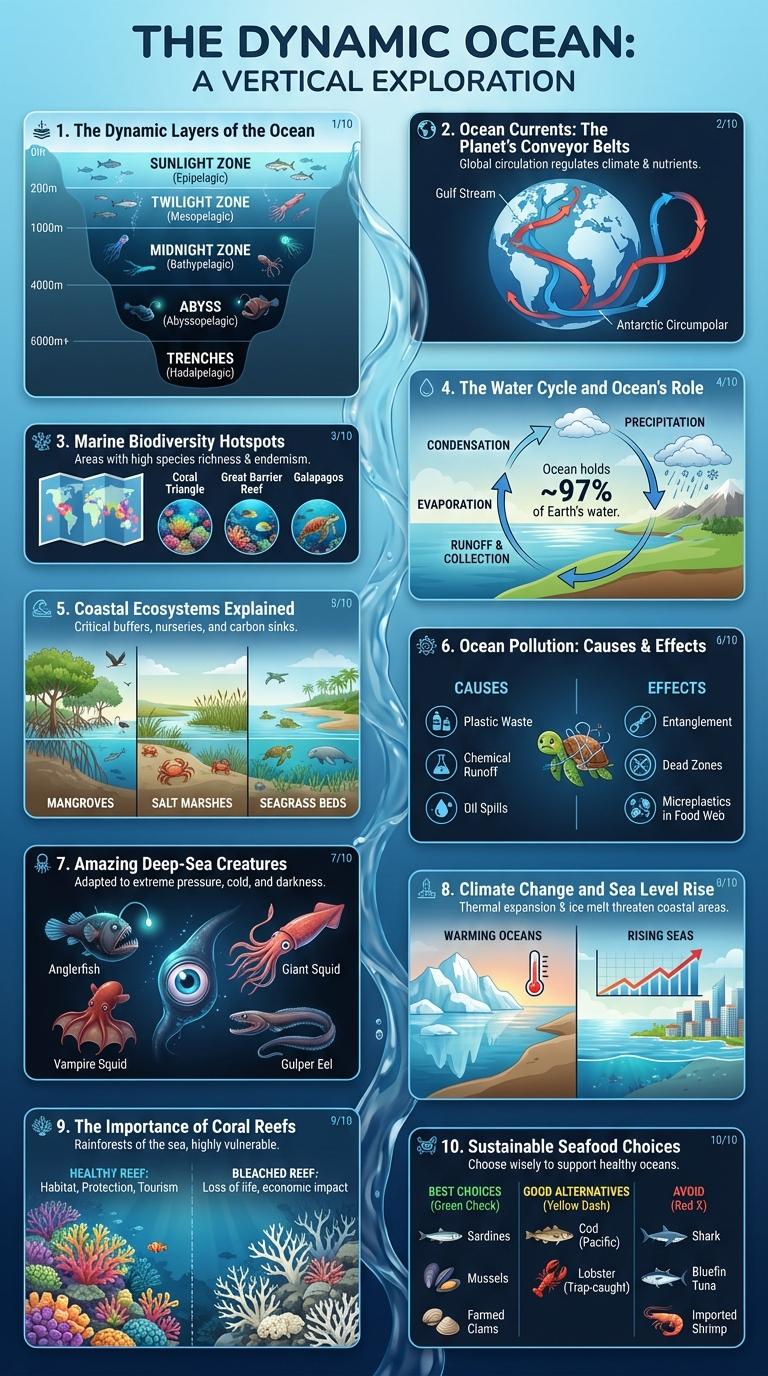
Oceans cover over 70% of the Earth's surface, playing a vital role in regulating climate and supporting diverse marine life. This infographic highlights key facts about ocean ecosystems, including their biodiversity, the impact of pollution, and conservation efforts. Understanding these elements is essential for protecting ocean health and maintaining ecological balance.
The Dynamic Layers of the Ocean
| Layer | Description |
|---|---|
| Epipelagic Zone (Sunlight Zone) | 0-200 meters deep; receives ample sunlight; supports photosynthesis and a diverse range of marine life including coral reefs and large fish. |
| Mesopelagic Zone (Twilight Zone) | 200-1,000 meters deep; limited light penetration; home to bioluminescent organisms and species adapted to low light and higher pressure. |
| Bathypelagic Zone (Midnight Zone) | 1,000-4,000 meters deep; no sunlight; high pressure and cold temperature; inhabited by deep-sea creatures such as giant squid and anglerfish. |
| Abyssopelagic Zone (Abyss) | 4,000-6,000 meters deep; near freezing temperatures; very high pressure; bacteria and invertebrates dominate. |
| Hadalpelagic Zone (Trenches) | 6,000 meters to ocean floor; found in deep sea trenches; extreme pressure and complete darkness; specialized microbes and enigmatic creatures. |
Ocean Currents: The Planet's Conveyor Belts
Ocean currents act as the planet's conveyor belts, moving vast amounts of water across the globe. These currents regulate climate by distributing heat from the equator to the poles.
Surface currents are driven by wind patterns and the Earth's rotation, while deep ocean currents are powered by differences in water temperature and salinity. Together, they form a global circulation system known as the thermohaline circulation.
Marine Biodiversity Hotspots
Marine biodiversity hotspots are regions in the ocean where a vast variety of marine species coexist, supporting complex ecosystems. These areas include coral reefs, mangroves, and seagrass beds, which provide critical habitats for fish, mammals, and invertebrates. Protecting marine biodiversity hotspots is essential for maintaining ocean health, supporting fisheries, and preserving global ecological balance.
The Water Cycle and Ocean's Role
How does the ocean influence the water cycle?
The ocean plays a crucial role in the water cycle by acting as the largest reservoir of Earth's water. It provides the moisture necessary for cloud formation through evaporation.
What process returns water from the atmosphere to the ocean?
Precipitation, including rain and snow, transports water from the atmosphere back to the ocean. This process maintains the balance of water levels across the planet.
How does evaporation from the ocean affect climate?
Evaporation from the ocean surface removes heat, cooling the ocean while warming the atmosphere. This exchange regulates global temperature and weather patterns.
Why is ocean salinity important in the water cycle?
Ocean salinity influences water density and circulation, impacting the movement of water in the cycle. Variations in salinity also affect marine life habitats and climate systems.
How do ocean currents contribute to the water cycle?
Ocean currents distribute heat and moisture globally, driving climate and weather changes. These currents facilitate the transfer of water vapor that fuels the water cycle.
Coastal Ecosystems Explained
Coastal ecosystems are vital interfaces where land meets ocean, supporting diverse marine and terrestrial life. These areas provide crucial ecological services such as habitat provision, storm protection, and carbon sequestration.
- Estuaries - Zones where freshwater from rivers mixes with saltwater, creating nutrient-rich environments that support high biodiversity.
- Mangroves - Coastal forests that stabilize shorelines, reduce erosion, and serve as nurseries for many fish species.
- Coral Reefs - Complex underwater structures formed by corals, offering habitat to a vast array of marine organisms and protecting coastlines from waves.
- Salt Marshes - Tidal wetlands dominated by salt-tolerant plants, filtering pollutants and buffering storm impacts.
- Seagrass Beds - Submerged flowering plants that provide food and shelter to marine life, as well as help in carbon storage.
Ocean Pollution: Causes & Effects
Ocean pollution poses a severe threat to marine ecosystems worldwide. Contaminants such as plastics, chemicals, and oil spills degrade water quality and harm marine life.
The primary causes of ocean pollution include plastic waste, industrial discharge, and agricultural runoff. Plastic debris accumulates in the oceans, affecting over 800 marine species through ingestion and entanglement. Chemical pollutants disrupt reproductive systems and degrade coral reefs, while oil spills contaminate habitats and threaten biodiversity.
Amazing Deep-Sea Creatures
The deep sea hosts some of the most extraordinary and bizarre creatures on Earth. These animals have adapted to survive in extreme pressure, darkness, and cold temperatures.
Discover the amazing features of unique deep-sea species that thrive in the ocean's depths.
- Giant Squid - This elusive creature can grow up to 43 feet long and has massive eyes adapted for detecting faint light.
- Anglerfish - Known for its bioluminescent lure, it attracts prey in complete darkness.
- Vampire Squid - Despite its name, it consumes marine detritus and has light-producing organs for camouflage.
- Dragonfish - Equipped with fang-like teeth and red bioluminescent photophores to hunt prey efficiently.
- Goblin Shark - Called a "living fossil," it has a protrusible jaw that snaps forward to catch prey.
Climate Change and Sea Level Rise
Climate change significantly accelerates sea level rise by melting glaciers and expanding warmer ocean waters. Coastal areas face increased flooding risks, threatening ecosystems and human settlements. Monitoring these changes helps develop effective strategies to mitigate future impacts.
The Importance of Coral Reefs
Coral reefs are vital marine ecosystems that support approximately 25% of all ocean species. They provide essential habitats for diverse marine life, fostering biodiversity and ecological balance.
These reefs protect coastlines from erosion and storm damage by buffering wave impact. Coral reefs also contribute significantly to local economies through tourism and fishing industries.