
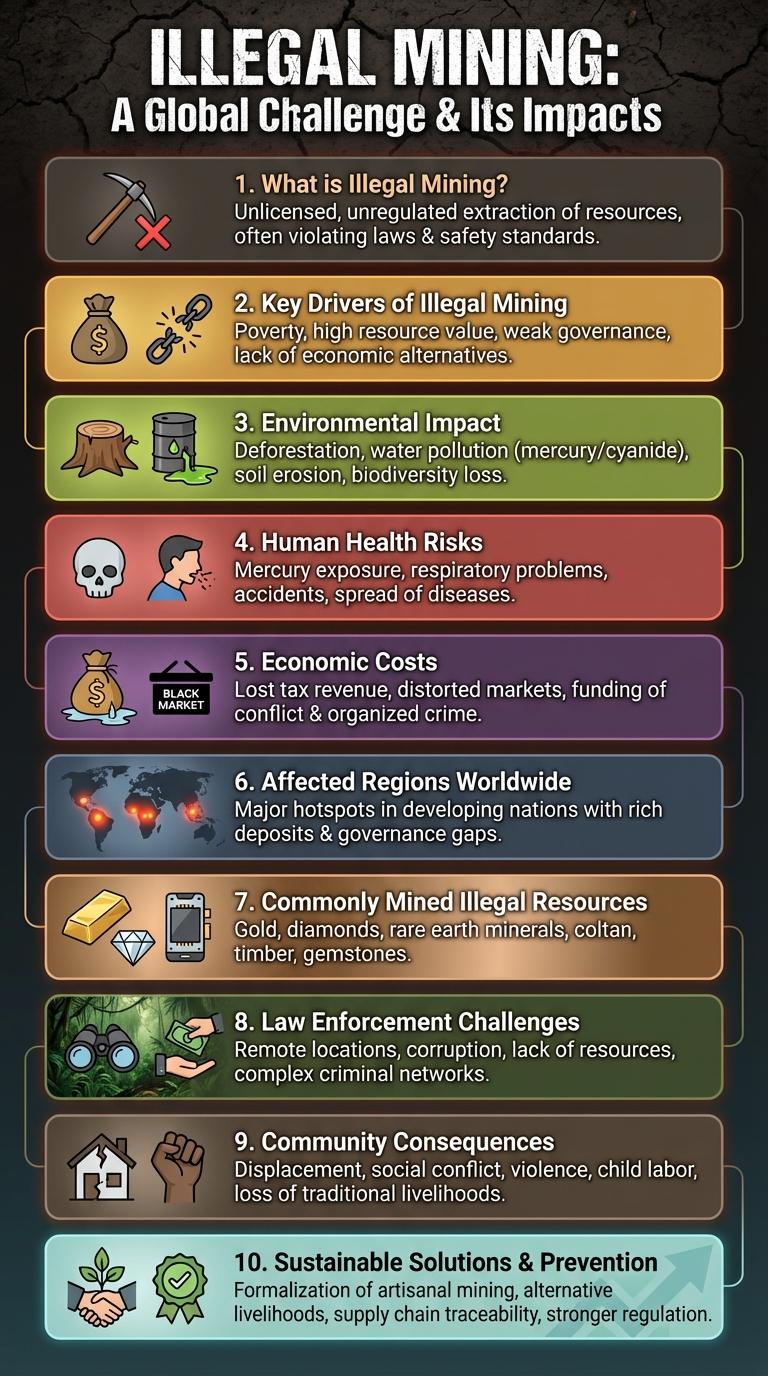
Illegal mining poses serious environmental and social challenges, degrading ecosystems and threatening local communities. This infographic highlights key statistics, impacts, and hotspots of illicit extraction activities worldwide. Understanding these factors is crucial for developing effective policies to combat illegal mining.
What is Illegal Mining?
| Aspect | Description |
|---|---|
| Definition | Illegal mining refers to the extraction of minerals or resources from the earth without proper authorization or in violation of mining laws and regulations. |
| Common Practices | Unlicensed mining operations, mining in protected areas, using banned methods harmful to the environment, and evading taxes or royalties. |
| Environmental Impact | Deforestation, soil erosion, water pollution, destruction of habitats, and loss of biodiversity are frequently associated with illegal mining activities. |
| Economic Consequences | Loss of government revenue, market distortions, unfair competition with legal miners, and funding of criminal organizations. |
| Social Effects | Health risks to miners, exploitation of labor, conflicts with communities, and increased risk of accidents and unsafe working conditions. |
Key Drivers of Illegal Mining
Illegal mining is driven by economic hardship, lack of regulatory enforcement, and high demand for precious minerals. Unemployment and poverty compel many to engage in hazardous mining activities without permits. Weak government oversight and corruption enable the continuation of illegal mining operations worldwide.
Environmental Impact of Illegal Mining
Illegal mining causes severe environmental degradation by contaminating water sources with toxic chemicals like mercury and cyanide. This pollution disrupts aquatic ecosystems and poses health risks to nearby communities.
Deforestation and soil erosion result from unregulated mining activities, leading to loss of biodiversity and increased greenhouse gas emissions. The destruction of natural habitats threatens wildlife survival and contributes to climate change.
Human Health Risks
Illegal mining poses significant threats to human health, leading to severe medical conditions and increased mortality rates. Toxic chemicals and unsafe working conditions exacerbate these health risks, affecting miners and nearby communities.
- Exposure to Mercury - Mercury used in illegal mining contaminates water sources, causing neurological damage and developmental issues in humans.
- Respiratory Diseases - Dust and particulate matter from mining sites lead to chronic lung diseases such as silicosis and bronchitis.
- Water Contamination - Pollutants from mining operations poison drinking water, resulting in gastrointestinal illnesses and other health problems.
Economic Costs
Illegal mining causes significant economic losses globally, with estimates reaching billions of dollars annually in lost tax revenue and export earnings. The unregulated extraction depletes natural resources, undermining legitimate mining industries and local economies. Costs include environmental degradation requiring expensive remediation, and health impacts that strain public healthcare systems.
Affected Regions Worldwide
Which regions are most affected by illegal mining worldwide?
Illegal mining severely impacts regions in South America, Africa, and Southeast Asia. These areas experience environmental degradation, loss of biodiversity, and social conflicts caused by unregulated mining activities.
| Region | Key Impacts |
|---|---|
| Amazon Basin (South America) | Deforestation, mercury pollution, disruption of indigenous communities |
| Central Africa | Soil erosion, child labor, funding of armed groups |
| Indonesia (Southeast Asia) | Water contamination, habitat destruction, economic loss |
| West Africa | Land degradation, human rights abuses, loss of agricultural land |
| Eastern Europe | Illegal extraction of precious metals, environmental hazards |
Commonly Mined Illegal Resources
Illegal mining involves the extraction of minerals without proper authorization, causing significant environmental and social harm. Commonly mined illegal resources include gold, diamonds, and coltan, which fuel illicit markets worldwide.
Gold is highly sought after due to its value and ease of smuggling, often mined in protected forests and riverbeds. Diamonds extracted illegally fund conflict and violate human rights in several regions. Coltan, essential for electronics, is frequently mined under hazardous conditions with little oversight, impacting local ecosystems and communities.
Law Enforcement Challenges
Illegal mining poses significant challenges to law enforcement agencies worldwide. Effective monitoring and control are hindered by the clandestine nature of these operations and limited resources.
- Remote Locations - Illegal mining sites are often in inaccessible areas, making surveillance and intervention difficult for authorities.
- Lack of Resources - Many law enforcement agencies face shortages in funding, personnel, and technology to combat illegal mining effectively.
- Corruption Issues - Corruption among officials can undermine enforcement efforts and allow illegal activities to continue unchecked.
Addressing law enforcement challenges is crucial to reducing the environmental and social impacts of illegal mining.
Community Consequences
Illegal mining disrupts local communities by causing environmental degradation that destroys farmland and contaminates water sources. This leads to loss of livelihood for many families dependent on agriculture and fishing.
Social tensions increase as conflicts arise between illegal miners and residents over land use and resource depletion. Health problems escalate due to exposure to toxic chemicals like mercury used in illegal mining processes.