
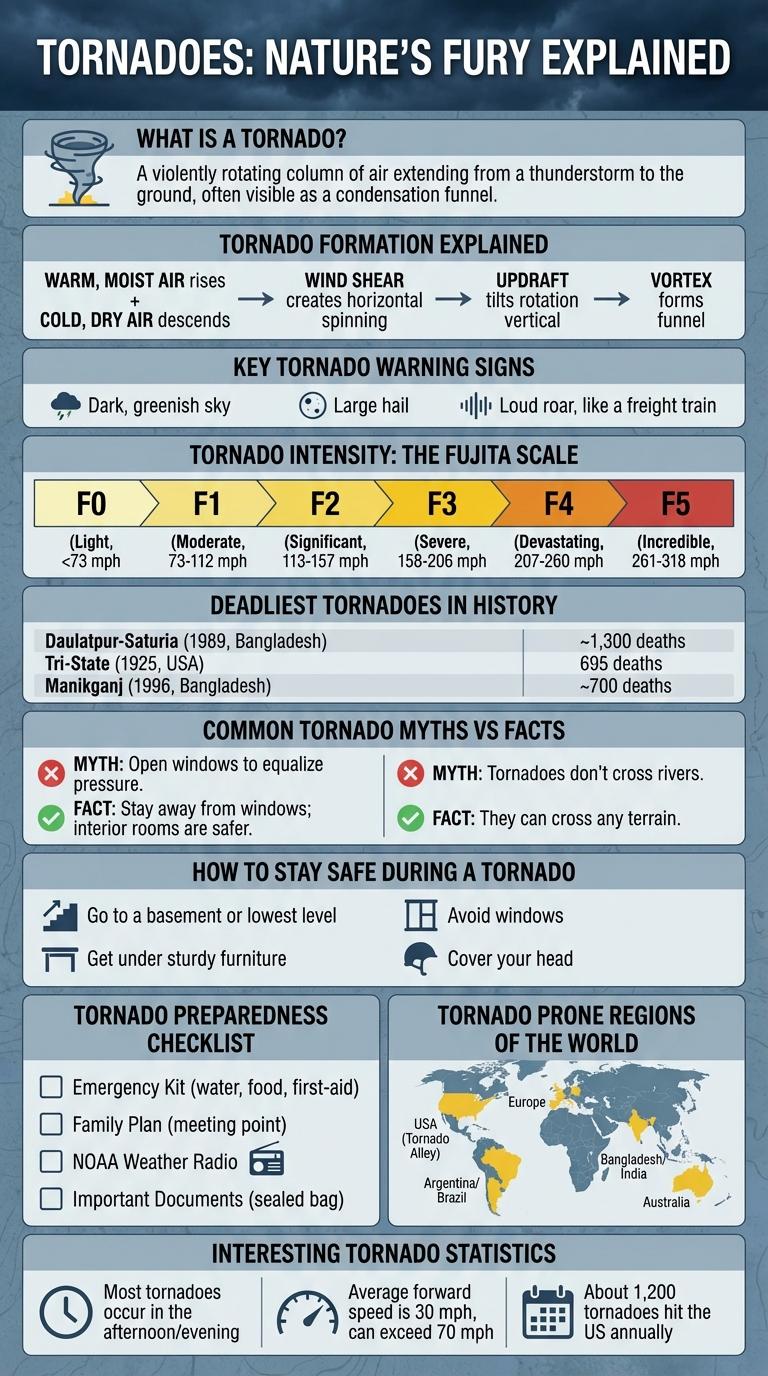
A tornado is a violent, rotating column of air extending from a thunderstorm to the ground, capable of causing severe damage in seconds. Infographics visually break down tornado formation, intensity scales, and safety tips to help people understand and prepare for these natural disasters. Clear data and vivid illustrations enhance awareness and promote proactive measures during tornado events.
What is a Tornado?
What is a tornado?
A tornado is a rapidly rotating column of air extending from a thunderstorm to the ground. It is capable of causing significant destruction due to its intense wind speeds and swirling debris.
Tornado Formation Explained
Tornadoes form from severe thunderstorms when atmospheric conditions align to create a rotating column of air. These powerful storms can cause significant damage due to their intense winds and unpredictable paths.
- Warm, Moist Air - Warm, moist air near the Earth's surface rises and interacts with cooler, drier air above, creating instability.
- Wind Shear - Changes in wind speed and direction at different altitudes cause a horizontal spinning effect in the lower atmosphere.
- Updrafts - Strong upward winds tilt the horizontal spinning air vertically, forming a rotating thunderstorm called a mesocyclone.
Key Tornado Warning Signs
Tornadoes are violent rotating columns of air extending from thunderstorms to the ground. Recognizing key warning signs can save lives by providing critical time to seek shelter.
- Dark, Greenish Sky - A green tint to the sky often indicates severe weather capable of producing tornadoes.
- Loud Roaring Sound - A persistent roar, similar to a freight train, signals an approaching tornado.
- Funnel Cloud Formation - A visible funnel extending from a cloud base toward the ground is a direct sign of a tornado developing.
Tornado Intensity: The Fujita Scale
| Fujita Scale Category | Wind Speed (mph) |
|---|---|
| F0 | 40-72 |
| F1 | 73-112 |
| F2 | 113-157 |
| F3 | 158-206 |
| F4 | 207-260 |
| F5 | 261-318 |
The Fujita Scale, also known as the F-Scale, classifies tornado intensity based on estimated wind speeds and related damage. It ranges from F0 (weakest) to F5 (strongest). Tornadoes rated F0 cause light damage, mostly to trees and roofs. F5 tornadoes result in incredible damage, destroying strong frame houses and lifting heavy objects. This scale helps meteorologists assess tornado strength and guide safety protocols.
Deadliest Tornadoes in History
Tornadoes are among the most destructive natural disasters, capable of causing widespread devastation. Throughout history, several tornadoes have resulted in significant loss of life and property.
The deadliest tornado on record struck Bangladesh in 1989, killing approximately 1,300 people. The Tri-State Tornado of 1925 in the United States caused nearly 700 fatalities, making it the most fatal tornado in U.S. history. Other notable deadly tornadoes include the Daulatpur-Saturia Tornado in Bangladesh (1989) and the Joplin Tornado in Missouri (2011), both known for their catastrophic impacts.
Common Tornado Myths vs Facts
Tornadoes are often misunderstood, leading to many myths that can be dangerous during severe weather events. Common misconceptions include the belief that opening windows can reduce damage and that tornadoes never strike cities. Understanding the facts about tornado behavior and safety measures is critical for effective preparation and protection.
How to Stay Safe During a Tornado
Tornadoes are violent windstorms characterized by a twisting, funnel-shaped cloud. Knowing how to stay safe during a tornado can save lives and reduce injuries.
- Seek Shelter Immediately - Go to a basement or an interior room with no windows on the lowest floor of a sturdy building.
- Stay Informed - Monitor weather alerts via radio, smartphone apps, or emergency broadcasts for real-time updates.
- Protect Your Head - Use helmets, blankets, or cushions to shield your head and neck from flying debris.
Always have an emergency kit prepared with water, food, and first aid supplies in your tornado safety area.
Tornado Preparedness Checklist
Tornadoes are intense windstorms characterized by a twisting, funnel-shaped cloud. They can cause severe damage and pose significant risks to life and property.
Being prepared before a tornado strikes can save lives and reduce injuries. A tornado preparedness checklist ensures individuals and families have essential items and plans in place.
Tornado Prone Regions of the World
Tornadoes primarily occur in specific regions around the world where atmospheric conditions favor their formation. These regions experience a combination of warm, moist air and cold, dry air that creates the instability needed for tornado development.
The United States, especially the central part known as Tornado Alley, sees the highest frequency of tornadoes globally. Other tornado-prone areas include parts of Canada, Bangladesh, and Australia, where varying climates contribute to tornado activity.