
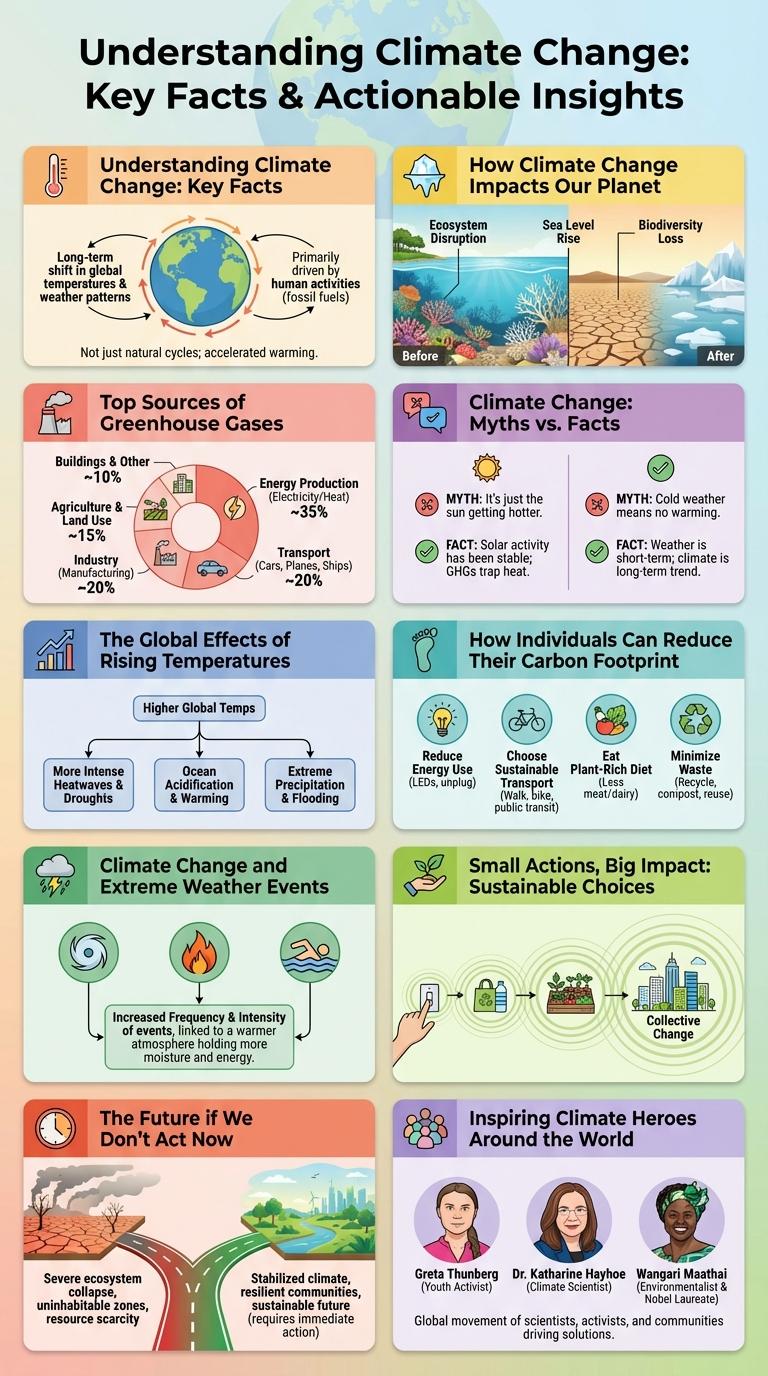
Climate change awareness infographics visually highlight the urgent need to address global warming by presenting key data on rising temperatures, carbon emissions, and their environmental impacts. Effective design and clear statistics help educate audiences on the causes and consequences of climate change, promoting informed decisions and sustainable actions. These visuals serve as powerful tools for advocacy and mobilizing communities toward climate resilience.
Understanding Climate Change: Key Facts
Climate change refers to long-term shifts in temperature and weather patterns, primarily caused by human activities such as burning fossil fuels. Rising levels of greenhouse gases, including carbon dioxide and methane, trap heat in the atmosphere and drive global warming.
Key facts highlight that global temperatures have increased by approximately 1.2degC since the pre-industrial era. Melting ice caps, rising sea levels, and extreme weather events serve as clear indicators of ongoing climate disruption.
How Climate Change Impacts Our Planet
Climate change is accelerating the transformation of ecosystems and weather patterns globally. Understanding its impacts is crucial for developing effective mitigation strategies.
- Rising Global Temperatures - Average global temperatures have increased, leading to more frequent heatwaves and altered weather conditions.
- Melting Polar Ice - Shrinking ice caps and glaciers contribute to rising sea levels and habitat loss for polar species.
- Extreme Weather Events - Increased frequency and intensity of hurricanes, floods, and droughts disrupt communities and economies.
Top Sources of Greenhouse Gases
Climate change is driven by various human activities that release greenhouse gases into the atmosphere. Understanding the top sources of these emissions is crucial for effective mitigation strategies.
- Energy Production - Burning fossil fuels for electricity and heat is the largest source of greenhouse gas emissions globally.
- Transportation - Vehicles emit significant amounts of carbon dioxide due to reliance on gasoline and diesel fuels.
- Agriculture - Livestock farming and rice cultivation produce methane and nitrous oxide, potent greenhouse gases.
Reducing emissions from these major sources is essential to limit global warming and protect the planet.
Climate Change: Myths vs. Facts
Climate change awareness is crucial for understanding the real impact of human activities on our planet. Many myths surrounding climate change hinder effective action and public support.
One common myth is that climate change is a natural process, but scientific evidence shows human activities are the primary driver. Another false belief is that reducing carbon emissions will harm the economy, whereas clean energy investments create jobs and growth. Climate change facts emphasize rising global temperatures, increased extreme weather events, and melting ice caps caused by greenhouse gas emissions.
The Global Effects of Rising Temperatures
Rising global temperatures have caused significant shifts in weather patterns, leading to increased frequency of extreme events such as heatwaves, hurricanes, and droughts. These changes disrupt ecosystems, agriculture, and water supplies worldwide.
Glaciers and polar ice caps are rapidly melting, contributing to sea level rise that threatens coastal communities and habitats. Increased temperatures also exacerbate health risks by promoting the spread of diseases and worsening air quality.
How Individuals Can Reduce Their Carbon Footprint
Climate change awareness is crucial for motivating individual actions that reduce carbon footprints. Small daily choices can collectively lead to significant environmental benefits.
- Use Energy-Efficient Appliances - Switching to energy-saving devices lowers electricity consumption and reduces greenhouse gas emissions.
- Adopt Sustainable Transportation - Walking, cycling, or using public transit decreases fossil fuel usage and air pollution.
- Reduce, Reuse, Recycle - Minimizing waste limits landfill methane production and conserves natural resources.
Climate Change and Extreme Weather Events
Climate change significantly increases the frequency and intensity of extreme weather events worldwide. Rising global temperatures contribute to more powerful hurricanes, prolonged droughts, and severe heatwaves. Understanding these impacts is crucial for creating effective adaptation and mitigation strategies.
Small Actions, Big Impact: Sustainable Choices
Small Actions, Big Impact highlights how everyday sustainable choices contribute significantly to combating climate change. Simple habits like reducing plastic use, conserving water, and opting for public transport can collectively lower carbon footprints. Raising awareness about these impactful actions encourages a community-driven approach to environmental responsibility.
The Future if We Don't Act Now
What will happen if we don't act now against climate change?
Global temperatures will continue to rise, leading to more extreme weather events and loss of biodiversity. Sea levels will increase, threatening coastal communities and ecosystems.
How will climate change affect food security in the future?
Crop yields will decline due to droughts, floods, and shifting growing seasons. This will result in higher food prices and increased hunger worldwide.
What impact will unchecked climate change have on human health?
Rising temperatures and pollution will increase respiratory and heat-related illnesses. Disease patterns will shift, exposing more people to illnesses like malaria and dengue.
How vulnerable will cities become if climate action is delayed?
Coastal cities will face severe flooding and infrastructure damage from storms and sea level rise. Urban heat islands will worsen, making cities less livable and increasing energy demands.
What is the economic cost of inaction on climate change?
Financial losses from natural disasters, health care, and reduced productivity will soar. Investments in adaptation and recovery will place a heavy burden on governments and communities.