
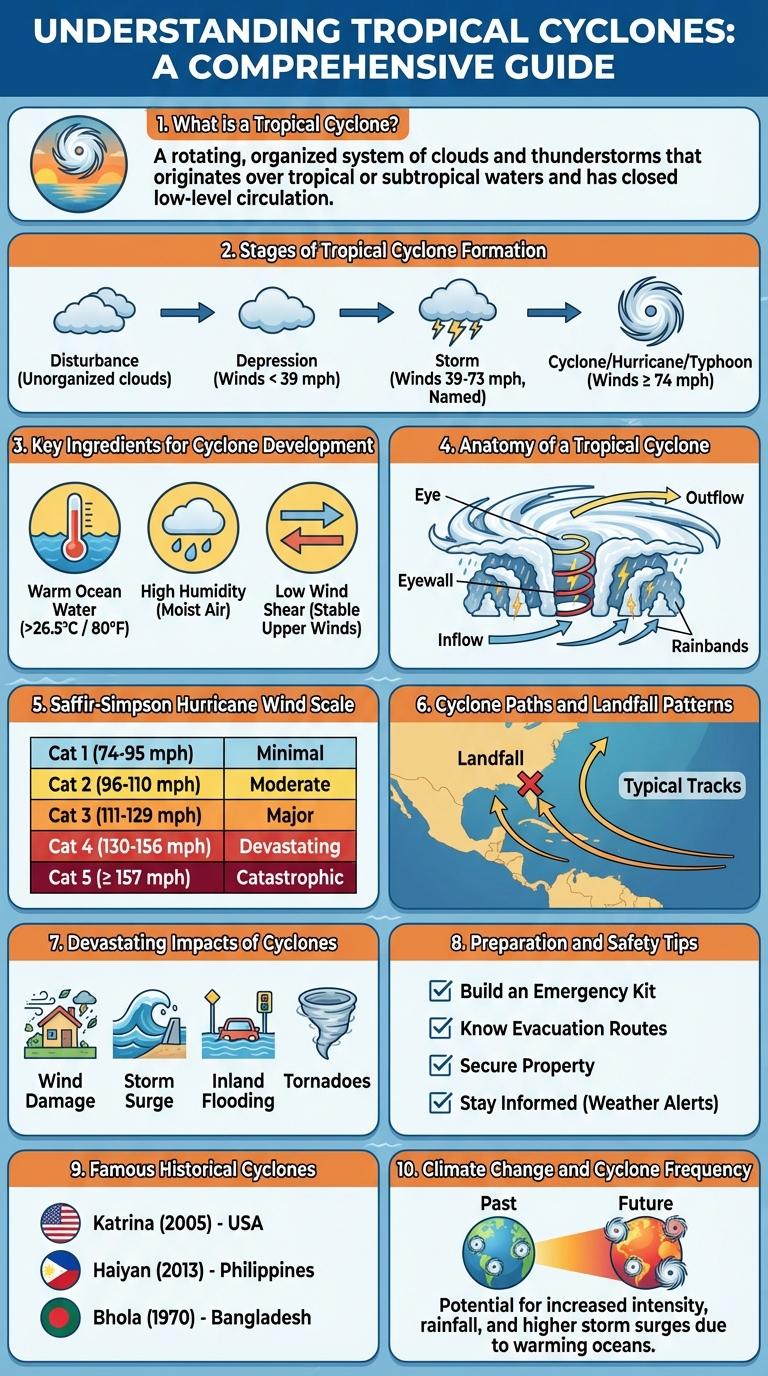
Tropical cyclones are powerful storms characterized by intense winds, heavy rainfall, and swirling cloud formations. These severe weather systems develop over warm ocean waters, causing significant impacts such as flooding, storm surges, and wind damage in coastal regions. Understanding their formation, structure, and effects is crucial for preparedness and risk reduction.
What is a Tropical Cyclone?
A tropical cyclone is a rapidly rotating storm system characterized by a low-pressure center, strong winds, and heavy rain. These storms form over warm tropical oceans, drawing energy from the warm water.
Tropical cyclones are classified by wind speed and can cause severe damage through high winds, flooding, and storm surges. They are known as hurricanes, typhoons, or cyclones depending on their location around the world.
Stages of Tropical Cyclone Formation
Tropical cyclones develop through a sequence of distinct stages, each characterized by specific atmospheric conditions. Understanding these stages aids in predicting storm intensity and potential impact.
The initial stage is the tropical disturbance, where clusters of thunderstorms form over warm ocean waters. It evolves into a tropical depression as wind circulation begins to organize around a low-pressure center.
During the tropical storm stage, wind speeds intensify between 39 to 73 mph, and the system acquires a defined rotation. When sustained winds exceed 74 mph, the system is classified as a tropical cyclone or hurricane, marked by a well-developed eye and spiral rain bands.
Key Ingredients for Cyclone Development
| Key Ingredient | Description |
|---|---|
| Warm Ocean Waters | Sea surface temperatures above 26.5degC (80degF) provide the necessary heat and moisture. |
| Atmospheric Instability | Unstable air promotes convection and the formation of thunderstorms. |
| High Humidity | Abundant moisture in the lower and mid-troposphere supports cyclone growth. |
| Low Vertical Wind Shear | Minimal change in wind speed and direction with altitude allows cyclone organization. |
| Coriolis Effect | Earth's rotation causes cyclonic spin, typically requiring a latitude at least 5deg away from the equator. |
Anatomy of a Tropical Cyclone
A tropical cyclone is a powerful rotating storm system characterized by a low-pressure center, strong winds, and heavy rain. It forms over warm tropical oceans and can cause significant damage upon landfall.
The anatomy of a tropical cyclone includes the eye, eye wall, and rainbands. The eye is the calm center with low pressure and light winds. Surrounding the eye, the eye wall features the most intense winds and thunderstorms. Rainbands spiral outward, bringing heavy rain and gusty winds far from the center.
Saffir-Simpson Hurricane Wind Scale
The Saffir-Simpson Hurricane Wind Scale measures the intensity of tropical cyclones in terms of sustained wind speeds. This scale ranges from Category 1 to Category 5, indicating increasing potential for damage.
- Category 1 - Winds range from 74 to 95 mph, causing minimal damage primarily to trees and mobile homes.
- Category 3 - Winds between 111 and 129 mph can lead to devastating damage, including structural destruction and widespread power outages.
- Category 5 - Winds exceed 157 mph, resulting in catastrophic damage with severe infrastructure failure and long-term recovery needs.
Cyclone Paths and Landfall Patterns
Tropical cyclones commonly form over warm ocean waters and follow prevailing wind patterns, creating distinct paths that often curve poleward. The majority of these storms make landfall along coastal regions of continents, with increased frequency in the North Atlantic, Western Pacific, and Indian Ocean basins. Understanding cyclone paths and landfall patterns is crucial for improving early warning systems and minimizing damage to vulnerable areas.
Devastating Impacts of Cyclones
What are the devastating impacts of tropical cyclones on communities and ecosystems?
Tropical cyclones cause severe wind damage, flooding, and storm surges that destroy infrastructure and homes. These natural disasters also lead to loss of life, displacement of populations, and long-term economic challenges for affected regions.
Preparation and Safety Tips
Tropical cyclones are powerful storms that can cause extreme damage through high winds, heavy rainfall, and flooding. Proper preparation and safety measures are essential to protect lives and property during these events.
- Create an Emergency Kit - Include water, non-perishable food, medications, flashlights, batteries, and important documents in a waterproof container.
- Stay Informed - Monitor weather updates from reliable sources and follow instructions from local authorities promptly.
- Secure Your Home - Install storm shutters, reinforce doors, and clear gutters to minimize damage from wind and water.
Famous Historical Cyclones
Tropical cyclones are powerful storms characterized by strong winds, heavy rain, and storm surges. Famous historical cyclones have caused significant destruction and loss of life worldwide, highlighting the need for improved forecasting and preparedness. Understanding these events helps scientists develop better strategies to mitigate future impacts.
| Cyclone Name | Year & Impact |
|---|---|
| Bhola Cyclone | 1970, Bangladesh, over 500,000 deaths |
| Hurricane Katrina | 2005, USA, $125 billion in damages |
| Typhoon Haiyan | 2013, Philippines, 6,000 fatalities |
| Cyclone Tracy | 1974, Australia, widespread destruction in Darwin |
| Hurricane Sandy | 2012, USA, extensive flooding and power outages |