
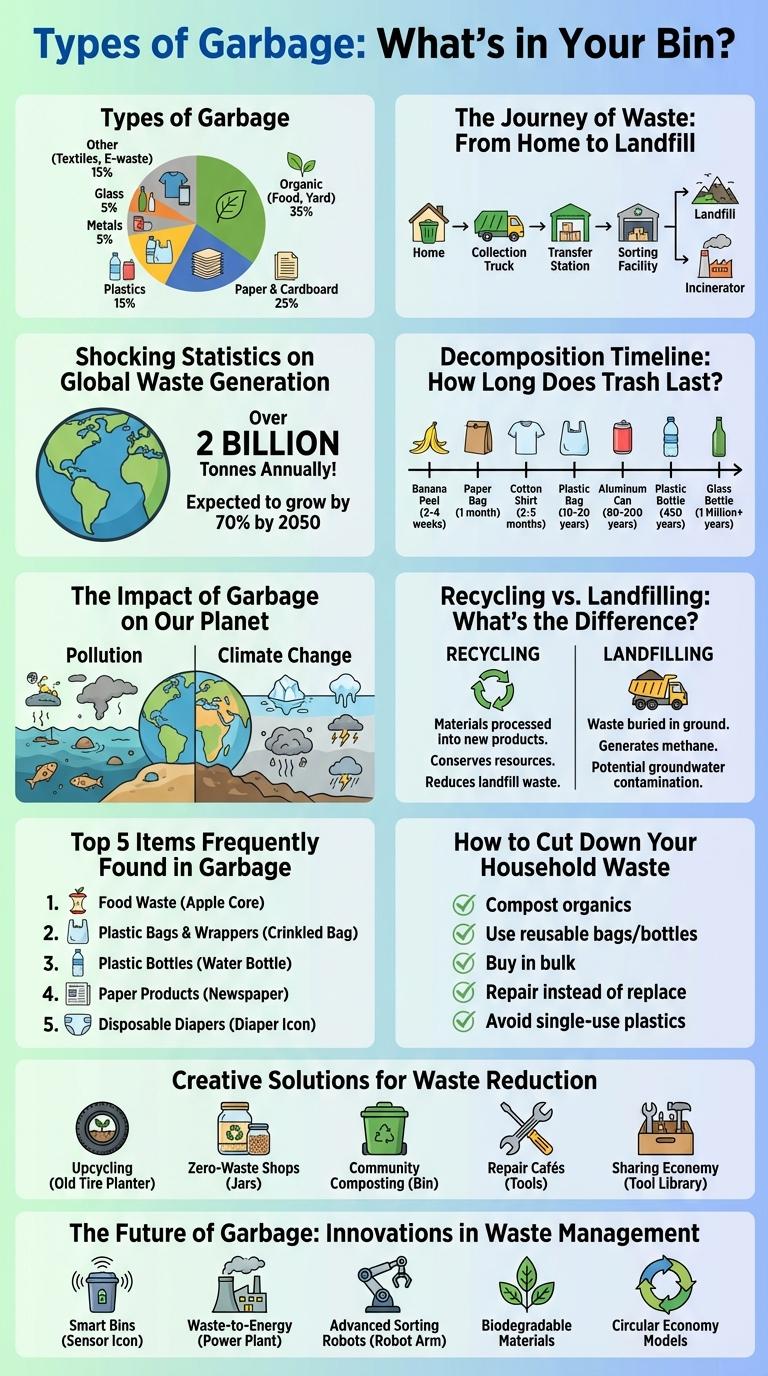
Garbage infographics effectively visualize the impact of waste on the environment and human health. Highlighting key statistics on landfill growth, recycling rates, and pollution sources helps to raise awareness and promote sustainable waste management practices. Clear, data-driven graphics motivate individuals and communities to reduce, reuse, and recycle more efficiently.
Types of Garbage: What's in Your Bin?
Garbage consists of various types including organic waste, recyclables, hazardous materials, and general trash. Organic waste such as food scraps and yard waste can be composted, reducing landfill usage. Properly sorting recyclables like paper, plastic, and glass helps conserve natural resources and energy.
The Journey of Waste: From Home to Landfill
The journey of waste begins in households where everyday items are discarded. Proper sorting at the source is crucial for effective waste management.
Collected waste is transported to processing facilities, where recyclables are separated from landfill-bound trash. Proper handling in this stage reduces environmental impact and conserves resources.
Shocking Statistics on Global Waste Generation
Global waste generation presents a critical environmental challenge impacting ecosystems and human health. Rapid urbanization and population growth drive unprecedented levels of waste production worldwide.
- 2.01 billion tonnes - The amount of municipal solid waste generated globally each year according to the World Bank.
- 33% increase - Projected rise in global waste by 2050 if current trends continue unchecked.
- 79% landfill and open dumping - Proportion of waste disposed of in landfills or dumpsites, leading to pollution and greenhouse gas emissions.
Decomposition Timeline: How Long Does Trash Last?
Garbage decomposition varies widely depending on the material, impacting environmental pollution levels. Organic waste like food scraps typically breaks down within weeks to months, while plastics can persist for hundreds of years. Understanding the decomposition timeline helps promote better waste management and environmental conservation efforts.
| Material | Decomposition Time |
|---|---|
| Banana Peel | 3-4 weeks |
| Paper Towel | 2-4 weeks |
| Cigarette Butt | 1-5 years |
| Plastic Bottle | 450 years |
| Glass Bottle | 1 million years or more |
The Impact of Garbage on Our Planet
Garbage significantly harms the environment, contributing to pollution and ecosystem damage. Effective waste management is crucial for protecting the planet's health and natural resources.
- Marine Pollution - Over 8 million tons of plastic enter oceans annually, threatening marine life and habitats.
- Soil Contamination - Toxic chemicals from landfill waste seep into soil, reducing fertility and harming agriculture.
- Greenhouse Gas Emissions - Decomposing organic waste produces methane, a potent greenhouse gas accelerating climate change.
Recycling vs. Landfilling: What's the Difference?
Recycling and landfilling are two primary methods of waste management. Recycling involves converting waste into reusable materials, while landfilling is the process of disposing of waste by burying it underground.
Recycling reduces the need for raw materials and helps conserve natural resources. It decreases greenhouse gas emissions by minimizing waste decomposition. Landfilling, on the other hand, takes up large areas of land and can lead to soil and groundwater contamination.
Top 5 Items Frequently Found in Garbage
Garbage composition reveals critical insights into waste management challenges. Identifying the most common items helps optimize recycling and reduction efforts.
- Food Waste - Represents a significant portion of landfill mass, accelerating methane emissions from decomposition.
- Plastic Packaging - Often non-biodegradable, contributing to long-term environmental pollution and ocean contamination.
- Paper Products - Includes newspapers, cardboard, and mail that are recyclable but frequently discarded improperly.
- Glass Containers - Recyclable yet commonly found in landfills due to breakage or lack of recycling facilities.
- Textiles - Discarded clothing and fabrics that contribute to landfill bulk and can release harmful chemicals.
Targeting these top five items can significantly reduce landfill volume and improve environmental sustainability.
How to Cut Down Your Household Waste
| Tip | Description |
|---|---|
| Reduce Plastic Use | Choose reusable bags, containers, and water bottles to minimize plastic waste. |
| Compost Organic Waste | Convert food scraps and yard waste into nutrient-rich compost instead of trash. |
| Buy in Bulk | Purchase items in larger quantities to reduce packaging waste and frequent trips. |
| Donate or Reuse | Give away clothes, furniture, and electronics to extend their life and reduce landfill waste. |
| Recycle Properly | Sort recyclables according to local guidelines to ensure efficient waste processing. |
Creative Solutions for Waste Reduction
Creative solutions for waste reduction offer innovative ways to minimize environmental impact. These methods emphasize recycling, reusing, and reducing waste at its source.
Community-driven initiatives like composting and upcycling transform waste into valuable resources. Technological advancements improve sorting and processing, making waste management more efficient and sustainable.