
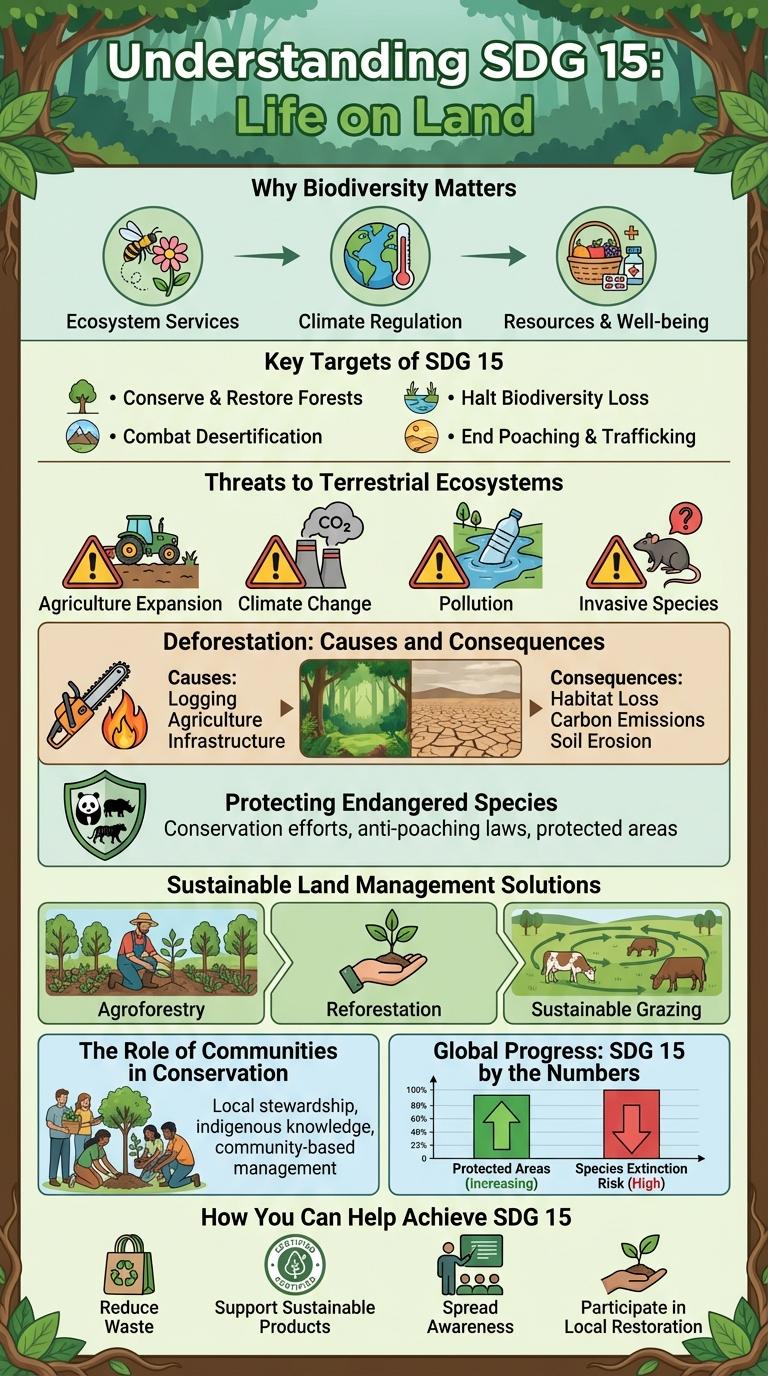
SDG 15 focuses on protecting, restoring, and promoting the sustainable use of terrestrial ecosystems. Safeguarding biodiversity and preventing land degradation are crucial for maintaining ecological balance. This infographic highlights key actions and progress toward preserving life on land.
Understanding SDG 15: Life on Land
Sustainable Development Goal 15 focuses on protecting, restoring, and promoting sustainable use of terrestrial ecosystems. It highlights the importance of forests, combating desertification, halting land degradation, and preserving biodiversity.
- Forest Conservation - SDG 15 aims to sustainably manage forests to maintain biodiversity and support ecosystem services.
- Combat Desertification - Efforts focus on restoring degraded land to prevent desertification and loss of arable soil.
- Protect Biodiversity - Goals include halting biodiversity loss and safeguarding endangered species and habitats.
By achieving SDG 15, global efforts contribute to climate regulation, food security, and overall ecosystem resilience.
Why Biodiversity Matters
Biodiversity supports the intricate balance of ecosystems essential for life on Earth. Protecting biodiversity ensures the survival of species and the health of natural environments.
- Ecological Stability - Diverse species contribute to resilient ecosystems that can withstand environmental changes.
- Economic Value - Biodiversity provides resources for food, medicine, and raw materials vital to economies.
- Climate Regulation - Healthy ecosystems with rich biodiversity help regulate the climate by sequestering carbon and maintaining water cycles.
Key Targets of SDG 15
SDG 15 aims to protect, restore, and promote the sustainable use of terrestrial ecosystems. Key targets include halting deforestation, combating desertification, and preserving biodiversity by 2020. Efforts focus on ensuring the conservation of mountain ecosystems, reducing the degradation of natural habitats, and preventing the extinction of threatened species.
| Key Target | Description |
|---|---|
| Forest Management | Halt deforestation and promote sustainable forest management worldwide. |
| Desertification Control | Combat desertification and restore degraded land and soil by 2030. |
| Biodiversity Conservation | Protect mountain ecosystems and natural habitats to maintain biodiversity. |
| Species Protection | Prevent the extinction of threatened flora and fauna. |
| Promotion of Sustainable Use | Encourage sustainable use of ecosystems for long-term ecological balance. |
Threats to Terrestrial Ecosystems
SDG 15 aims to protect, restore, and promote the sustainable use of terrestrial ecosystems. Threats to these ecosystems include deforestation, habitat loss, and land degradation caused by human activities such as agriculture and urbanization. Biodiversity decline and climate change further exacerbate risks to the health and stability of terrestrial habitats.
Deforestation: Causes and Consequences
Deforestation contributes significantly to the loss of biodiversity and disruption of ecosystems, posing a severe threat to Sustainable Development Goal 15 (Life on Land). The primary causes include agricultural expansion, logging, infrastructure development, and mining activities.
Consequences of deforestation encompass habitat destruction, climate change acceleration due to increased carbon emissions, and soil erosion leading to reduced agricultural productivity. Forest degradation undermines the livelihoods of indigenous communities and disrupts water cycles, impacting overall environmental stability. Protecting and restoring forests is essential to preserve terrestrial ecosystems and achieve SDG 15 targets.
Protecting Endangered Species
Why is protecting endangered species crucial for our planet's health?
Safeguarding endangered species helps maintain biodiversity, which is essential for ecosystem stability and resilience. Conservation efforts support food security, clean air, and water, benefiting all living organisms.
Sustainable Land Management Solutions
Sustainable Development Goal 15 aims to protect, restore, and promote the sustainable use of terrestrial ecosystems. It emphasizes combating desertification, halting biodiversity loss, and ensuring sustainable land management.
Implementing sustainable land management solutions involves reforestation, soil conservation, and agroforestry practices. These approaches help maintain land productivity, enhance biodiversity, and mitigate the impacts of climate change.
The Role of Communities in Conservation
SDG 15 aims to protect, restore, and promote sustainable use of terrestrial ecosystems, manage forests sustainably, combat desertification, halt and reverse land degradation, and halt biodiversity loss. Communities play a crucial role in conservation by engaging in sustainable land management and protecting local biodiversity.
Local knowledge and participation empower communities to effectively monitor and preserve natural habitats. Collaborative efforts between communities and organizations enhance conservation outcomes and foster long-term sustainable practices.
Global Progress: SDG 15 by the Numbers
| Indicator | Statistics (2023) |
|---|---|
| Forest Area Coverage | 31% of global land area |
| Terrestrial Protected Areas | 15.4% of total land surface |
| Species Threatened with Extinction | Approximately 28% of assessed species |
| Annual Deforestation Rate | Around 10 million hectares lost per year |
| Reforestation Efforts | Over 5 million hectares restored annually |