
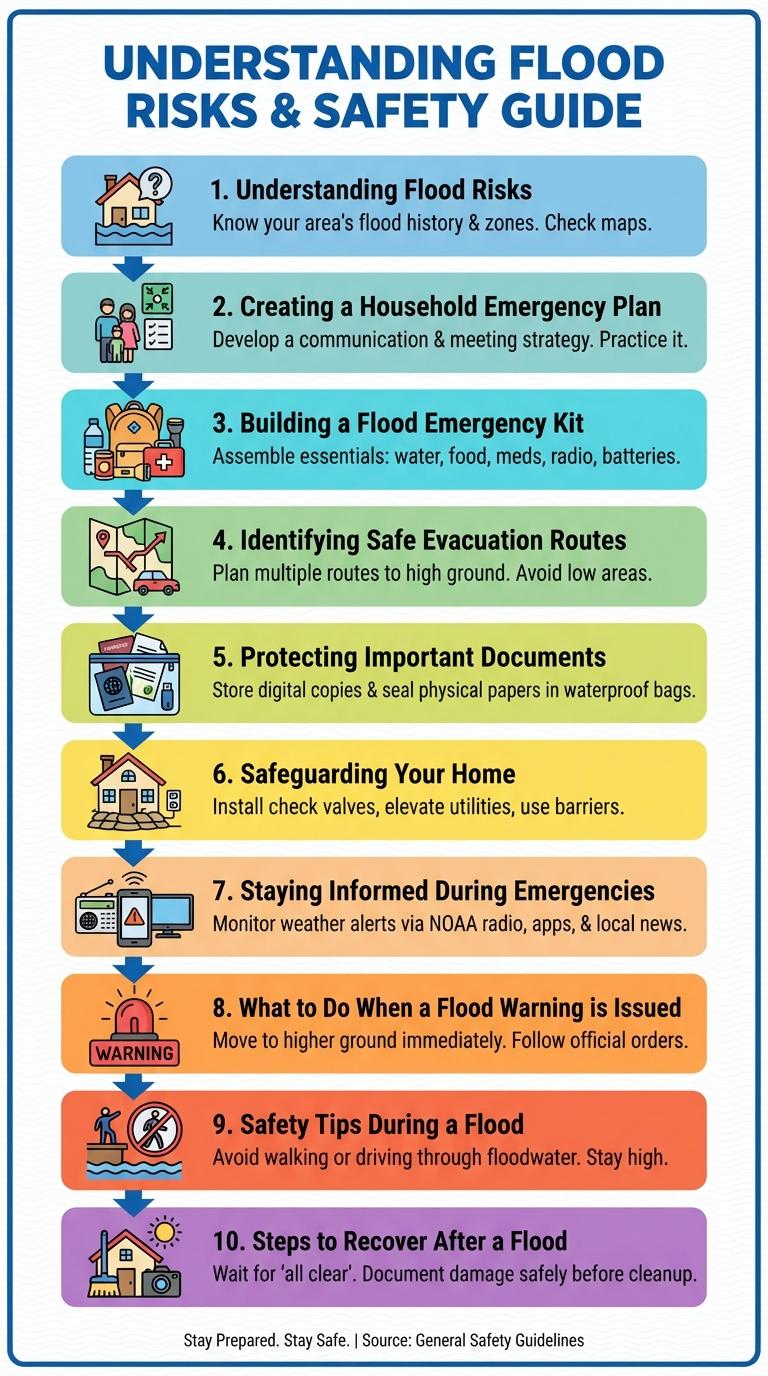
Understanding flood preparedness is essential for minimizing risks and ensuring safety during emergencies. This infographic highlights key actions such as creating an emergency plan, assembling a supply kit, and staying informed about local flood warnings. Following these guidelines can help protect lives and property when flooding occurs.
Understanding Flood Risks
Understanding flood risks is crucial for effective flood preparedness. Assess local flood history and identify vulnerable areas to anticipate potential hazards.
Evaluate property elevation, drainage systems, and nearby water bodies to determine exposure levels. Awareness of flood risks enables informed decisions on safety measures and emergency planning.
Creating a Household Emergency Plan
Creating a Household Emergency Plan is essential for flood preparedness. It involves identifying safe evacuation routes, designating a meeting place, and compiling emergency contact information. Families should practice the plan regularly to ensure everyone knows their role during a flood event.
Building a Flood Emergency Kit
Preparing a flood emergency kit is essential for ensuring safety during flood events. This kit contains vital supplies needed to survive and stay comfortable when evacuation or sheltering in place is necessary.
Key items include non-perishable food, clean drinking water, and a first aid kit to handle minor injuries. Flashlights, batteries, and important documents help maintain communication and identification. Personal hygiene products and extra clothing add comfort during extended emergencies.
Identifying Safe Evacuation Routes
How can you identify safe evacuation routes during a flood? Locate high ground areas and avoid low-lying or flood-prone zones when planning your escape path. Use official maps and local government resources to ensure your route remains accessible and safe.
Protecting Important Documents
Protecting important documents is crucial in flood preparedness to ensure quick recovery and minimize loss. Proper storage and backup methods safeguard critical information from water damage and loss.
- Store Documents in Waterproof Containers - Use sealed, waterproof boxes or bags to protect physical documents from floodwater intrusion.
- Digitize Important Documents - Scan and save copies of documents on secure cloud services to access them anytime, even if originals are damaged.
- Keep Copies Off-site - Store duplicates of essential papers at a different location to prevent total loss during a flood emergency.
Safeguarding Your Home
Flood preparedness is essential for protecting your home from water damage and ensuring family safety. Taking proactive measures can significantly reduce the risks and costs associated with flooding.
- Install Flood Barriers - Use sandbags or flood gates to block water from entering doors and windows.
- Elevate Electrical Systems - Raise electrical outlets and wiring above potential flood levels to prevent electrical hazards.
- Seal Foundation Cracks - Repair and waterproof foundation cracks to stop water seepage into basements and crawl spaces.
Staying Informed During Emergencies
Staying informed during floods is crucial for timely evacuation and safety measures. Reliable sources include local weather alerts, emergency broadcasts, and official social media channels.
Mobile apps and NOAA weather radios provide real-time updates even when traditional communication fails. Always have multiple ways to receive alerts to ensure you stay aware of evolving flood conditions.
What to Do When a Flood Warning is Issued
Flood warnings signal an imminent risk of flooding and require immediate action to ensure safety. Knowing what to do when a flood warning is issued can protect lives and property.
- Stay Informed - Monitor local news, weather updates, and official alerts for real-time flood information.
- Prepare to Evacuate - Identify evacuation routes and pack essential items like medications, documents, and emergency supplies.
- Avoid Floodwaters - Do not walk, swim, or drive through floodwaters as they can be dangerous and unpredictable.
Taking prompt and informed action when a flood warning is issued increases your chances of staying safe and minimizing damage.
Safety Tips During a Flood
| Safety Tip | Description |
|---|---|
| Move to Higher Ground | Evacuate immediately to elevated areas to avoid rising floodwaters. |
| Avoid Floodwater | Do not walk, swim, or drive through floodwaters; they may contain debris or be electrically charged. |
| Turn Off Utilities | Shut off electricity, gas, and water to prevent hazards before flooding. |
| Keep Emergency Supplies | Maintain a kit with food, water, medications, and important documents in a waterproof container. |
| Stay Informed | Listen to local alerts and weather updates on battery-powered devices. |