
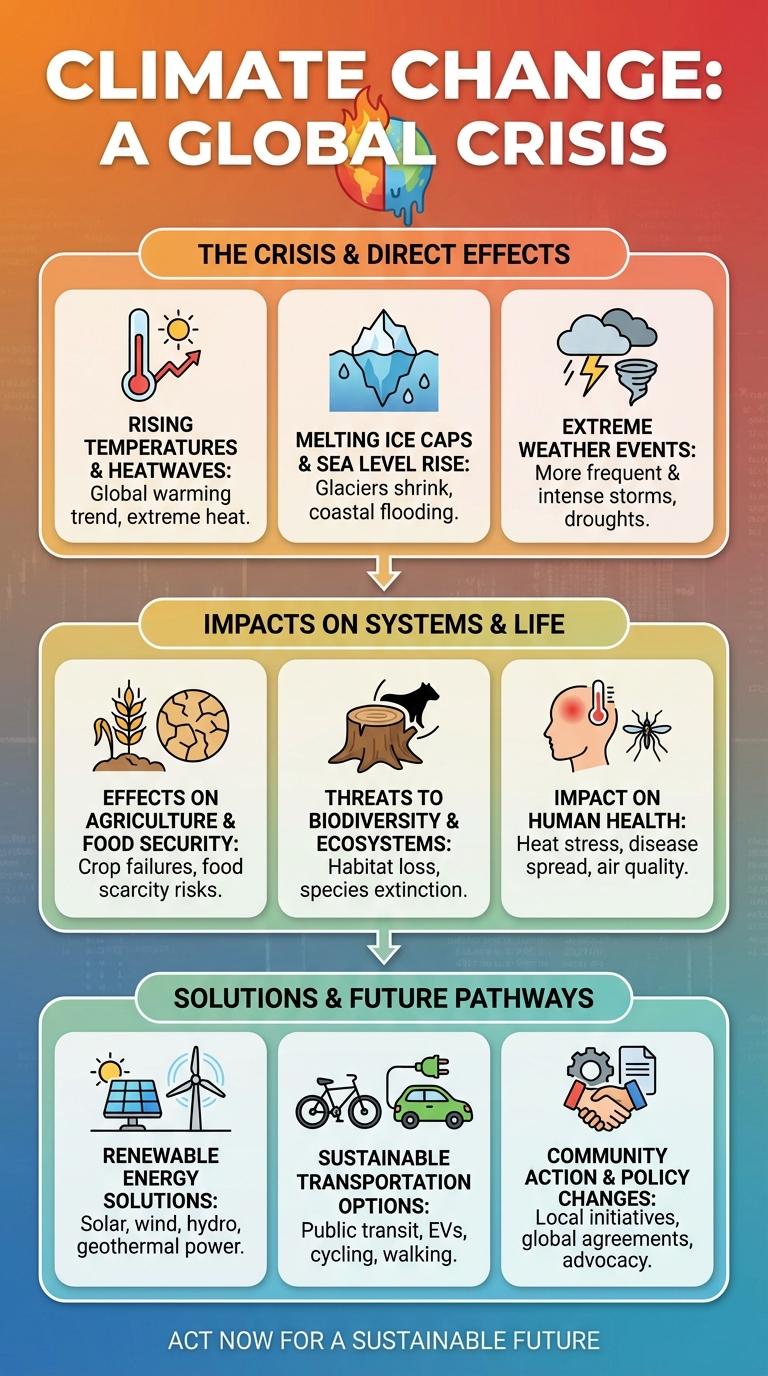
Climate change significantly impacts global ecosystems, weather patterns, and human health, intensifying natural disasters and threatening biodiversity. Understanding these effects helps highlight the urgency of sustainable practices, renewable energy adoption, and emission reductions. Implementing strategic actions can mitigate climate change, preserving the planet for future generations.
Climate Change: A Global Crisis
Climate change poses an unprecedented threat to ecosystems and human societies worldwide. The global rise in temperatures has led to severe environmental and economic consequences.
- Rising Sea Levels - Melting ice caps and glaciers contribute to increased ocean levels, threatening coastal communities.
- Extreme Weather Events - More frequent hurricanes, droughts, and floods disrupt habitats and agriculture.
- Loss of Biodiversity - Rapid climate shifts endanger species, reducing ecological resilience.
Implementing renewable energy, enhancing energy efficiency, and promoting sustainable land use are crucial to mitigating climate change effects.
Rising Temperatures & Heatwaves
Rising temperatures caused by climate change lead to more frequent and intense heatwaves, threatening ecosystems and human health. These extreme heat events increase the risk of heat-related illnesses and strain energy resources due to higher cooling demands.
Implementing green infrastructure, such as urban trees and green roofs, helps reduce urban heat by providing shade and cooling through evapotranspiration. Transitioning to renewable energy sources lowers greenhouse gas emissions, mitigating temperature increases and heatwave severity.
Melting Ice Caps & Sea Level Rise
Melting ice caps are accelerating due to rising global temperatures, contributing significantly to sea level rise. This phenomenon threatens coastal communities and disrupts marine ecosystems worldwide.
As ice caps melt, vast amounts of freshwater enter the oceans, causing sea levels to rise and increasing the risk of flooding in low-lying areas. Coastal erosion and habitat loss for wildlife are escalating concerns linked to these changes. Efforts to curb these effects include reducing greenhouse gas emissions, promoting renewable energy, and implementing coastal protection measures.
Extreme Weather Events
Climate change intensifies extreme weather events such as hurricanes, droughts, and floods, leading to widespread environmental and economic damage. Rising global temperatures increase the frequency and severity of these disasters, affecting vulnerable communities worldwide. Implementing sustainable practices and investing in resilient infrastructure can significantly reduce the impact of extreme weather events caused by climate change.
Effects on Agriculture & Food Security
| Effects on Agriculture & Food Security | Ways to Curb Them |
|---|---|
| Increased frequency of droughts reduces crop yields and soil moisture | Implement drought-resistant crop varieties and advanced irrigation techniques |
| Rising temperatures cause heat stress, lowering livestock productivity | Adopt climate-resilient livestock breeds and improve animal shelter designs |
| Changing rainfall patterns disrupt planting schedules and crop cycles | Use precision agriculture and real-time weather monitoring for adaptive farming |
| Increased pest and disease outbreaks threaten crops and food supply | Enhance integrated pest management and biological control methods |
| Soil degradation and erosion due to extreme weather events reduce arable land | Promote soil conservation practices like cover cropping and contour farming |
Threats to Biodiversity & Ecosystems
Climate change severely disrupts biodiversity and fragile ecosystems, threatening species survival and ecosystem functionality. Immediate action to reduce emissions and protect habitats is critical to preserving natural balance and preventing irreversible losses.
- Habitat Destruction - Rising temperatures and extreme weather alter habitats, forcing species migration or extinction.
- Ocean Acidification - Increased CO2 lowers ocean pH, damaging coral reefs and marine biodiversity.
- Invasive Species Proliferation - Climate shifts enable invasive species to spread, outcompeting native organisms.
- Conservation Initiatives - Establishing protected areas helps maintain biodiversity and supports ecosystem resilience.
- Emission Reductions - Cutting greenhouse gases slows climate change, stabilizing ecosystems and species habitats.
Impact on Human Health
Climate change significantly impacts human health by increasing the frequency of heatwaves, leading to heat-related illnesses and deaths. It also exacerbates respiratory conditions due to elevated air pollution and allergen levels.
Rising temperatures contribute to the spread of vector-borne diseases such as malaria and dengue fever. Reducing greenhouse gas emissions and improving public health infrastructure are vital steps to mitigate these health risks.
Renewable Energy Solutions
Climate change accelerates global warming, causing extreme weather events and rising sea levels. Renewable energy solutions like solar, wind, and hydropower reduce greenhouse gas emissions by replacing fossil fuels. Investing in these clean energy technologies supports sustainable growth and combats climate change effectively.
Sustainable Transportation Options
How does climate change affect our transportation systems? Rising temperatures and extreme weather events disrupt infrastructure and increase maintenance costs for transportation networks. Sustainable transportation options reduce greenhouse gas emissions and improve air quality.
Which sustainable transportation options help curb climate change? Electric vehicles produce zero tailpipe emissions and lower dependence on fossil fuels. Public transit and cycling reduce traffic congestion and carbon footprints.
Why is investing in public transit important for climate action? Efficient mass transit systems decrease the number of individual car trips, leading to reduced emissions. Well-developed transit networks promote social equity and fewer urban pollutants.
How can biking and walking contribute to sustainability? Non-motorized transport options produce no emissions and encourage healthier lifestyles. Cities with bike lanes and pedestrian zones experience lower pollution and better quality of life.
What role do policy and urban planning play in sustainable transportation? Implementing policies like congestion pricing and incentives for electric vehicles motivates behavioral change. Smart urban designs prioritize accessibility and limit car dependency, supporting climate goals.