
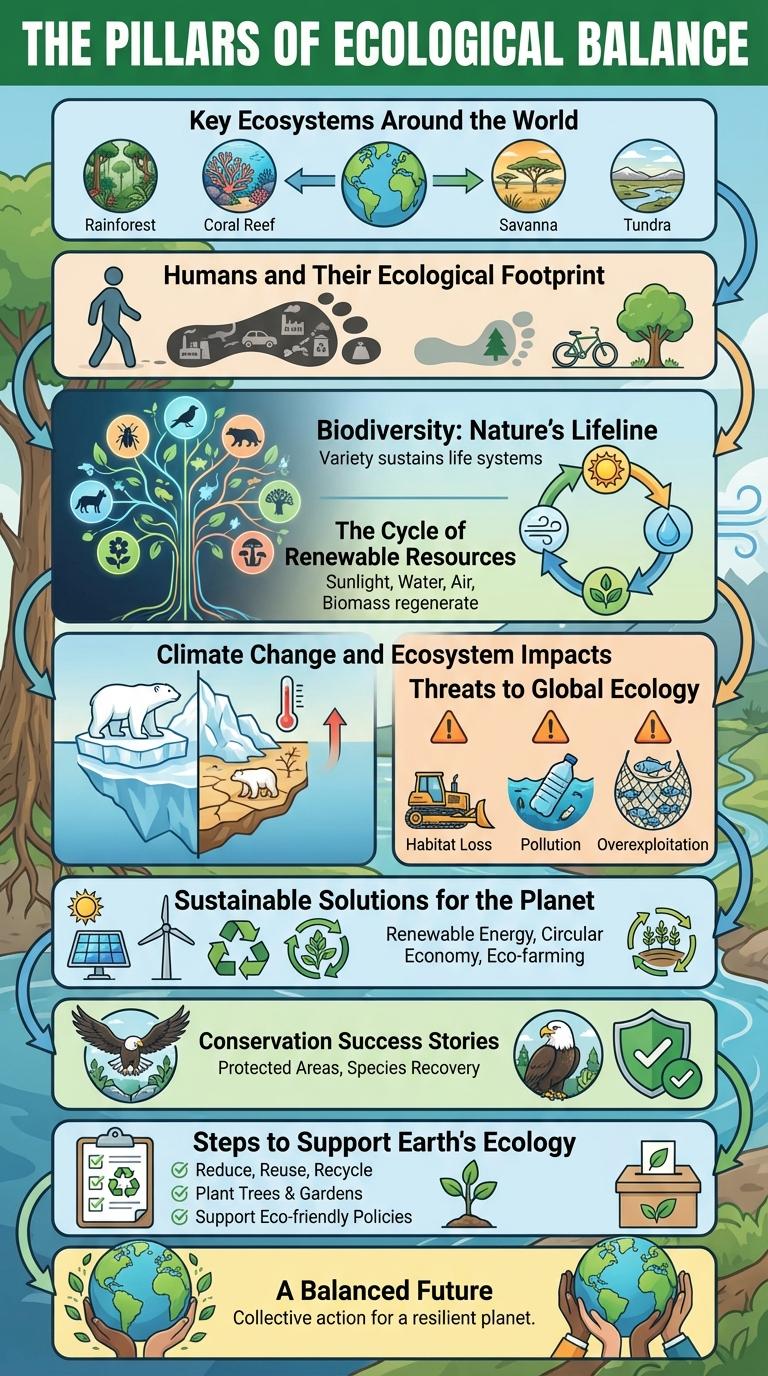
Ecology explores the relationships between living organisms and their environments, highlighting the delicate balance sustaining life on Earth. Infographics simplify complex ecological data, making it accessible and engaging for diverse audiences. Visual representations promote awareness and inspire action toward environmental conservation.
The Pillars of Ecological Balance
The Pillars of Ecological Balance consist of biodiversity, natural resources, and climate regulation. Biodiversity ensures the stability and resilience of ecosystems by supporting a wide variety of species. Natural resources provide the essential materials for life, while climate regulation maintains the environmental conditions necessary for all living organisms.
Key Ecosystems Around the World
Ecology studies the relationships between living organisms and their environments. Key ecosystems around the world play crucial roles in maintaining biodiversity and supporting life on Earth.
Major ecosystems include tropical rainforests, deserts, tundras, wetlands, and coral reefs. Tropical rainforests house over half of the world's terrestrial species, making them vital for global biodiversity. Deserts, though harsh, support specially adapted flora and fauna that contribute to ecological balance.
Humans and Their Ecological Footprint
The ecological footprint measures the impact of human activities on the environment, quantifying resource consumption and waste generation. It highlights how individual and collective behaviors contribute to environmental degradation and resource depletion.
Humans currently use natural resources equivalent to 1.7 Earths annually, indicating unsustainable consumption patterns. Reducing energy use, minimizing waste, and adopting sustainable practices can help lower the ecological footprint and protect the planet.
Biodiversity: Nature's Lifeline
Biodiversity represents the variety of all living organisms on Earth, encompassing plants, animals, fungi, and microorganisms. It forms the foundation of ecosystems, supporting essential processes such as pollination, nutrient cycling, and climate regulation.
Healthy biodiversity ensures ecosystem resilience and provides resources like food, medicine, and clean water. Protecting biodiversity is crucial for maintaining nature's balance and securing human well-being for future generations.
The Cycle of Renewable Resources
Renewable resources follow a natural cycle that enables sustainable use without depletion. Understanding this cycle highlights the importance of eco-friendly practices in preserving the environment.
- Resource Growth - Renewable resources such as trees and plants grow through natural processes like photosynthesis.
- Harvesting - These resources can be harvested in ways that allow for regeneration, ensuring long-term availability.
- Regeneration - After harvesting, resources regenerate through natural cycles, maintaining ecological balance.
Maintaining the cycle of renewable resources supports environmental health and reduces reliance on non-renewable materials.
Climate Change and Ecosystem Impacts
| Climate Change Factor | Ecosystem Impact |
|---|---|
| Rising Global Temperatures | Alters species distribution and disrupts breeding cycles |
| Sea Level Rise | Leads to loss of coastal habitats and increases saltwater intrusion |
| Increased Greenhouse Gas Emissions | Contributes to ocean acidification affecting marine life |
| Changing Precipitation Patterns | Causes drought stress and affects freshwater availability |
| Extreme Weather Events | Damages habitats and reduces biodiversity resilience |
Threats to Global Ecology
Global ecology faces significant threats from human activities and environmental changes that disrupt natural systems. Understanding these threats is essential for developing effective conservation strategies.
- Deforestation - Large-scale tree removal reduces biodiversity and disrupts carbon storage, accelerating climate change.
- Pollution - Contaminants in air, water, and soil harm wildlife and ecosystems, impairing natural functions.
- Climate Change - Rising temperatures and altered weather patterns threaten habitat stability and species survival.
Sustainable Solutions for the Planet
Ecology plays a critical role in maintaining the health of our planet through sustainable practices. Embracing sustainable solutions helps reduce environmental impact and promotes long-term ecological balance.
- Renewable Energy Adoption - Utilizing solar, wind, and hydro power decreases reliance on fossil fuels and reduces greenhouse gas emissions.
- Waste Reduction and Recycling - Minimizing waste by recycling and reusing materials conserves resources and lowers landfill impact.
- Conservation of Natural Habitats - Protecting forests, wetlands, and marine areas preserves biodiversity and supports ecosystem services essential for life.
Conservation Success Stories
Ecology conservation efforts have led to remarkable success stories worldwide, illustrating the positive impact of dedicated environmental protection. Species such as the bald eagle and giant panda have seen population recoveries due to targeted conservation strategies. These successes demonstrate the importance of habitat preservation, legal protection, and community involvement in sustaining biodiversity.