
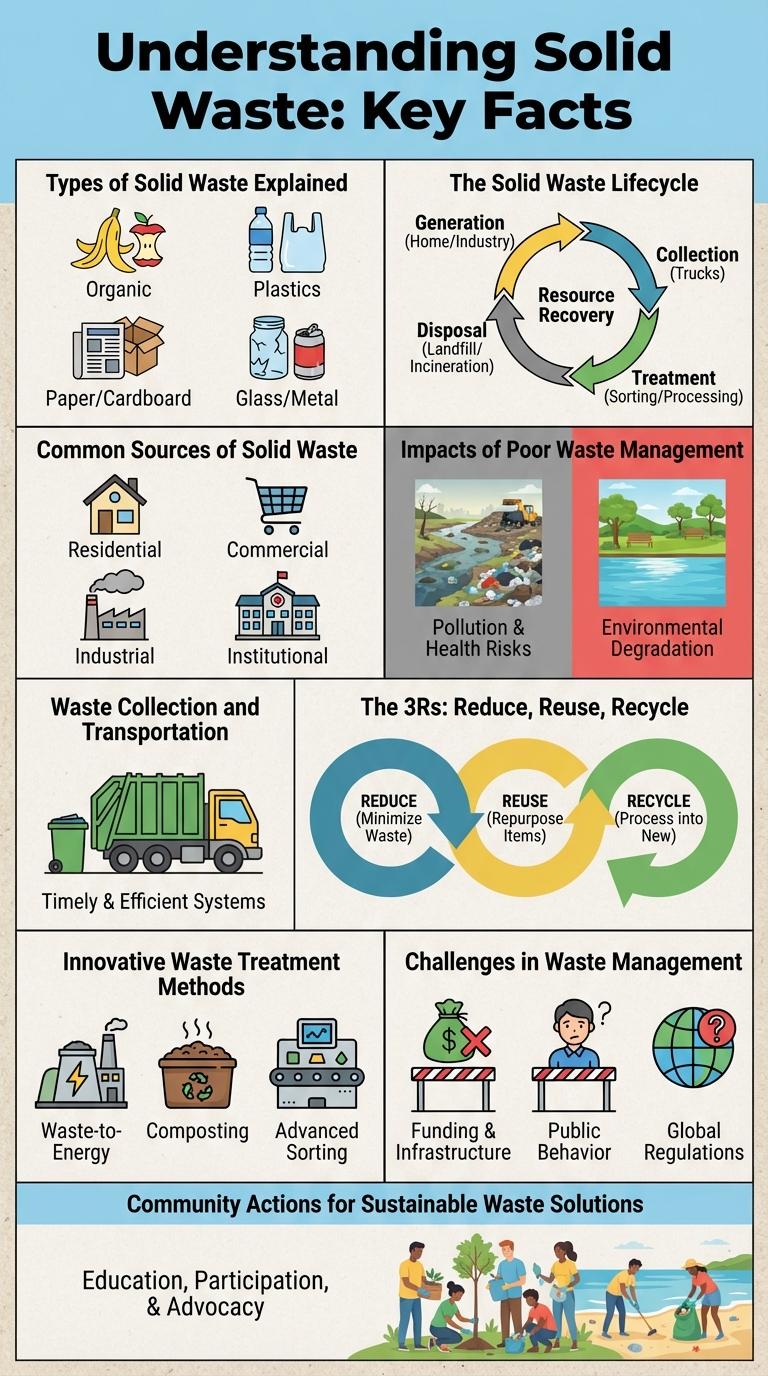
Effective solid waste management plays a crucial role in maintaining environmental health and promoting sustainable living. Proper segregation, collection, and disposal of waste minimize pollution and resource depletion, enhancing community well-being. Visual representations through infographics can simplify complex data, making it easier to understand waste management practices and their impact.
Understanding Solid Waste: Key Facts
Solid waste management is essential for environmental health and urban sanitation. Understanding the key facts about solid waste helps in developing effective waste reduction strategies.
- Definition of Solid Waste - Includes all discarded materials from residential, commercial, industrial, and institutional sources.
- Types of Solid Waste - Comprises organic waste, plastics, metals, glass, and hazardous materials.
- Global Waste Generation - The world produces over 2 billion tons of solid waste annually, with a significant portion improperly managed.
Effective solid waste management reduces pollution and conserves natural resources.
Types of Solid Waste Explained
Solid waste management involves the collection, treatment, and disposal of solid materials generated by human activity. Understanding the different types of solid waste is crucial for effective environmental planning and sustainability.
Municipal solid waste includes everyday items discarded by households and businesses, such as food scraps, paper, and packaging. Industrial waste originates from manufacturing processes and can contain hazardous materials requiring special handling. Biomedical waste consists of medical by-products that pose health risks and must be disposed of safely to prevent contamination.
The Solid Waste Lifecycle
| Stage | Description |
|---|---|
| Waste Generation | Creation of waste materials from households, industries, and commercial activities. |
| Collection | Gathering and transporting waste using bins, trucks, and collection centers. |
| Sorting and Segregation | Separating waste into recyclables, organic, hazardous, and landfill categories. |
| Treatment | Processes such as recycling, composting, incineration, and biological treatment. |
| Disposal | Final placement of refuse in landfills or environmentally safe disposal sites. |
Common Sources of Solid Waste
Common sources of solid waste include residential households, commercial establishments, industrial facilities, construction sites, and healthcare institutions. Residential waste mainly consists of food scraps, packaging materials, and discarded household items. Industrial waste often includes manufacturing by-products, chemical residues, and scrap materials from production processes.
Impacts of Poor Waste Management
Poor waste management leads to severe environmental pollution, contaminating soil, water, and air. It contributes to the spread of diseases and poses significant health risks to communities. Inefficient waste disposal also accelerates climate change through the release of greenhouse gases like methane.
Waste Collection and Transportation
Waste collection involves the systematic gathering of solid waste from residential, commercial, and industrial sources. Efficient collection methods ensure timely removal, reducing environmental pollution and health hazards.
Transportation of waste uses specialized vehicles designed to minimize spillage and odor during transit. Proper routing and scheduling optimize fuel consumption and reduce operational costs in solid waste management.
The 3Rs: Reduce, Reuse, Recycle
Effective solid waste management relies on the 3Rs: Reduce, Reuse, Recycle to minimize environmental impact. These principles help conserve resources, reduce landfill waste, and promote sustainable living.
- Reduce - Minimize the amount of waste generated by choosing sustainable products and reducing consumption.
- Reuse - Extend the life of items by repairing, repurposing, or donating instead of discarding them.
- Recycle - Process materials like paper, plastic, and metal to create new products, lowering the need for raw resources.
Innovative Waste Treatment Methods
What are the latest innovations in solid waste management? Innovative waste treatment methods improve efficiency and reduce environmental impact. Technologies such as anaerobic digestion, pyrolysis, and advanced recycling are transforming waste into valuable resources.
Challenges in Waste Management
Effective solid waste management faces numerous obstacles that impact environmental health and urban sanitation. Addressing these challenges is critical for sustainable development and public well-being.
- Rapid Urbanization - Accelerated city growth increases waste generation, overwhelming existing management systems.
- Insufficient Infrastructure - Lack of proper collection, transportation, and disposal facilities hampers efficient waste handling.
- Limited Public Awareness - Low community engagement reduces recycling rates and proper waste segregation at the source.