
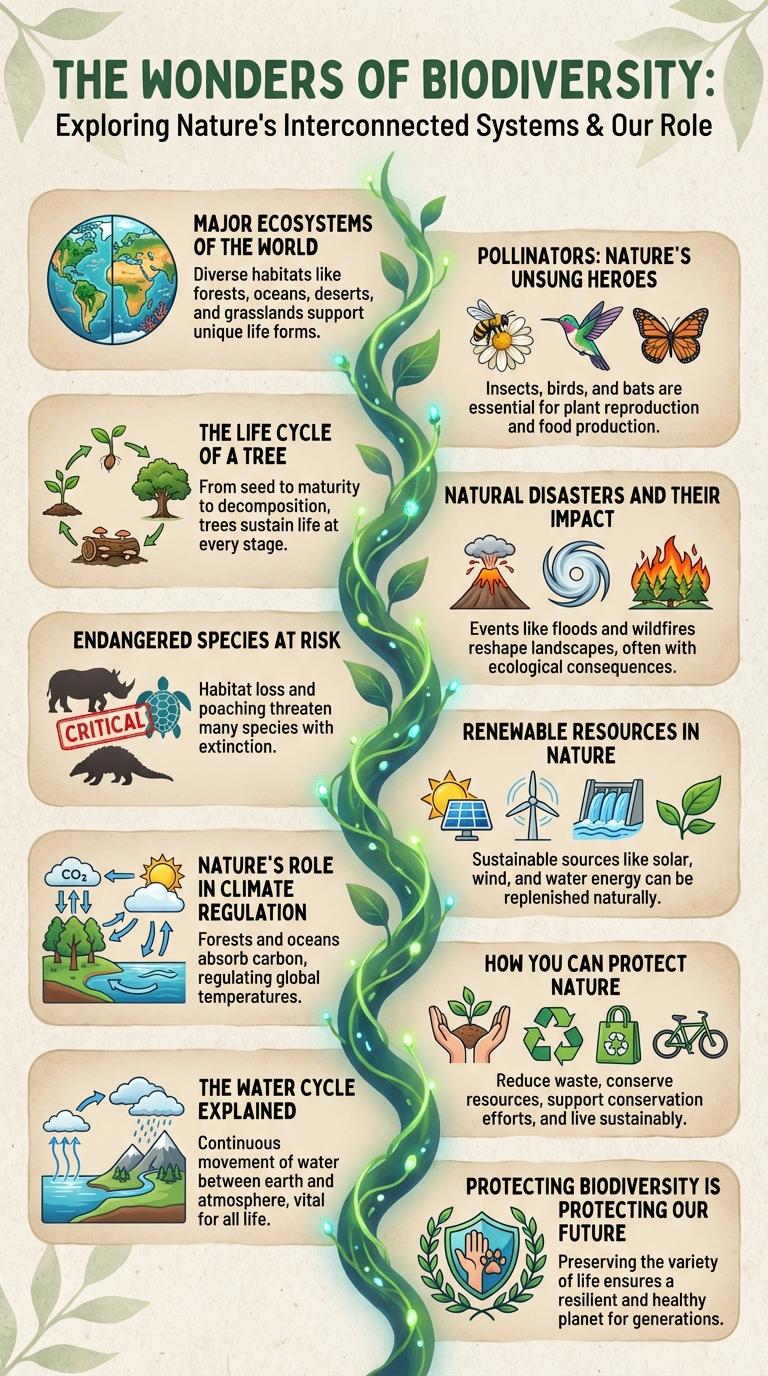
Nature's intricate ecosystems and stunning biodiversity can be vividly captured through detailed infographics that translate complex information into visually engaging content. These graphics highlight key elements such as flora and fauna distribution, environmental impacts, and conservation efforts, making the data accessible and compelling. By combining art and science, nature infographics inspire awareness and promote sustainable practices.
The Wonders of Biodiversity
Biodiversity represents the variety of life on Earth, encompassing millions of species of plants, animals, and microorganisms. This diversity is essential for ecosystem stability and human survival.
Forests, oceans, and wetlands provide critical habitats that support countless species. Biodiversity helps regulate climate, purify water, and pollinate crops. Protecting natural habitats ensures the preservation of these vital ecological functions for future generations.
Major Ecosystems of the World
What are the major ecosystems of the world? Major ecosystems include forests, grasslands, deserts, wetlands, and marine environments. Each ecosystem supports unique biodiversity and plays a crucial role in Earth's ecological balance.
| Ecosystem | Key Characteristics |
|---|---|
| Forests | High biodiversity, dense tree coverage, carbon storage |
| Grasslands | Dominated by grasses, supports large herbivores, seasonal rainfall |
| Deserts | Low precipitation, extreme temperatures, specialized flora and fauna |
| Wetlands | Water-saturated soils, rich habitat for birds and amphibians |
| Marine | Oceans and seas, largest ecosystem, crucial for global oxygen and climate regulation |
The Life Cycle of a Tree
| Stage | Description |
|---|---|
| Seed | Contains the embryo; begins germination under suitable conditions of moisture and temperature. |
| Seedling | Young tree sprouting from the seed; develops roots, stem, and leaves for photosynthesis. |
| Sapling | Immature tree; grows taller and develops a stronger trunk and branches. |
| Mature Tree | Fully grown; capable of producing flowers, fruits, and seeds for reproduction. |
| Decay and Regeneration | Old tree decomposes, enriching soil; promotes growth of new seedlings and sustains ecosystem. |
Endangered Species at Risk
Endangered species face an increased risk of extinction due to habitat loss, climate change, and human activities. Protecting these species is crucial for maintaining biodiversity and ecosystem health. Conservation efforts focus on habitat preservation, legal protection, and breeding programs to restore populations.
Nature's Role in Climate Regulation
Nature plays a crucial role in regulating the Earth's climate by absorbing carbon dioxide and maintaining atmospheric balance. Healthy ecosystems like forests, oceans, and wetlands act as natural climate buffers.
- Carbon Sequestration - Forests and oceans absorb large amounts of CO2, reducing greenhouse gas levels in the atmosphere.
- Temperature Regulation - Vegetation influences local and global temperatures through evapotranspiration and shade.
- Water Cycle Support - Wetlands and forests regulate rainfall patterns and maintain soil moisture, mitigating droughts and floods.
The Water Cycle Explained
The water cycle is a continuous process that moves water through the environment. It involves key stages such as evaporation, condensation, precipitation, and collection.
Sunlight heats water bodies, causing evaporation which turns liquid water into vapor. This vapor cools and condenses to form clouds, leading to precipitation that returns water to Earth's surface.
Pollinators: Nature's Unsung Heroes
Pollinators such as bees, butterflies, and birds play a crucial role in ecosystems by enabling the reproduction of over 75% of the world's flowering plants. These creatures facilitate the growth of fruits, vegetables, and seeds, supporting biodiversity and food security. Protecting pollinators helps maintain healthy environments and sustains agricultural productivity worldwide.
Natural Disasters and Their Impact
Natural disasters cause significant disruptions to ecosystems, communities, and economies worldwide. Understanding their types and impacts helps improve preparedness and resilience.
- Earthquakes - Sudden ground shaking causes infrastructure damage and loss of life, especially in densely populated areas.
- Floods - Overflowing water leads to property destruction, soil erosion, and waterborne diseases.
- Wildfires - Intense fires destroy vegetation, threaten wildlife habitats, and degrade air quality.
- Hurricanes - Powerful storms bring high winds and heavy rainfall, triggering flooding and wind damage.
- Volcanic Eruptions - Eruptions release ash and lava, disrupting air travel and harming nearby communities.
Renewable Resources in Nature
Renewable resources in nature provide sustainable energy solutions essential for reducing environmental impact. These resources replenish naturally, making them vital for long-term ecological balance.
- Solar Energy - Harnesses sunlight through photovoltaic cells to generate electricity without emissions.
- Wind Power - Converts wind flow into mechanical energy using turbines, offering a clean alternative to fossil fuels.
- Hydropower - Utilizes flowing water to produce energy, supplying reliable and renewable electricity globally.
Efficient use of renewable natural resources is crucial for achieving a sustainable future and mitigating climate change.