
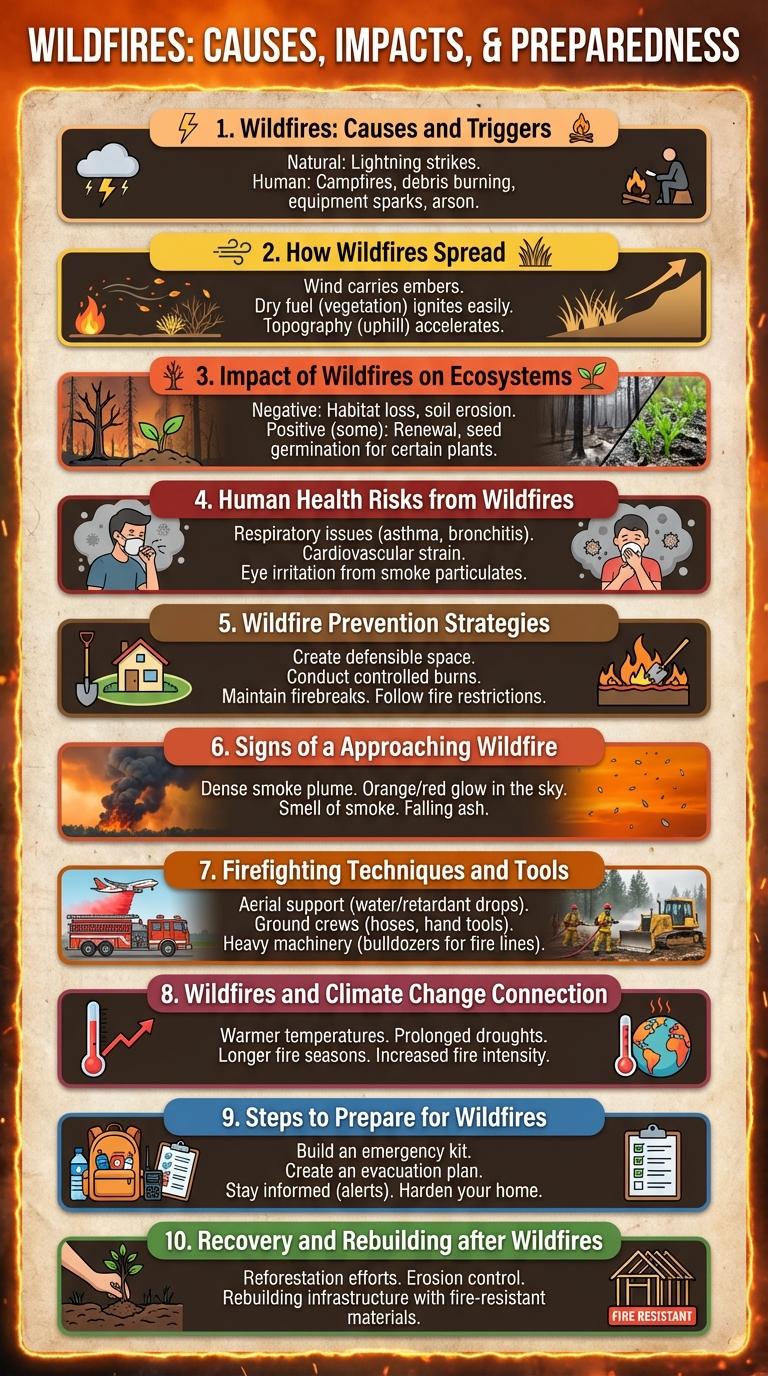
Wildfires rapidly consume vast landscapes, threatening ecosystems, homes, and human lives with intense heat and unpredictable behavior. Understanding the causes, effects, and prevention methods of wildfires is essential for mitigating their destructive impact. This infographic presents key data and insights to raise awareness and promote effective wildfire management strategies.
Wildfires: Causes and Triggers
Wildfires are uncontrolled fires that spread rapidly through vegetation, often fueled by dry conditions and high winds. They pose significant threats to ecosystems, property, and human life worldwide.
Major causes of wildfires include lightning strikes, human negligence such as unattended campfires, and deliberate arson. Environmental factors like drought and heatwaves significantly increase the likelihood of wildfire ignition and spread.
How Wildfires Spread
Wildfires can rapidly consume large areas of land, posing severe risks to ecosystems and human settlements. Understanding how wildfires spread is crucial for prevention and control efforts.
- Wind Propagation - Wind carries embers and flames, accelerating fire movement across landscapes.
- Fuel Availability - Dry vegetation acts as combustible material, fueling the fire's growth and intensity.
- Topography Influence - Fires move faster uphill due to heat rising and preheating vegetation above the fire line.
Impact of Wildfires on Ecosystems
| Impact | Description |
|---|---|
| Vegetation Loss | Wildfires destroy large areas of forests and grasslands, reducing plant biodiversity and disrupting habitats. |
| Soil Degradation | Intense heat alters soil composition, reducing fertility and increasing erosion risks. |
| Wildlife Displacement | Animals lose shelter and food sources, leading to migration, population decline, or mortality. |
| Carbon Emissions | Wildfires release significant amounts of carbon dioxide, contributing to climate change. |
| Water Quality Impact | Fire-related ash and debris contaminate water bodies, affecting aquatic ecosystems and drinking water supplies. |
Human Health Risks from Wildfires
Wildfires release a mix of harmful pollutants, including fine particulate matter (PM2.5), carbon monoxide, and volatile organic compounds, which can severely impact human respiratory health. Exposure to wildfire smoke increases the risk of asthma attacks, bronchitis, and other respiratory illnesses, particularly in children, the elderly, and individuals with preexisting conditions. Long-term exposure to wildfire-related air pollution may lead to chronic cardiovascular and pulmonary diseases, highlighting the need for effective public health measures during wildfire events.
Wildfire Prevention Strategies
Wildfires pose a significant threat to forests, wildlife, and human communities worldwide. Effective prevention strategies can drastically reduce the frequency and impact of these devastating events.
Creating defensible space by clearing dry vegetation around properties helps slow fire spread. Implementing controlled burns manages fuel buildup and maintains ecosystem health.
Signs of a Approaching Wildfire
What are the common signs indicating an approaching wildfire? Visible smoke plumes rising from distant forests and a sudden increase in dry, hot winds often signal a wildfire nearby. Wildlife behavior changes, such as animals fleeing the area, can also be an early warning.
Firefighting Techniques and Tools
Wildfire firefighting techniques include controlled burns, firebreaks, and aerial water drops to contain and extinguish fires efficiently. Tools commonly used are fire engines, helicopters equipped with water buckets, and hand tools like shovels and Pulaskis designed specifically for wildfire control. Advanced technology such as drones and infrared cameras helps in early detection and monitoring of wildfire spread, enhancing firefighting effectiveness.
Wildfires and Climate Change Connection
Wildfires have become increasingly frequent and intense due to the rising global temperatures. Climate change directly influences the conditions that fuel wildfires, such as prolonged droughts and heatwaves.
Higher temperatures lead to drier vegetation, creating more combustible material for wildfires. Changes in precipitation patterns result in prolonged dry seasons, increasing wildfire risks. The increased frequency of extreme weather events further exacerbates wildfire outbreaks, threatening ecosystems and human communities worldwide.
Steps to Prepare for Wildfires
Wildfires can rapidly threaten homes and communities, making preparation essential. Understanding key steps helps reduce risks and protect lives.
- Create Defensible Space - Clear vegetation and flammable materials around your home to slow wildfire spread and improve firefighter access.
- Prepare an Emergency Kit - Assemble supplies including water, food, medications, and important documents for quick evacuation.
- Develop an Evacuation Plan - Identify multiple escape routes and establish communication methods with family members during emergencies.