
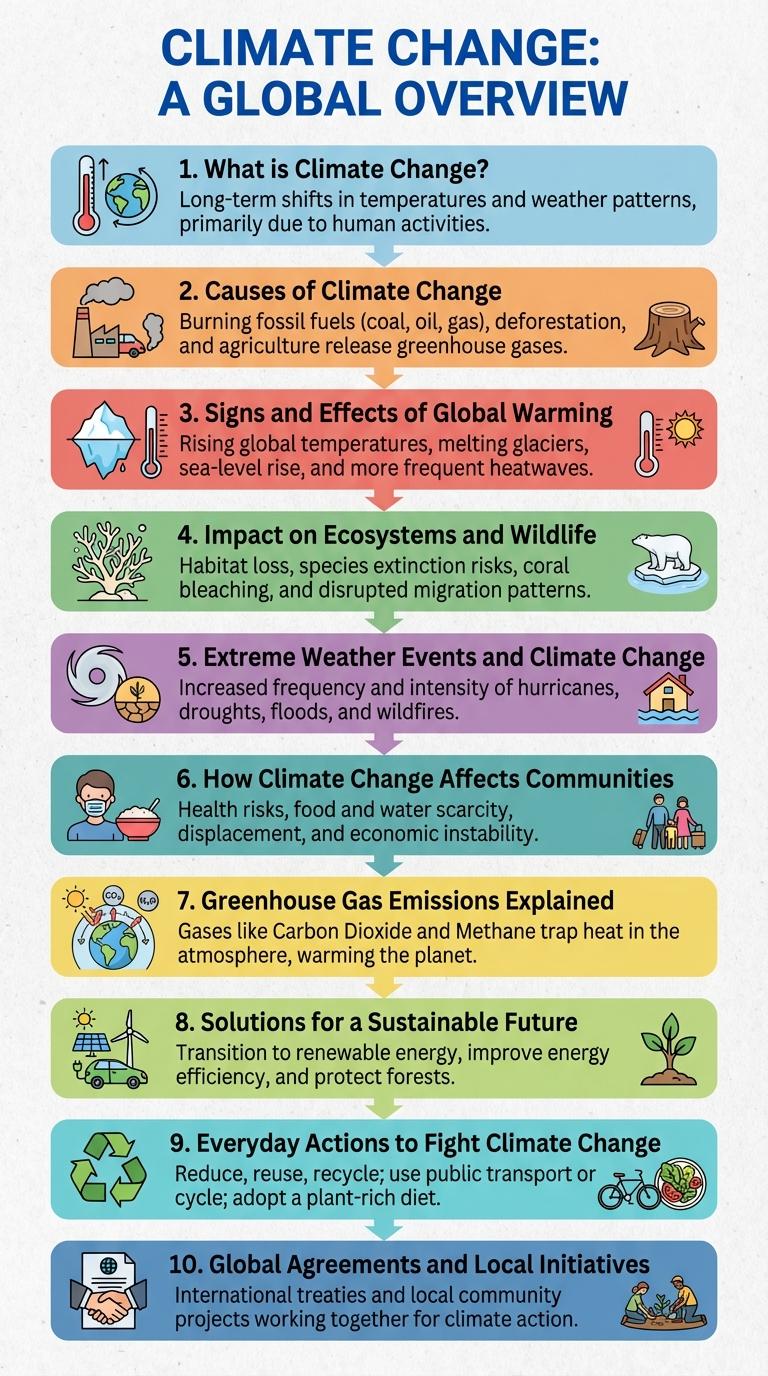
Climate change significantly impacts ecosystems, weather patterns, and human livelihoods worldwide. Rising temperatures contribute to more frequent extreme weather events, such as typhoons and droughts, threatening biodiversity and agriculture. Understanding these changes through clear, visual data helps communities prepare and adapt effectively.
What is Climate Change?
What is Climate Change?
Climate change refers to long-term shifts in temperature, precipitation, and weather patterns on Earth. It is primarily driven by human activities such as burning fossil fuels and deforestation.
Causes of Climate Change
Climate change primarily results from increased concentrations of greenhouse gases such as carbon dioxide, methane, and nitrous oxide in the atmosphere. These gases trap heat, leading to global temperature rises and altered weather patterns.
Human activities including fossil fuel burning, deforestation, and industrial processes are major contributors to greenhouse gas emissions. Natural factors such as volcanic eruptions and solar radiation changes also influence climate but to a lesser extent.
Signs and Effects of Global Warming
Global warming causes rising temperatures, melting polar ice caps, and increased frequency of extreme weather events. Signs include shifts in seasonal patterns, more intense heatwaves, and rising sea levels. Effects impact ecosystems, agriculture, and human health, leading to biodiversity loss and food insecurity.
Impact on Ecosystems and Wildlife
Climate change significantly alters natural habitats, affecting the survival of numerous species. These alterations disrupt ecosystem balance and biodiversity worldwide.
- Habitat Loss - Rising temperatures and shifting weather patterns lead to the degradation and loss of critical habitats for many wildlife species.
- Species Migration - Changes in climate force species to relocate to more suitable environments, often resulting in increased competition and ecosystem stress.
- Extinction Risk - Rapid environmental changes heighten extinction risks for species unable to adapt or migrate quickly enough.
Extreme Weather Events and Climate Change
Climate change intensifies the frequency and severity of extreme weather events worldwide. Rising global temperatures contribute to unpredictable weather patterns and natural disasters.
Extreme weather events include hurricanes, floods, heatwaves, and droughts, all exacerbated by climate change. These events disrupt ecosystems, harm human health, and cause significant economic damage. Understanding the link between climate change and extreme weather is crucial for effective disaster preparedness and mitigation strategies.
How Climate Change Affects Communities
Climate change leads to extreme weather events, disrupting daily life and damaging infrastructure in communities. Rising temperatures increase health risks, such as heatstroke and respiratory problems, especially among vulnerable populations. Changes in precipitation patterns affect water supply and agriculture, threatening food security and livelihoods.
Greenhouse Gas Emissions Explained
Climate change is driven primarily by the increase of greenhouse gases in the atmosphere. These gases trap heat, leading to global warming and severe environmental impacts.
- Carbon Dioxide (CO2) - The largest contributor to greenhouse gas emissions, mainly from burning fossil fuels and deforestation.
- Methane (CH4) - Emitted during the production of coal, oil, natural gas, and from livestock digestion processes.
- Nitrous Oxide (N2O) - Released from agricultural activities, industrial processes, and combustion of organic matter.
Solutions for a Sustainable Future
| Solution | Description |
|---|---|
| Renewable Energy | Utilizing solar, wind, and hydro power to reduce reliance on fossil fuels and decrease greenhouse gas emissions. |
| Energy Efficiency | Implementing energy-saving technologies in buildings, transportation, and industry to lower overall energy consumption. |
| Reforestation | Planting trees and restoring forests to absorb CO2 and improve biodiversity. |
| Sustainable Agriculture | Adopting practices that minimize environmental impact, such as crop rotation, organic farming, and reduced chemical use. |
| Waste Reduction | Encouraging recycling, composting, and minimizing landfill waste to lower methane emissions and conserve resources. |
Everyday Actions to Fight Climate Change
Climate change poses a significant threat to our planet, driven largely by human activities that increase greenhouse gas emissions. Minor lifestyle adjustments in daily routines can collectively contribute to reducing this impact.
Simple everyday actions like conserving energy, reducing waste, and choosing sustainable transport options help lower your carbon footprint. Embracing eco-friendly habits supports global efforts to slow climate change and protect the environment for future generations.