
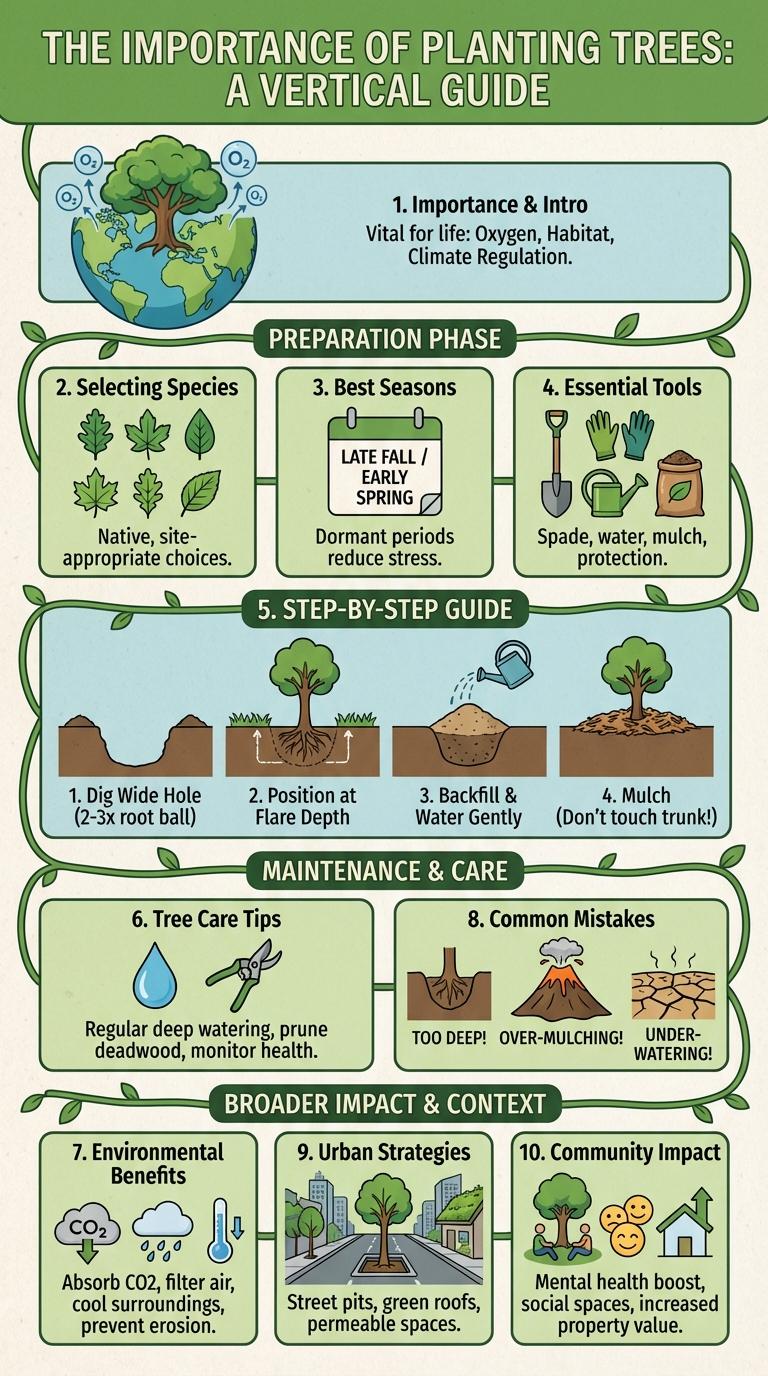
Planting trees plays a crucial role in combating climate change by absorbing carbon dioxide and producing oxygen. Trees enhance biodiversity by providing habitats for numerous species and support soil health through erosion control. This infographic highlights key benefits of tree planting and offers actionable steps for effective reforestation efforts.
The Importance of Planting Trees
Planting trees plays a vital role in sustaining ecosystems and improving air quality. Trees act as natural air filters and provide habitats for numerous species.
- Climate Regulation - Trees absorb carbon dioxide and help reduce greenhouse gases, mitigating climate change.
- Soil Conservation - Tree roots prevent soil erosion and maintain soil fertility by retaining nutrients.
- Biodiversity Support - Trees offer shelter and food sources for wildlife, enhancing biodiversity in urban and rural areas.
Step-by-Step Guide to Planting a Tree
How do you successfully plant a tree? Follow these essential steps to ensure your tree thrives in its new environment.
| Step | Action |
|---|---|
| 1. Choose the Right Tree | Select a species suitable for your climate and soil type to ensure optimal growth and resilience. |
| 2. Pick the Ideal Location | Find a spot with enough sunlight, space for roots, and proper drainage for healthy development. |
| 3. Prepare the Planting Hole | Dig a hole twice as wide and the same depth as the root ball to give roots room to expand. |
| 4. Plant the Tree | Place the tree in the hole, ensuring the root collar is level with the soil surface before backfilling. |
| 5. Water and Mulch | Thoroughly water the tree and apply mulch around the base to retain moisture and regulate temperature. |
Selecting the Right Tree Species
Selecting the right tree species is essential for successful planting and long-term growth. Consider factors such as local climate, soil type, and available space.
Native trees often thrive better and support local ecosystems. Research species that provide shade, wildlife habitat, or aesthetic value based on your planting goals.
Best Seasons for Tree Planting
Planting trees during the right season ensures better growth and survival rates. Spring and fall are the best seasons for tree planting due to moderate temperatures and adequate rainfall. Avoid extreme heat or cold to give young trees the best start.
Essential Tools for Tree Planting
Planting trees requires specific tools to ensure successful growth and development. Essential equipment includes items that help prepare the soil, plant the saplings, and care for them during early growth stages.
Shovels and spades are fundamental for digging holes and moving soil efficiently. Gloves protect hands from rough materials and potential allergens while ensuring a firm grip on tools.
Tree Care Tips for Healthy Growth
Planting trees is essential for environmental health and enhancing urban aesthetics. Proper care ensures strong roots and vibrant foliage for years to come.
Choose well-drained soil and water trees deeply but infrequently to encourage root growth. Mulch around the base to retain moisture and regulate soil temperature. Prune dead or damaged branches regularly to promote healthy growth and prevent diseases.
Environmental Benefits of Trees
Planting trees plays a crucial role in improving the environment by enhancing air quality and supporting biodiversity. Trees act as natural air filters, absorbing pollutants and providing habitats for countless species.
- Carbon Sequestration - Trees absorb carbon dioxide from the atmosphere, reducing greenhouse gases and mitigating climate change.
- Air Purification - Leaves trap dust, pollen, and smoke, cleaning the air and improving respiratory health.
- Soil Conservation - Tree roots stabilize soil, preventing erosion and maintaining nutrient-rich land.
Trees contribute significantly to a healthier planet and sustainable ecosystems.
Common Mistakes in Tree Planting
Planting trees is vital for the environment, but common mistakes can harm tree growth and survival. Avoiding these errors ensures healthy trees and long-term benefits.
Understanding correct planting techniques maximizes tree health and environmental impact.
- Planting Too Deep - Trees planted too deep often suffer from root rot and poor oxygen access.
- Ignoring Soil Quality - Poor soil conditions stunt growth and reduce nutrient uptake.
- Poor Watering Practices - Overwatering or underwatering damages roots and stresses the tree.
- Using Inappropriate Tree Species - Selecting species unsuitable for the local climate leads to high mortality rates.
- Neglecting Proper Mulching - Lack of mulch increases weed competition and soil moisture loss.