
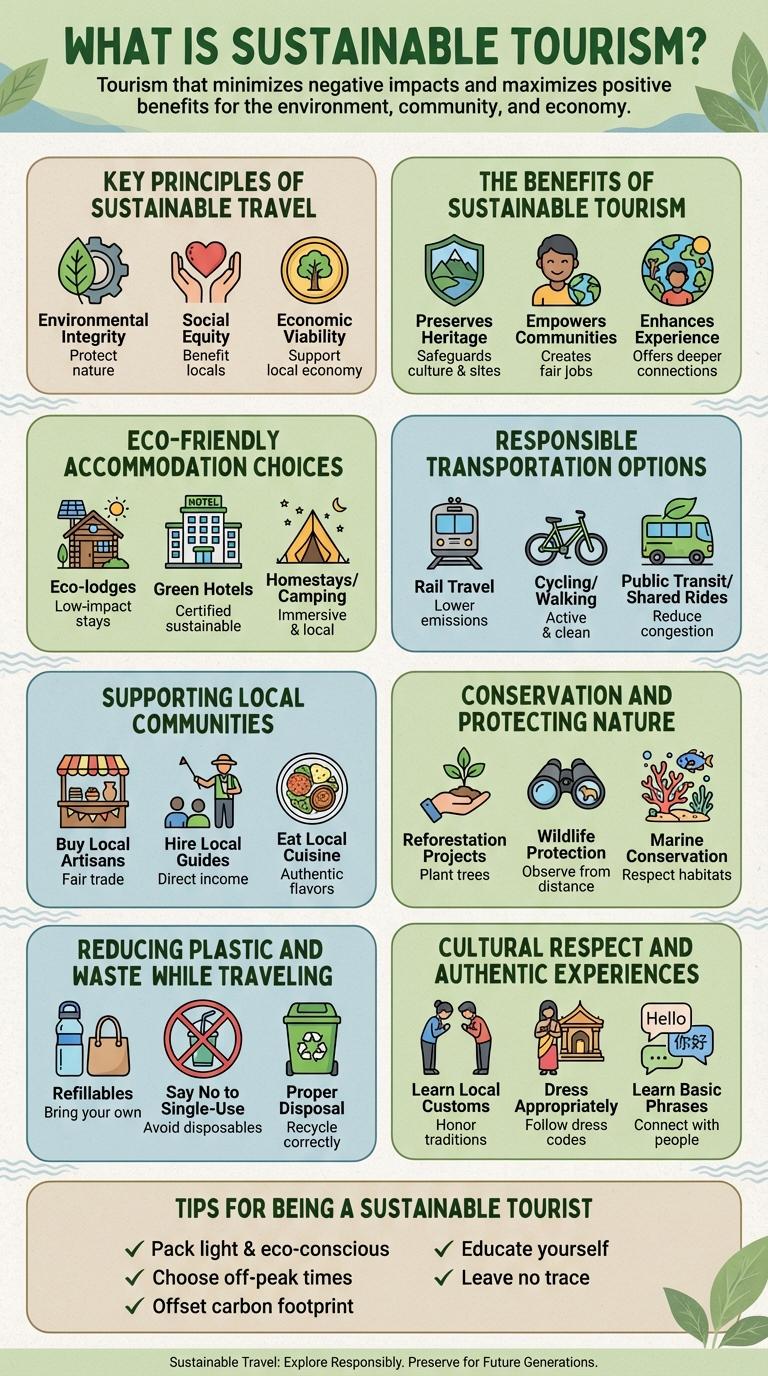
Sustainable tourism promotes responsible travel that minimizes environmental impact and supports local communities. Infographics visually highlight key practices such as reducing waste, conserving natural resources, and respecting cultural heritage. Travelers can use these insights to make eco-friendly choices that preserve destinations for future generations.
What is Sustainable Tourism?
Sustainable tourism promotes responsible travel principles to minimize negative environmental and cultural impacts while supporting local economies. It emphasizes conservation, respect for indigenous cultures, and maintaining biodiversity for future generations.
- Environmental Protection - Sustainable tourism focuses on preserving natural habitats and reducing pollution during travel activities.
- Cultural Respect - It encourages travelers to honor local traditions and support authentic cultural experiences.
- Economic Benefits - This approach ensures that tourism revenue contributes to community development and poverty reduction.
Key Principles of Sustainable Travel
Sustainable tourism promotes responsible travel that conserves the environment and improves local communities' well-being. Embracing sustainable travel principles helps protect natural resources and cultural heritage for future generations.
- Environmental Conservation - Minimize ecological impact by preserving wildlife habitats and reducing waste.
- Cultural Respect - Honor local traditions and support indigenous cultures through authentic interactions.
- Economic Benefits - Encourage fair trade and support local businesses to boost community prosperity.
Following these core principles ensures tourism contributes positively to the planet and the people who call it home.
The Benefits of Sustainable Tourism
Sustainable tourism promotes responsible travel that minimizes environmental impact and supports local communities. It encourages preservation of cultural heritage and natural resources for future generations.
By prioritizing eco-friendly practices, sustainable tourism reduces pollution and conserves biodiversity. It boosts local economies through authentic experiences and fair employment opportunities. Visitors benefit from more meaningful connections and improved travel experiences.
Eco-Friendly Accommodation Choices
Sustainable tourism promotes eco-friendly accommodation choices to reduce environmental impact. Options include hotels powered by renewable energy, lodges with water conservation systems, and buildings constructed from sustainable materials. Choosing green-certified accommodations supports local communities and preserves natural habitats for future generations.
Responsible Transportation Options
Responsible transportation options in sustainable tourism significantly reduce carbon footprints and environmental impact. Choosing public transit, biking, or walking supports local economies while preserving natural habitats. Eco-friendly vehicles such as electric buses and hybrid cars offer greener alternatives for travelers committed to sustainability.
Supporting Local Communities
Supporting local communities is a vital aspect of sustainable tourism, ensuring that travelers contribute positively to the areas they visit. When tourists prioritize local businesses, artisans, and services, they help preserve cultural heritage and create economic opportunities.
Local employment increases as tourism revenues stay within the community, promoting social well-being and reducing poverty. Sustainable tourism encourages respect for local traditions and environments, fostering a mutually beneficial relationship between visitors and residents.
Conservation and Protecting Nature
Sustainable tourism emphasizes conservation efforts that protect natural habitats and biodiversity. It encourages travelers to minimize their environmental impact while supporting local ecosystems.
Protecting nature involves reducing waste, avoiding pollution, and respecting wildlife. Sustainable tourism promotes eco-friendly practices that help preserve natural resources for future generations.
Reducing Plastic and Waste While Traveling
Sustainable tourism emphasizes minimizing environmental impact by reducing plastic and waste during travel. Conscious choices help preserve destinations and promote eco-friendly practices.
- Use Reusable Items - Carry reusable water bottles, bags, and utensils to avoid single-use plastics.
- Choose Eco-Friendly Products - Select biodegradable toiletries and avoid plastic packaging.
- Proper Waste Disposal - Dispose of waste responsibly and participate in local recycling programs when available.
Cultural Respect and Authentic Experiences
How can travelers promote cultural respect during sustainable tourism? Embracing local customs and traditions fosters mutual understanding and appreciation. This approach enriches the travel experience while preserving cultural heritage.
What defines authentic experiences in sustainable tourism? Engaging with local communities through meaningful activities ensures genuine cultural exchange. Authentic experiences support local economies and promote responsible travel practices.
| Aspect | Description |
| Cultural Respect | Observing local traditions, respecting languages, and supporting indigenous artisans. |
| Authentic Experiences | Participating in traditional events, visiting locally owned businesses, and learning about community history. |
| Benefits | Preservation of heritage, empowerment of locals, and meaningful traveler connections. |
| Traveler Tips | Ask permission before photographing, use local guides, and avoid exploitative souvenirs. |
| Impact | Supports sustainable development and promotes respectful cultural exchange. |