
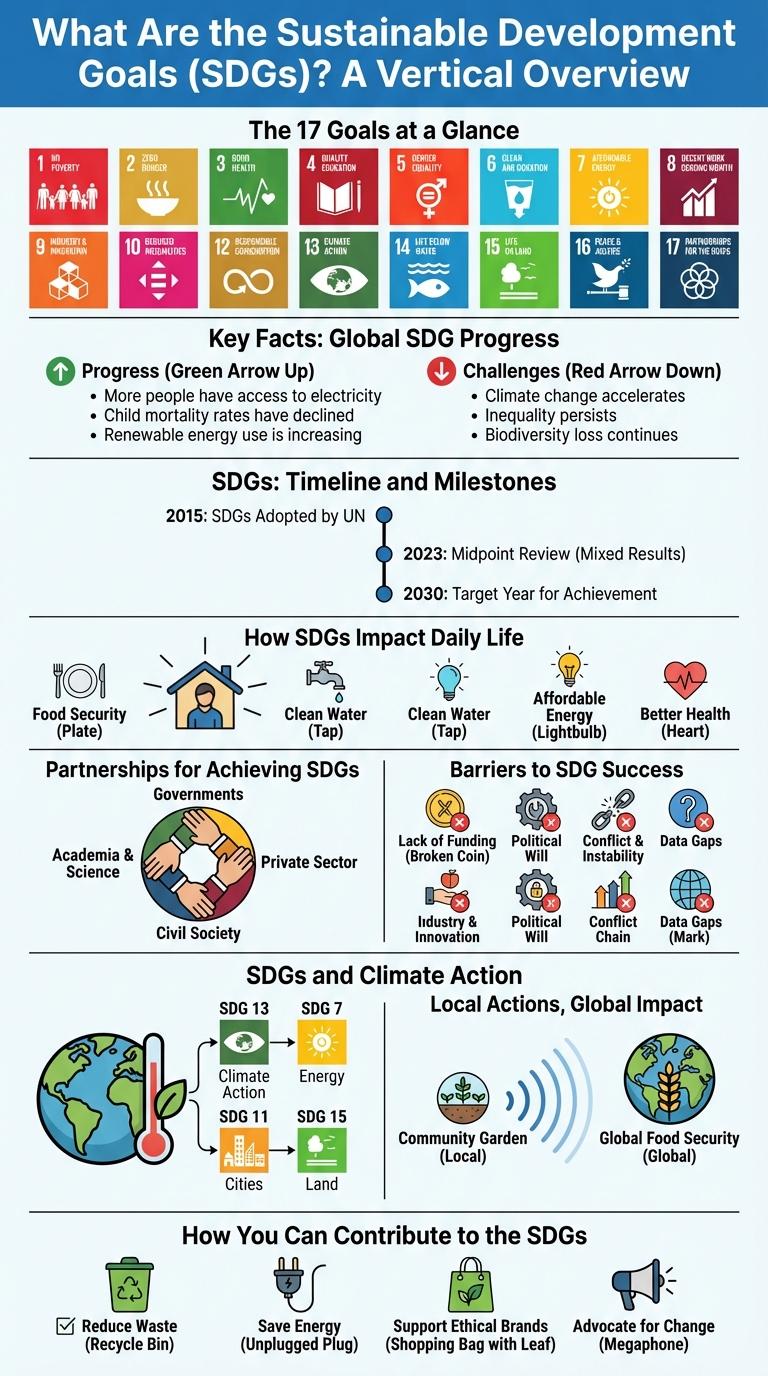
The Sustainable Development Goals (SDGs) provide a universal framework for addressing global challenges such as poverty, inequality, and climate change. Infographics visually distill complex data into clear, engaging insights that highlight progress and areas needing attention. These visual tools effectively communicate the importance of collective efforts toward achieving the SDGs by 2030.
What Are the Sustainable Development Goals (SDGs)?
The Sustainable Development Goals (SDGs) are a set of 17 global objectives established by the United Nations in 2015. They aim to address urgent social, economic, and environmental challenges by 2030. These goals guide countries and organizations in creating a sustainable and equitable future worldwide.
The 17 Goals at a Glance
The 17 Sustainable Development Goals (SDGs) are a global blueprint for achieving a better and more sustainable future by 2030. These goals address the urgent environmental, political, and economic challenges facing the world.
- No Poverty - End poverty in all its forms everywhere to ensure basic needs are met for all people.
- Zero Hunger - Achieve food security, improve nutrition, and promote sustainable agriculture.
- Quality Education - Ensure inclusive and equitable quality education and promote lifelong learning opportunities.
Key Facts: Global SDG Progress
Global progress on the Sustainable Development Goals (SDGs) highlights significant achievements and ongoing challenges. Monitoring key indicators reveals disparities between regions and sectors.
As of 2024, 60% of the SDG targets show some degree of progress, driven by efforts in clean energy, education, and health. However, climate action and inequality remain critical areas needing accelerated intervention. Data from the United Nations indicates that pandemic recovery influences many goals' timelines and success rates globally.
SDGs: Timeline and Milestones
| Year | Milestone |
|---|---|
| 2000 | United Nations adopts Millennium Development Goals (MDGs), a precursor to SDGs |
| 2012 | Rio+20 Conference sets framework for Sustainable Development Goals |
| 2015 | UN launches 17 Sustainable Development Goals with a 2030 target |
| 2016 | SDGs officially come into effect globally |
| 2020 | Progress reports highlight challenges and renew efforts toward SDG targets |
How SDGs Impact Daily Life
How do Sustainable Development Goals (SDGs) influence everyday living? SDGs promote health, education, and clean energy, improving quality of life globally. Implementing SDGs helps communities achieve better access to resources like water and clean air.
Which SDGs directly affect personal well-being? Goals like No Poverty, Zero Hunger, Good Health, and Quality Education target fundamental needs that shape daily experiences. These goals work together to reduce inequalities and enhance opportunities for all individuals.
How does clean energy, an SDG focus, change household routines? Access to affordable, renewable energy improves lighting, cooking, and heating efficiency. This reduces environmental pollution and lowers utility costs for families worldwide.
In what ways does sustainable infrastructure benefit cities? Sustainable industrial innovations encourage stable jobs and resilient communities. Green spaces and efficient transportation systems enhance urban living conditions and promote environmental health.
Why is responsible consumption important at home? SDGs encourage reduced waste and mindful use of resources like water and electricity. Practicing sustainable habits lowers carbon footprints and preserves natural ecosystems for future generations.
Partnerships for Achieving SDGs
Partnerships play a crucial role in achieving the Sustainable Development Goals (SDGs) by mobilizing resources, knowledge, and expertise across sectors. Collaborative efforts accelerate progress towards global targets and ensure inclusive, sustainable development.
- Global Cooperation - Effective partnerships between governments, private sector, and civil society enhance resource sharing and innovation.
- Financial Mobilization - Joint funding initiatives increase investments in projects that address social, economic, and environmental challenges.
- Knowledge Exchange - Cross-sector networks facilitate the transfer of best practices and technologies to accelerate SDG implementation.
Building strong, inclusive partnerships is essential for the successful achievement of all 17 SDGs by 2030.
Barriers to SDG Success
Barriers to Sustainable Development Goals (SDG) success include limited financial resources and lack of political commitment. These obstacles hinder the effective implementation of projects aimed at ending poverty, improving education, and ensuring environmental sustainability.
Another major challenge is inadequate data collection and monitoring systems, which complicate tracking progress. Social inequalities and conflicts further exacerbate difficulties in achieving the 17 global goals by 2030.
SDGs and Climate Action
Sustainable Development Goals (SDGs) are a global blueprint to achieve a better and more sustainable future by 2030. Climate Action, represented by SDG 13, emphasizes urgent measures to combat climate change and its impacts.
Climate change threatens ecosystems, human health, and economic stability worldwide, necessitating coordinated international responses. Implementing renewable energy solutions and reducing carbon emissions are essential strategies under SDG 13.
- Global Temperature Rise - Limiting the average global temperature increase to below 2degC is critical in mitigating climate risks.
- Carbon Emission Reduction - Reducing greenhouse gas emissions accelerates progress toward sustainable development and environmental preservation.
- Climate Resilience - Strengthening resilience and adaptive capacity builds communities' ability to withstand climate shocks effectively.
Local Actions, Global Impact
The Sustainable Development Goals (SDGs) highlight the critical role of local actions in achieving global impacts. Communities, cities, and local organizations drive progress by implementing sustainable practices aligned with SDG targets. These localized efforts collectively contribute to global sustainability, poverty reduction, and climate resilience.