
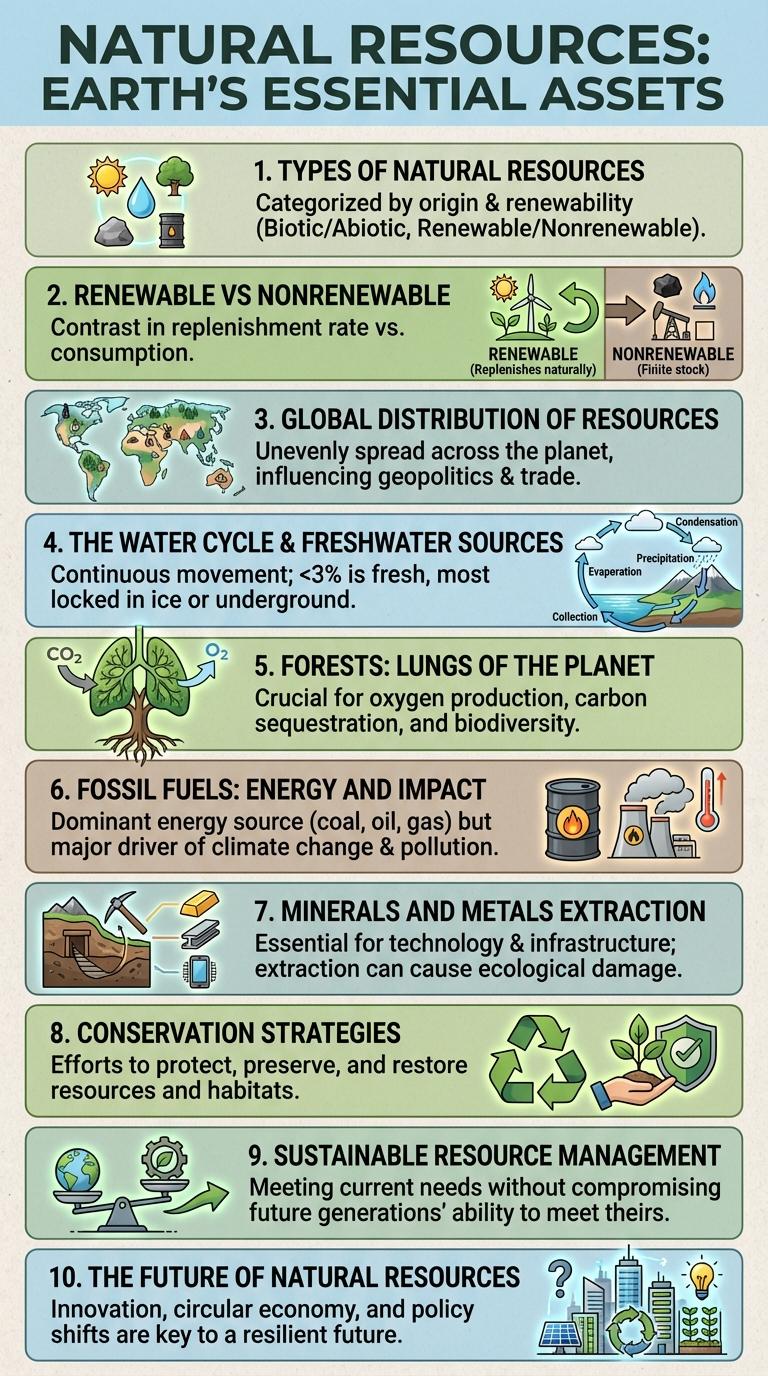
Natural resources are essential materials obtained from the Earth that support life and fuel economies worldwide. This infographic highlights the types, uses, and conservation methods of renewable and non-renewable resources. Understanding their distribution and importance helps promote sustainable management for future generations.
Types of Natural Resources
Natural resources are materials or substances occurring in nature that can be used for economic gain. They are broadly categorized into renewable and non-renewable resources, depending on their availability and regeneration rate. Understanding these types helps in managing and conserving resources for sustainable development.
| Type | Examples |
|---|---|
| Renewable Resources | Solar energy, wind energy, forests, freshwater |
| Non-Renewable Resources | Coal, oil, natural gas, minerals |
Renewable vs Nonrenewable
What are the main differences between renewable and nonrenewable natural resources?
Renewable natural resources can replenish quickly and are sustainable over time, such as solar energy and wind power. Nonrenewable resources, like coal and oil, exist in finite quantities and take millions of years to form.
Global Distribution of Resources
Natural resources are unevenly distributed across the globe, with certain regions rich in specific types of resources such as minerals, fossil fuels, and water. Countries like Russia, Brazil, Canada, and Australia hold vast reserves of essential natural resources.
Energy resources such as oil and natural gas are predominantly found in the Middle East, Russia, and the United States. Freshwater availability is highest in areas like the Amazon Basin, Canada, and Siberia, supporting diverse ecosystems and human populations.
The Water Cycle and Freshwater Sources
The water cycle continuously moves water through Earth's atmosphere, surface, and underground. Freshwater sources provide essential water for drinking, agriculture, and ecosystems.
Water evaporates from oceans, condenses into clouds, and returns as precipitation, replenishing freshwater supplies.
- Evaporation - Water changes from liquid to vapor, rising into the atmosphere.
- Condensation - Water vapor cools and forms clouds, preparing for precipitation.
- Precipitation - Rain, snow, or hail falls, delivering water to rivers, lakes, and groundwater.
- Surface Water - Rivers, lakes, and reservoirs store freshwater accessible for use.
- Groundwater - Underground aquifers provide a large source of freshwater through natural filtration.
Forests: Lungs of the Planet
Forests cover approximately 31% of the Earth's land area and act as vital carbon sinks, absorbing about 2 billion tons of CO2 annually. These ecosystems support over 80% of terrestrial species, maintaining biodiversity and ecological balance. Forests regulate climate, purify air, and provide resources essential for human survival and economic development.
Fossil Fuels: Energy and Impact
Fossil fuels, including coal, oil, and natural gas, are primary energy sources that power industries, transportation, and homes worldwide. They contribute significantly to the global energy supply but are non-renewable and finite.
Burning fossil fuels releases greenhouse gases like carbon dioxide, driving climate change and air pollution. Extraction processes such as mining and drilling disrupt ecosystems and can lead to environmental degradation. Transitioning to cleaner energy sources is essential to reduce their ecological impact and promote sustainability.
Minerals and Metals Extraction
Minerals and metals extraction is a critical industry that supports numerous sectors, including manufacturing, construction, and technology. Sustainable extraction methods are essential to minimize environmental impact while meeting global demand for these resources.
- Global Production - Over 3 billion tons of minerals and metals are extracted worldwide each year, fueling industrial growth.
- Key Metals - Iron, copper, aluminum, gold, and lithium are among the most extracted metals used in various applications.
- Environmental Impact - Mining operations can lead to habitat destruction, soil erosion, and water contamination if not managed responsibly.
Advancements in recycling and resource-efficient technologies are helping reduce dependency on virgin mineral extraction.
Conservation Strategies
Conserving natural resources is essential for sustaining ecosystems and supporting human life. Effective strategies ensure the responsible use and replenishment of these valuable assets.
- Efficient Water Management - Implementing techniques like rainwater harvesting and wastewater recycling reduces freshwater depletion.
- Renewable Energy Adoption - Using solar, wind, and hydro power lowers reliance on fossil fuels and decreases environmental impact.
- Protected Area Designation - Establishing wildlife reserves and conservation zones preserves biodiversity and natural habitats.