
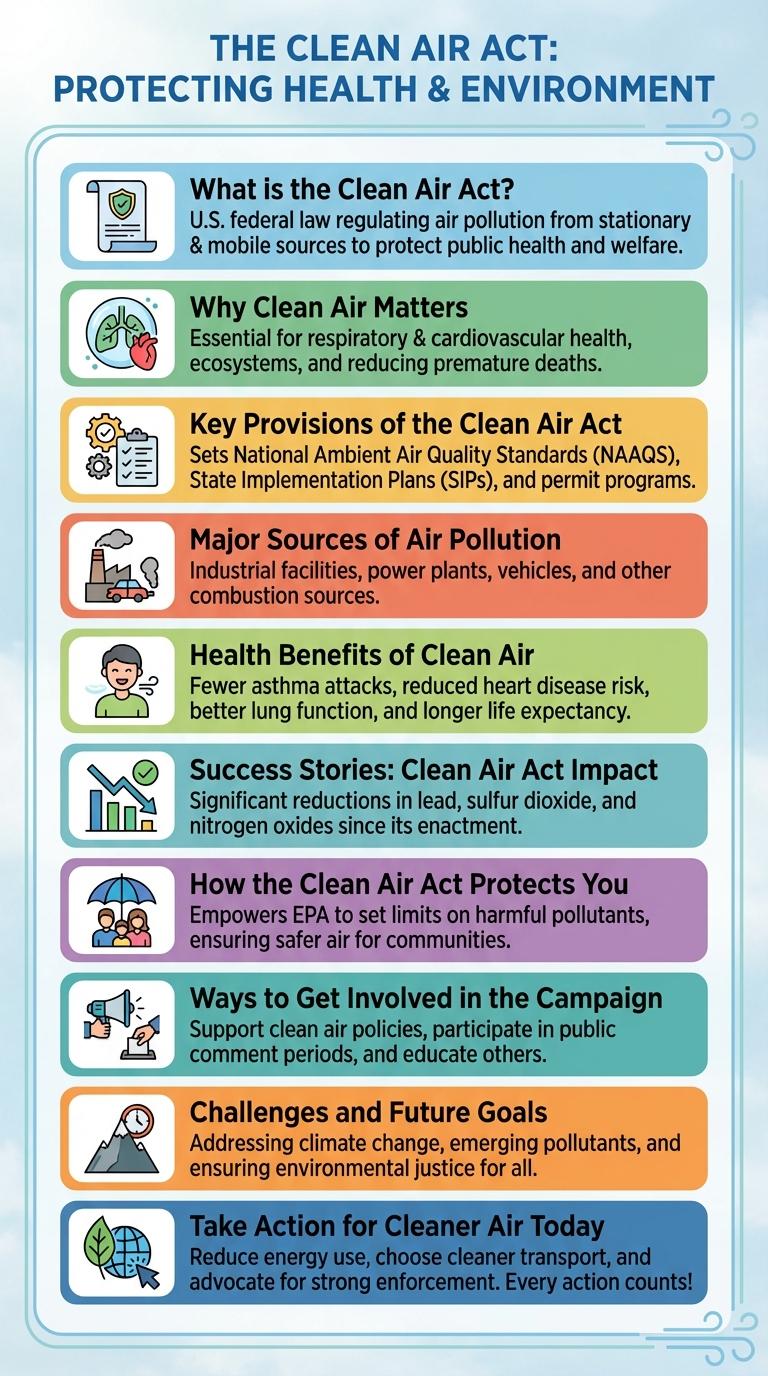
The Clean Air Act campaign raises awareness about air pollution and its impact on public health. Infographics visually highlight key regulations, benefits of cleaner air, and steps individuals can take to reduce emissions. Clear data presentation helps audiences grasp the urgency and effectiveness of pollution control efforts.
What is the Clean Air Act?
The Clean Air Act is a comprehensive federal law that regulates air emissions from stationary and mobile sources in the United States. It aims to ensure that air quality meets health-based standards to protect public health and the environment. The act empowers the Environmental Protection Agency (EPA) to set and enforce air quality standards, reduce pollutants, and promote cleaner air nationwide.
Why Clean Air Matters
| Why Clean Air Matters | Key Facts |
|---|---|
| Health Benefits | Reducing air pollution lowers risks of asthma, heart disease, and lung cancer for millions. |
| Environmental Protection | Cleaner air reduces acid rain and smog, preserving ecosystems and wildlife habitats. |
| Economic Impact | Improved air quality decreases healthcare costs and increases workforce productivity. |
| Climate Change Mitigation | Cutting emissions of greenhouse gases slows global warming and promotes sustainable living. |
| Legal Framework | The Clean Air Act empowers agencies to set standards that ensure public health and environmental safety. |
Key Provisions of the Clean Air Act
What are the key provisions of the Clean Air Act that help improve air quality? The Clean Air Act sets national air quality standards to control pollutants that harm public health and the environment. It mandates emission limits for industries and vehicles, reducing harmful substances like nitrogen oxides and sulfur dioxide.
Major Sources of Air Pollution
The Clean Air Act campaign targets major sources of air pollution, including vehicles, industrial facilities, power plants, and agricultural activities. These sources emit harmful pollutants such as nitrogen oxides, sulfur dioxide, particulate matter, and volatile organic compounds. Reducing emissions from these sectors is critical for improving air quality and protecting public health.
Health Benefits of Clean Air
The Clean Air Act campaign promotes policies to reduce air pollution and protect public health. Improved air quality significantly decreases risks of respiratory and cardiovascular diseases.
Reduction in pollutants like ozone and particulate matter leads to fewer asthma attacks and hospital visits. Cleaner air also supports healthier lung development in children and lowers premature death rates among adults.
Success Stories: Clean Air Act Impact
The Clean Air Act campaign has led to significant reductions in air pollution across the United States. This legislation has played a crucial role in improving public health and environmental quality.
- Reduction in Airborne Pollutants - Emissions of key pollutants like sulfur dioxide and nitrogen oxides have decreased by over 70% since the Act's implementation.
- Improved Public Health - Respiratory illnesses and premature deaths linked to air pollution have sharply declined, benefiting millions annually.
- Enhanced Environmental Quality - Visibility in national parks and natural areas has improved, preserving ecosystems and wildlife habitats.
How the Clean Air Act Protects You
The Clean Air Act (CAA) is a critical U.S. law designed to control air pollution and protect public health. It regulates emissions from industries, vehicles, and power plants to ensure cleaner air.
The CAA sets limits on harmful pollutants like carbon monoxide, sulfur dioxide, and particulate matter. It enforces standards through the Environmental Protection Agency (EPA), requiring regular monitoring and reporting. This legislation reduces respiratory illnesses, improves visibility, and mitigates environmental damage caused by air pollution.
Ways to Get Involved in the Campaign
The Clean Air Act campaign promotes improved air quality through community engagement and policy support. Taking part in this campaign helps reduce pollution and protect public health.
- Join Local Events - Participate in community clean air marches and educational workshops to raise awareness.
- Advocate for Policy Change - Contact legislators to support stricter air pollution regulations and enforcement.
- Adopt Sustainable Practices - Reduce vehicle emissions by using public transport, biking, or carpooling regularly.
Challenges and Future Goals
The Clean Air Act campaign faces ongoing challenges such as industrial emissions, urban air pollution, and enforcement gaps. Rising vehicle use and climate change further complicate efforts to maintain air quality standards.
Future goals include expanding renewable energy adoption and strengthening pollution control technologies. Enhanced public awareness and stricter regulatory measures aim to ensure healthier air for all communities.