
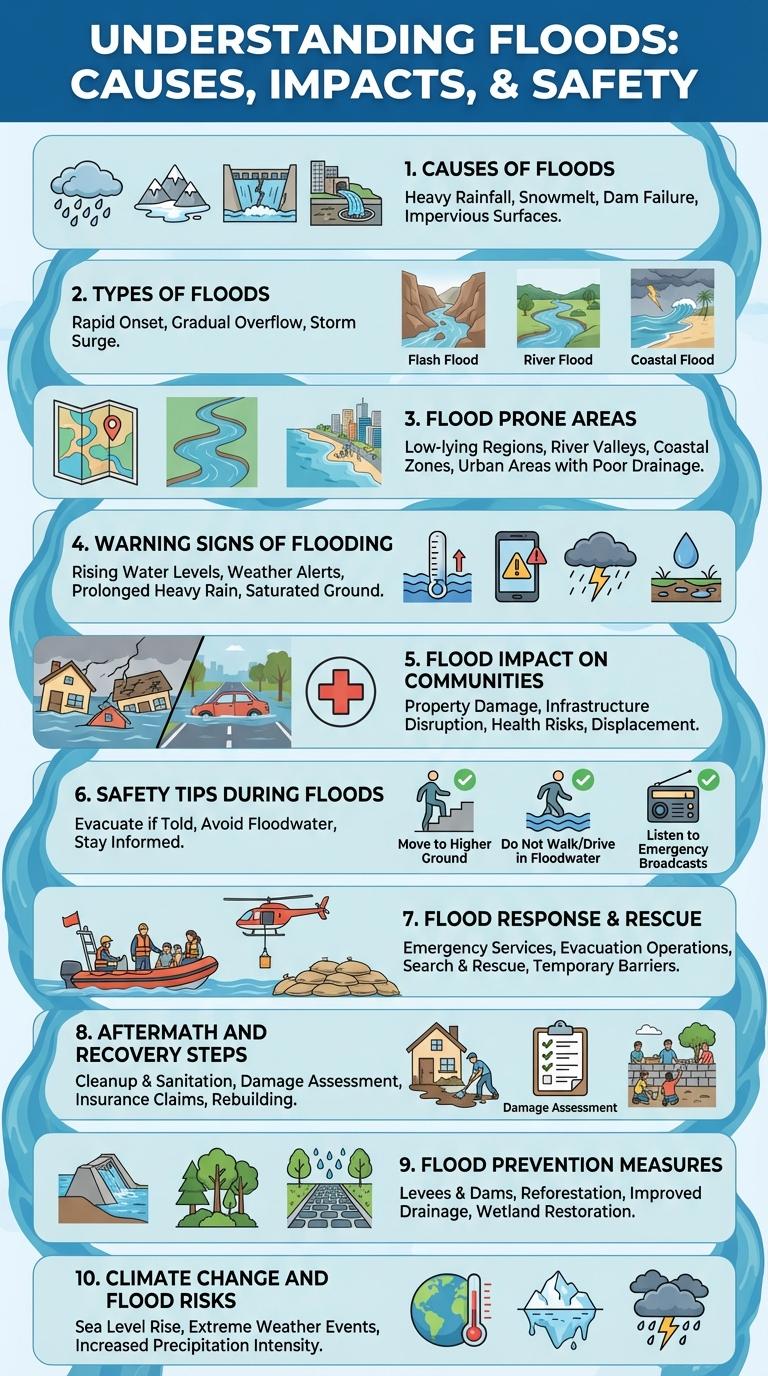
Floods cause widespread damage, impacting communities, infrastructure, and the environment. Understanding flood patterns, causes, and safety measures is essential for preparedness and risk reduction. This infographic highlights key data and facts to help individuals stay informed and act promptly during flood events.
Causes of Floods
Floods occur when water overwhelms land that is normally dry, leading to significant damage and disruption. Understanding the primary causes of floods helps in implementing effective prevention and mitigation strategies.
- Heavy Rainfall - Intense or prolonged rain saturates the ground, causing rivers and drainage systems to overflow.
- River Overflow - Excess water volume in rivers due to upstream rain or snowmelt breaches riverbanks, flooding adjacent areas.
- Urbanization - Increased impermeable surfaces reduce natural water absorption, leading to rapid surface runoff and localized flooding.
Types of Floods
| Type of Flood | Description |
|---|---|
| River Flood | Occurs when rivers overflow their banks due to heavy rainfall or snowmelt, causing water to spread over adjacent lands. |
| Flash Flood | Rapid flooding typically caused by intense rainfall in a short period, leading to sudden water level rise in low-lying areas. |
| Coastal Flood | Triggered by storm surges, hurricanes, or tsunamis, leading to the inundation of coastal regions by seawater. |
| Urban Flood | Flooding in cities due to inadequate drainage systems combined with heavy rainfall or water overflow. |
| Pluvial Flood | Surface water flooding resulting from intense rainfall that exceeds the capacity of the ground and drainage systems. |
Flood Prone Areas
Flood prone areas are regions highly susceptible to flooding due to their geographic and climatic conditions. These areas often include riverbanks, coastal zones, and low-lying urban regions. Identifying flood prone zones helps in planning disaster management and implementing effective flood control measures.
Warning Signs of Flooding
What are the key warning signs of flooding to watch for?
Rising water levels in rivers and drains often indicate an impending flood. Dark, heavy clouds and prolonged rainfall also signal potential flooding in your area.
Flood Impact on Communities
Floods devastate communities by damaging homes, infrastructure, and essential services. They disrupt daily life, causing displacement and economic losses for affected populations.
The impact on communities includes health risks from contaminated water and increased exposure to diseases. Floodwaters can destroy crops and local businesses, leading to food insecurity and unemployment. Recovery often requires extensive resources and time, as well as community resilience and support systems.
Safety Tips During Floods
Floods pose significant risks to life and property, making safety precautions essential. Staying informed through reliable sources and avoiding floodwaters can prevent accidents. Preparing an emergency kit and having an evacuation plan enhances survival during floods.
Flood Response & Rescue
Flood response and rescue operations are critical to saving lives and minimizing damage during flood events. Timely interventions and coordinated efforts ensure effective management of flood emergencies.
- Early Warning Systems - Real-time monitoring and alerts help communities prepare before floodwaters rise.
- Evacuation Procedures - Organized relocations reduce risk by moving affected people to safe shelters promptly.
- Search and Rescue Teams - Trained personnel use boats and helicopters to reach stranded individuals efficiently.
Aftermath and Recovery Steps
Flood aftermath often includes widespread property damage, disrupted infrastructure, and health risks due to contaminated water. Communities face challenges such as power outages, displaced families, and blocked transportation routes.
Recovery steps involve immediate safety measures like evacuation and securing clean water supplies. Long-term actions include repairing infrastructure, providing mental health support, and implementing flood defense systems to reduce future risks.
Flood Prevention Measures
Flood prevention measures are essential to protect communities and reduce damage caused by excessive water accumulation. Effective strategies help manage water flow and minimize flood risks in vulnerable areas.
- Constructing Levees - Levees serve as barriers that prevent river water from overflowing into populated regions.
- Installing Flood Barriers - Temporary or permanent barriers block water entry during heavy rains or storms.
- Improving Drainage Systems - Enhanced drainage infrastructure accelerates water runoff and reduces flooding in urban areas.
Implementing these flood prevention measures significantly lowers the impact of floods on lives and property.