
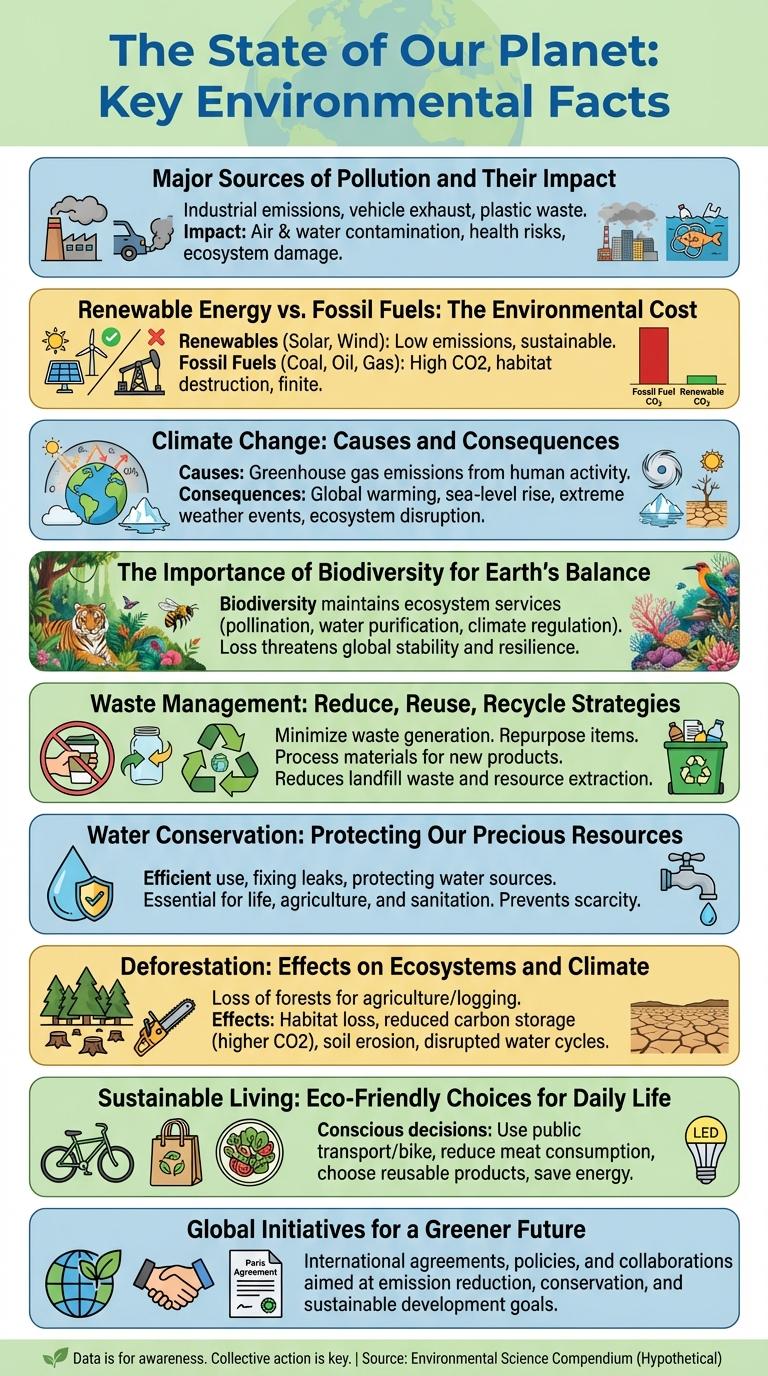
Infographics about the environment visually communicate critical data on climate change, pollution, and conservation efforts. They highlight key statistics and trends, making complex environmental issues easier to understand and engage with. Effective infographics inspire awareness and motivate action toward sustainability.
The State of Our Planet: Key Environmental Facts
The State of Our Planet reveals critical environmental challenges threatening global ecosystems. Rapid climate change, biodiversity loss, and pollution are accelerating at unprecedented rates.
Over 1 million species face extinction due to habitat destruction and environmental degradation. Global carbon emissions reached 36 billion metric tons in 2023, intensifying the greenhouse effect.
Major Sources of Pollution and Their Impact
Environmental pollution arises from multiple major sources, each contributing uniquely to ecosystem degradation. Key pollutants originate from industrial emissions, vehicle exhaust, agricultural activities, waste disposal, and energy production.
Industrial emissions release harmful chemicals and particulate matter affecting air and water quality. Agricultural runoff introduces pesticides and fertilizers, leading to soil and water contamination.
Renewable Energy vs. Fossil Fuels: The Environmental Cost
Renewable energy sources like solar and wind produce minimal greenhouse gas emissions, significantly reducing air pollution and combating climate change. Fossil fuels, including coal, oil, and natural gas, release large amounts of carbon dioxide and other harmful pollutants, damaging ecosystems and human health. Transitioning to renewable energy is essential for sustainable development and preserving the planet's biodiversity.
Climate Change: Causes and Consequences
Climate change results from increased greenhouse gas emissions such as carbon dioxide and methane, primarily due to fossil fuel burning and deforestation. Rising global temperatures cause ice melt, sea level rise, and more frequent extreme weather events. These environmental changes threaten biodiversity, agriculture, and human health worldwide.
The Importance of Biodiversity for Earth's Balance
| Aspect | Details |
|---|---|
| Definition of Biodiversity | Variety of all living organisms on Earth, including plants, animals, fungi, and microorganisms. |
| Ecosystem Services | Pollination, nutrient cycling, water purification, and climate regulation supported by diverse species. |
| Earth's Balance | Biodiversity stabilizes ecosystems, enabling resilience against environmental changes and natural disasters. |
| Threats to Biodiversity | Habitat destruction, pollution, climate change, and invasive species leading to species extinction. |
| Conservation Importance | Protecting biodiversity ensures sustainable food sources, medical discoveries, and ecological health. |
Waste Management: Reduce, Reuse, Recycle Strategies
Effective waste management is essential for protecting the environment and conserving natural resources. The Reduce, Reuse, Recycle strategy helps minimize landfill waste and promotes sustainability.
- Reduce - Cutting down on waste production lowers pollution and saves raw materials.
- Reuse - Using items multiple times decreases the need for new products and reduces waste generation.
- Recycle - Processing materials into new products conserves resources and reduces energy consumption.
Adopting these strategies at individual and community levels significantly supports environmental health and resource efficiency.
Water Conservation: Protecting Our Precious Resources
Water conservation is essential for sustaining life and maintaining healthy ecosystems. Protecting our precious water resources ensures a reliable supply for future generations.
Reducing water waste helps preserve freshwater sources and supports biodiversity. Simple actions like fixing leaks and using water-efficient appliances contribute significantly. Conserving water also lowers energy consumption and reduces pollution.
Deforestation: Effects on Ecosystems and Climate
What are the consequences of deforestation on ecosystems and climate?
Deforestation leads to loss of biodiversity by destroying natural habitats for countless species. It also contributes to climate change by increasing carbon dioxide levels in the atmosphere due to reduced carbon sequestration.
Sustainable Living: Eco-Friendly Choices for Daily Life
Embracing sustainable living reduces environmental impact and conserves natural resources. Eco-friendly choices in daily life promote health, economy, and a greener planet.
Small lifestyle changes collectively contribute to significant environmental benefits and long-term sustainability.
- Reduce Plastic Use - Opt for reusable bags, bottles, and containers to minimize plastic waste and pollution.
- Conserve Energy - Use energy-efficient appliances and switch off unused electronics to lower carbon footprint.
- Support Local and Organic - Choose locally grown, organic foods to cut down food miles and reduce pesticide exposure.