
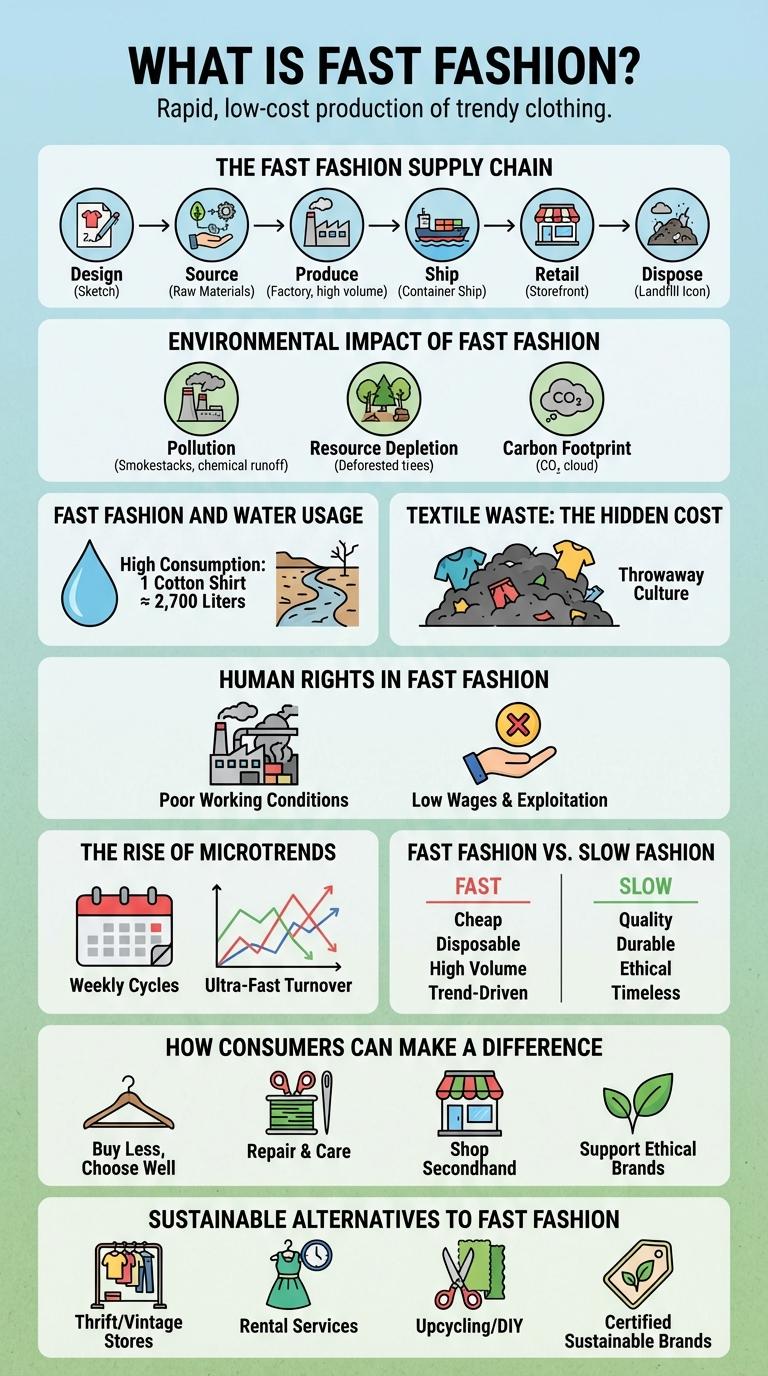
Fast fashion accelerates clothing production to meet the latest trends quickly and affordably, driving high consumer demand. This rapid cycle leads to significant environmental impacts, including increased textile waste and carbon emissions. Infographics help visualize these effects, highlighting the urgent need for sustainable choices in the fashion industry.
What Is Fast Fashion?
Fast fashion refers to the rapid production of inexpensive clothing that mirrors current fashion trends. It enables consumers to purchase trendy items quickly and affordably.
This industry relies on mass manufacturing and quick turnaround times from design to retail. Fast fashion often prioritizes speed and low cost over sustainability and ethical practices.
The Fast Fashion Supply Chain
| Fast Fashion Supply Chain Stage | Key Characteristics |
|---|---|
| Design & Trend Forecasting | Rapid development of styles based on current trends; driven by consumer demand and social media influence |
| Raw Material Sourcing | Use of low-cost materials including synthetic fibers; focus on minimizing production costs |
| Manufacturing | Mass production in countries with low labor costs; often involves tight deadlines and large volumes |
| Distribution & Retail | Fast delivery to retail and online stores; frequent stock refreshes to encourage consumer purchasing |
| Consumer Use & Disposal | High turnover rate of garments; limited garment lifespan leading to increased textile waste |
Environmental Impact of Fast Fashion
Fast fashion significantly contributes to environmental degradation through resource overuse and pollution. The rapid production cycles lead to excessive textile waste and increased carbon emissions.
- Water Consumption - Producing a single cotton t-shirt requires approximately 2,700 liters of water, impacting global water resources.
- Carbon Emissions - The fashion industry accounts for about 10% of global carbon dioxide emissions, more than international flights and shipping combined.
- Textile Waste - Around 85% of textiles produced end up in landfills each year, creating long-term environmental hazards.
- Chemical Pollution - Toxic dyes and chemicals from garment production pollute waterways, harming aquatic ecosystems.
- Energy Consumption - Fast fashion relies heavily on energy-intensive manufacturing processes, increasing fossil fuel dependence.
Mitigating the environmental impact of fast fashion requires sustainable practices and consumer awareness.
Fast Fashion and Water Usage
Fast fashion significantly contributes to global water consumption, using approximately 79 trillion liters annually. Textile production, especially cotton cultivation, requires immense water volumes, impacting freshwater resources. Sustainable alternatives aim to reduce water usage and promote eco-friendly manufacturing practices in the fashion industry.
Textile Waste: The Hidden Cost
Fast fashion produces massive amounts of textile waste, heavily impacting the environment. Each year, millions of tons of discarded clothing end up in landfills worldwide.
- High Volume of Waste - Over 92 million tons of textile waste is generated annually due to rapid fashion trends.
- Short Lifecycle - Fast fashion garments are worn fewer than five times on average before disposal.
- Non-Biodegradable Materials - Many clothes are made with synthetic fibers that take hundreds of years to decompose.
Human Rights in Fast Fashion
Fast fashion often relies on low-wage labor in developing countries, leading to widespread human rights abuses. Workers face unsafe conditions, long hours, and minimal pay, violating basic labor standards.
Child labor remains a significant concern in the garment industry supplying fast fashion brands. Advocates call for stricter regulations and increased transparency to protect vulnerable workers.
The Rise of Microtrends
Fast fashion has rapidly evolved with the emergence of microtrends, driven by social media and consumer demand for instant style updates. These microtrends cause brands to produce small, quickly changing collections that cater to fleeting fashion interests.
- Microtrend Frequency - Brands now launch new styles every 1-2 weeks, significantly accelerating production cycles.
- Consumer Behavior - Shoppers increasingly seek unique, short-lived fashion items, fueling rapid trend turnover.
- Environmental Impact - The quick disposal of microtrend garments contributes to increased textile waste and pollution.
Fast Fashion vs. Slow Fashion
What distinguishes fast fashion from slow fashion? Fast fashion prioritizes rapid production and low costs, often sacrificing quality and sustainability. Slow fashion emphasizes durability, ethical production, and environmental responsibility.
How do fast fashion and slow fashion impact the environment? Fast fashion generates significant textile waste and pollution due to mass production and disposable clothing. Slow fashion reduces waste through eco-friendly materials and longer-lasting garments.
What are the social implications of fast fashion compared to slow fashion? Fast fashion relies heavily on cheap labor in developing countries, often under poor working conditions. Slow fashion supports fair wages and safer workplaces, promoting ethical labor practices.
How does consumer behavior differ between fast and slow fashion? Fast fashion encourages frequent purchases and trend-driven consumption, leading to excess clothing disposal. Slow fashion promotes mindful buying, focusing on quality over quantity.
Which fashion model offers better economic value? Fast fashion provides affordable, trendy items but often lacks durability, increasing overall costs. Slow fashion invests in quality pieces that last longer, offering better long-term value.
How Consumers Can Make a Difference
Fast fashion fuels environmental damage and unethical labor practices worldwide. Consumers hold the power to drive change through informed choices.
Choosing sustainable brands reduces demand for harmful production methods. Supporting secondhand shopping minimizes textile waste and resource use. Spreading awareness encourages more people to adopt eco-friendly habits.